How to Find Day Jobs in Canada as a Newcomer: Your 2026 Guide

Day jobs in Canada can be a practical starting point for newcomers who want to earn income , build Canadian experience , improve workplace confidence , and understand how the local job market works.

Finding your first job in a new country can feel overwhelming. You may not have Canadian work experience yet. You may still be learning how resumes , interviews , references , payroll , tax forms , and workplace expectations work in Canada. You may also need income quickly while you continue searching for a longer-term career role.

This guide explains how newcomers can look for day jobs in Canada , what types of jobs are commonly available , what documents may be needed , where to search , how to prepare , and what mistakes to avoid.

This article is general information only. It does not guarantee employment , income , work authorization , or job approval.

Who This Guide Is For

This guide is for newcomers who are already in Canada or preparing for their first months in Canada , including:

  • Permanent residents
  • Temporary foreign workers
  • International students
  • Open work permit holders
  • Spouses or partners of eligible workers or students
  • People looking for their first Canadian job
  • Newcomers who want short-term , part-time , entry-level , or flexible work

Before applying for any job , make sure you are legally allowed to work in Canada. The Government of Canada states that Canadian citizens , permanent residents , and temporary residents need a Social Insurance Number , commonly called a SIN , to work in Canada or receive government benefits and services. (Kanada)

What Are Day Jobs in Canada?

Day jobs usually refer to work that is temporary , short-term , shift-based , part-time , casual , or available quickly. Some people use the term “day job” to mean a regular daytime role , while others mean short-term work that pays hourly.

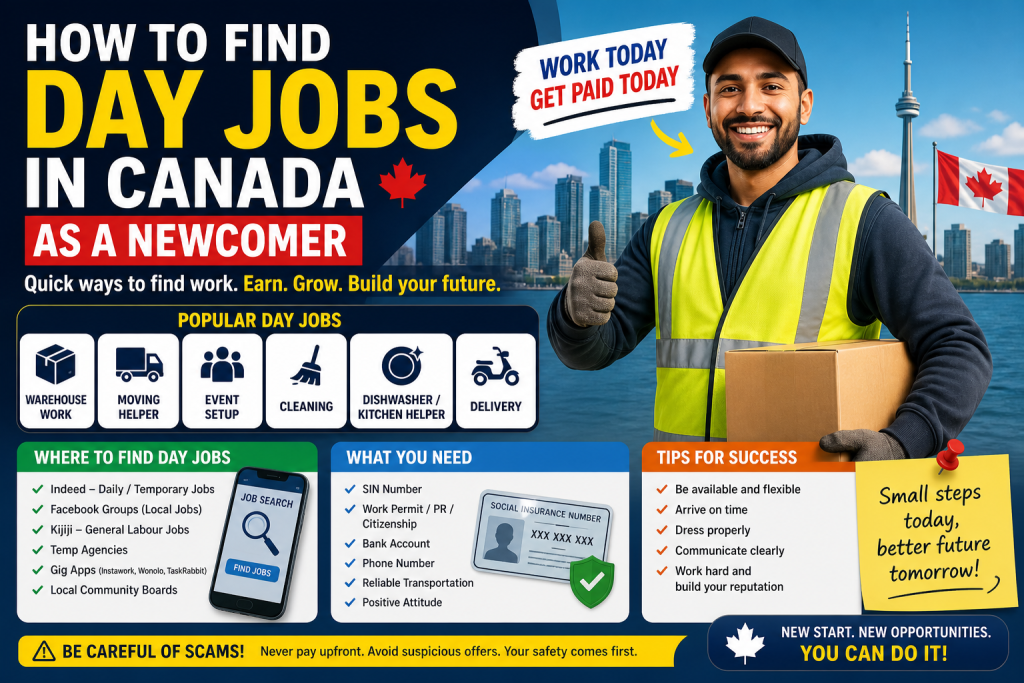
For newcomers , day jobs in Canada may include:

  • Warehouse associate
  • Delivery helper
  • Cleaner
  • Restaurant staff
  • Kitchen helper
  • Retail associate
  • Grocery store clerk
  • Cashier
  • General labourer
  • Event staff
  • Hotel housekeeper
  • Customer service representative
  • Call centre agent
  • Security guard , if licensed
  • Construction helper , depending on local rules and safety requirements
  • Landscaping or seasonal work
  • Moving helper
  • Packaging or production worker

These jobs may not always match your long-term career goal , but they can help you understand Canadian workplace culture , earn income , build references , and improve communication skills.

Step 1: Confirm That You Can Work in Canada

Before looking for day jobs in Canada , confirm your work eligibility. Your ability to work depends on your status and documents.

You may need to check:

  • Whether your work permit allows you to work
  • Whether your study permit allows off-campus work
  • Whether your employer must be listed on your permit
  • Whether there are limits on work hours
  • Whether your SIN is active and valid
  • Whether your occupation needs a licence or certification

The Government of Canada has official information about working in Canada , including work permits , worker rights , labour standards , and getting a SIN after receiving a work permit. (Kanada)

If you are unsure about your work conditions , check your official documents or use Government of Canada resources. Do not rely only on social media posts , WhatsApp groups , or informal advice.

Step 2: Get Your SIN Before Starting Work

A Social Insurance Number is required to work in Canada. Employers usually need your SIN for payroll and tax reporting.

Newcomers should apply for a SIN as soon as they are eligible. Service Canada explains that eligible Canadian citizens , permanent residents , and temporary residents need a SIN to work in Canada or access government programs and benefits. (Kanada)

Keep your SIN private. You should not put your SIN on your resume , job applications , social media profile , or public documents. Normally , you provide it after you are hired and the employer needs it for payroll.

Step 3: Prepare a Simple Canadian-Style Resume

For many day jobs in Canada , your resume does not need to be complicated. It should be clear , short , and easy to scan.

A beginner-friendly resume can include:

  • Your name
  • Phone number
  • Email address
  • City and province
  • Short summary
  • Relevant skills
  • Work experience
  • Education or training
  • Certifications , if relevant
  • Availability
  • Languages , if useful for the role

Do not include unnecessary personal details such as marital status , passport number , SIN , religion , or a photo unless a specific legitimate requirement applies.

For entry-level or day jobs , highlight practical skills such as:

  • Customer service
  • Cash handling
  • Cleaning
  • Lifting or physical work
  • Food preparation
  • Inventory
  • Teamwork
  • Reliability
  • Punctuality
  • Communication
  • Basic computer skills
  • Driving , if relevant and legal

If you do not have Canadian experience yet , include international experience that matches the job. For example , restaurant , retail , warehouse , office , driving , caregiving , hospitality , or customer service experience from another country can still be useful.

Step 4: Search on Official and Reliable Job Platforms

One of the best places to start is the Government of Canada’s Job Bank. Job Bank has a dedicated page for newcomers that includes available jobs , employment resources , and career advice for newcomers already in Canada. (jobbank.gc.ca)

You can search for day jobs using terms like:

  • General labour
  • Warehouse worker
  • Cleaner
  • Kitchen helper
  • Cashier
  • Retail associate
  • Customer service
  • Delivery helper
  • Part-time
  • Temporary
  • Seasonal
  • Entry level
  • No experience required

Other places to search may include:

  • Company career pages
  • Local settlement agencies
  • Community employment centres
  • City job boards
  • University or college job boards
  • Reputable job websites
  • Local staffing agencies
  • LinkedIn
  • Indeed
  • WorkBC , Ontario employment services , or other provincial employment resources

Use caution with informal listings. If a job offer sounds too easy , asks for money upfront , or wants sensitive personal information too early , be careful.

Step 5: Use Free Newcomer Employment Services

Canada has newcomer services that can help with job search , housing , health care , language skills , and other settlement needs. The Government of Canada says free newcomer services can help people transition into everyday life in Canada and find resources for jobs , housing , health care , language improvement , and other supports. (Kanada)

These services may help you with:

  • Resume writing
  • Interview preparation
  • Job search workshops
  • Understanding Canadian workplace culture
  • Finding local employers
  • Practicing English or French
  • Credential information
  • Networking events
  • Referrals to employment programs

The Government of Canada also provides a tool to find newcomer services near you , including settlement organizations across Canada outside Quebec. (Kanada Göçmenlik ve Vatandaşlık)

For newcomers , these services can be more useful than applying randomly to hundreds of jobs without guidance.

Step 6: Apply Quickly but Carefully

Day jobs in Canada can move fast. Employers hiring for entry-level or shift-based roles may contact applicants quickly. You should be ready to respond.

Before applying , check:

  • Job title
  • Location
  • Pay range , if listed
  • Schedule
  • Full-time , part-time , temporary , or casual status
  • Required documents
  • Required experience
  • Physical requirements
  • Work authorization requirements
  • Safety training or licences
  • Employer name and contact information

Keep a simple application tracker with:

Job Title Company Date Applied Website Status Notes
Warehouse Associate Example Company May 6 , 2026 Job Bank Applied Afternoon shift
Kitchen Helper Example Restaurant May 6 , 2026 Company site Interview Bring availability
Cleaner Example Services May 7 , 2026 Local board Waiting Part-time

This helps you avoid applying twice to the same job and makes follow-up easier.

Step 7: Be Ready for Interviews

For day jobs , interviews may be short and practical. Employers often want to know if you are reliable , available , willing to learn , and able to do the work safely.

Common interview questions include:

  • Tell me about yourself.
  • Why do you want this job?
  • What is your availability?
  • Can you work evenings or weekends?
  • Do you have experience in this type of work?
  • Can you lift boxes or stand for long periods , if required?
  • How do you handle customers?
  • Can you start soon?
  • Do you have reliable transportation?

Prepare simple answers. Do not memorize long speeches. Be honest about your availability , skills , and experience.

Example answer:

I am new to Canada and looking for my first local job. I have previous customer service experience and I am available on weekdays and weekends. I am reliable , comfortable learning new systems , and ready to start after completing the hiring requirements.

Step 8: Understand Pay , Payroll , and Workplace Basics

Day jobs are usually paid hourly. Your pay may depend on the province , industry , experience , and employer. Minimum wage and employment standards are usually set by province or territory , although federally regulated workplaces follow federal rules.

Before accepting a job , ask:

  • What is the hourly wage?
  • How often are employees paid?
  • Is training paid?
  • Is the job part-time , full-time , temporary , or casual?
  • Are there tips , bonuses , or commissions?
  • Is overtime available?
  • What deductions will appear on the paycheque?
  • What documents are needed before starting?

You should also understand that payroll deductions may include income tax , Employment Insurance , and Canada Pension Plan contributions , depending on your situation.

Employment standards can vary by province or territory. For example , Ontario’s employment standards guide covers topics such as minimum wage , hours of work , public holidays , vacation , termination , and other workplace rules. (ontario.ca)

Common Mistakes to Avoid

Avoid these common mistakes when looking for day jobs in Canada:

Applying Without a Canadian-Style Resume

Your resume should be clear and relevant. A long resume with too many unrelated details may be harder for employers to read.

Sharing Your SIN Too Early

Do not put your SIN on your resume or give it to random people online. Employers usually need it after hiring for payroll purposes.

Accepting Cash Jobs Without Understanding the Risks

Some newcomers are offered cash work. Be careful. You should understand your tax responsibilities , workplace rights , and whether the job is legal and safe.

Paying Money to Get a Job

Be very careful if someone asks you to pay for a job offer , training placement , or guaranteed employment. Legitimate employers generally do not require applicants to pay to be hired.

Ignoring Workplace Rights

Newcomers may feel pressure to accept unfair treatment. Learn basic employment standards in your province or territory and ask for help if something seems wrong.

Applying Only Online

Online applications are useful , but networking , settlement agencies , walk-in hiring events , and referrals can also help.

Checklist: How to Find Day Jobs in Canada

Use this checklist before applying:

  • Confirm you are legally allowed to work.
  • Apply for or confirm your SIN.
  • Create a simple Canadian-style resume.
  • Prepare a short cover message.
  • Make a list of job titles to search.
  • Search Job Bank and reputable job websites.
  • Contact newcomer employment services.
  • Prepare your availability schedule.
  • Practice common interview answers.
  • Keep track of every application.
  • Check employer legitimacy before sharing personal information.
  • Review pay , schedule , and job duties before accepting.

Frequently Asked Questions

Can newcomers get day jobs in Canada without Canadian experience?

Yes , some newcomers may find day jobs without Canadian experience , especially in entry-level , seasonal , customer service , warehouse , cleaning , food service , and general labour roles. However , hiring depends on the employer , location , availability , skills , language ability , and work authorization.

Do I need a SIN before applying for jobs in Canada?

You do not usually need to put your SIN on job applications , but you need a SIN to work in Canada. Employers normally request it after hiring for payroll and tax purposes. Service Canada explains that eligible citizens , permanent residents , and temporary residents need a SIN to work in Canada. (Kanada)

Where should newcomers search for day jobs in Canada?

A good starting point is Job Bank , which provides job listings and newcomer employment resources. You can also use settlement agencies , company websites , local employment centres , staffing agencies , and reputable job platforms. (jobbank.gc.ca)

Are day jobs in Canada full-time or part-time?

They can be either. Some day jobs are full-time , while others are part-time , temporary , seasonal , casual , or shift-based. Always check the job posting and confirm the schedule before accepting an offer.

How can I avoid job scams in Canada?

Be cautious if someone guarantees a job , asks for money upfront , requests sensitive documents too early , uses only informal messaging , or refuses to provide clear employer details. Use official resources and trusted newcomer services when possible.

Disclaimer

This article is for general information only and does not provide financial , legal , tax , immigration , employment , or professional advice. Rules , requirements , wages , programs , and work conditions may change. Always check official sources or speak with a qualified professional before making decisions.

Sources and Official Resources

  • Government of Canada Job Bank — newcomer job search resources. (jobbank.gc.ca)
  • Service Canada — Social Insurance Number eligibility and work requirements. (Kanada)
  • Government of Canada — work in Canada information. (Kanada)
  • Government of Canada — newcomer services. (Kanada)
  • Government of Canada — find newcomer services near you. (Kanada Göçmenlik ve Vatandaşlık)
  • Ontario employment standards guide as an example of provincial workplace rules. (ontario.ca)

Conclusion

Day jobs in Canada can be a useful first step for newcomers who want to earn income , build Canadian experience , and understand the local job market. Start by confirming your work eligibility , getting your SIN , preparing a simple Canadian-style resume , and using official resources such as Job Bank and newcomer services.

Your first job may not be your long-term career role , and that is normal. Many newcomers start with practical work , build references , improve communication skills , and move toward better opportunities over time. The key is to apply carefully , protect your personal information , understand your rights , and keep improving your job search strategy.