How to Get a Health Card is a practical topic for newcomers who want clear , begi
er-friendly information about their first year in Canada.
Introduction
Welcome to Canada! As you settle into your new home, one of the most important steps for your well-being is understanding how to access healthcare. This comprehensive Canada health card newcomer guide will walk you through the process of obtaining your provincial or territorial health card, which is essential for accessing free or subsidized medical services.
In Canada, healthcare is primarily managed at the provincial and territorial level, meaning there isn’t one single “Canada Health Card.” Instead, each province and territory has its own health insurance plan, and you must apply to the plan in the province where you reside. This guide will provide general steps and highlight key provincial differences to help you navigate this vital process.
Who This Guide Is For
This guide is specifically designed for:
- Permanent Residents : Individuals who have been granted permanent resident status in Canada.
- Temporary Workers : Those with valid work permits.
- International Students : Individuals studying at recognized educational institutions in Canada.
- Refugees: Protected persons and convention refugees.
- Newcomers : Anyone settling in Canada for the first time and needing to register for provincial health coverage.
Understanding these requirements is a key part of your First Month in Canada: Your Essential Checklist for Newcomers.
Practical Explanation: Your Health Card in Canada
A health card is your key to accessing Canada’s public healthcare system. Once you have one, you typically won’t pay directly for most doctor’s visits, hospital stays, or necessary medical procedures. However, it’s important to remember that certain services, such as prescription medications, dental care, and eye care, may not be fully covered and often require separate private insurance or out-of-pocket payment.
Each province and territory has its own health insurance plan, eligibility criteria, and application process. Most provinces also have a waiting period, which can be up to three months, before your coverage begins. During this waiting period, it is highly recommended to have private health insurance to cover any unexpected medical emergencies.
Step-by-Step: How to Get Your Health Card
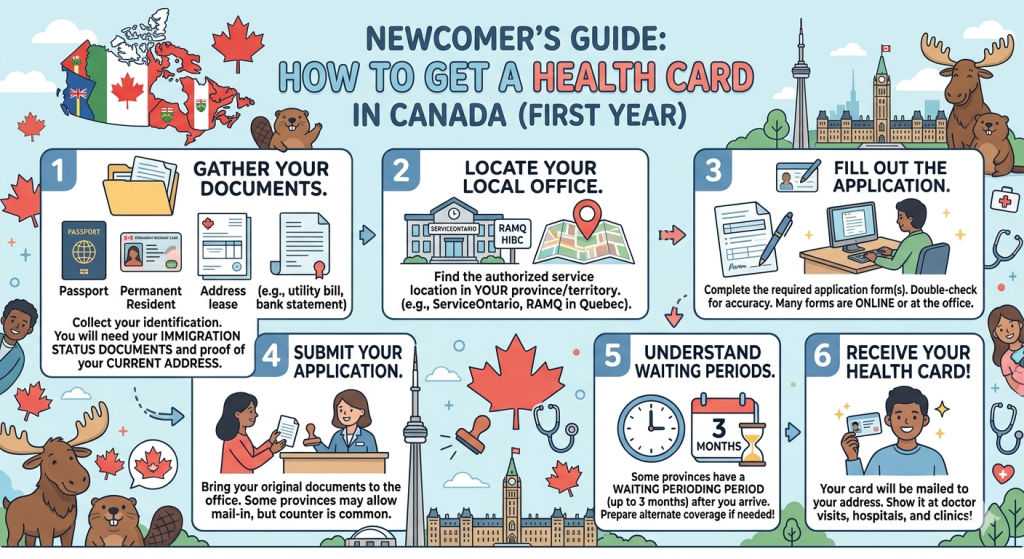
The process to apply for your health card generally involves these steps:
Step 1: Determine Your Eligibility
Eligibility varies by province, but generally, you must be a permanent resident or hold a valid immigration document (such as a work permit or study permit) and be physically present in the province for a certain number of days per year (e.g., 153 days) .
Step 2: Gather Required Documents
This is a critical step. You will need to provide proof of :
- Canadian Citizenship or Immigration Status: Your Permanent Resident Card, Confirmation of Permanent Residence (COPR), work permit, or study permit.
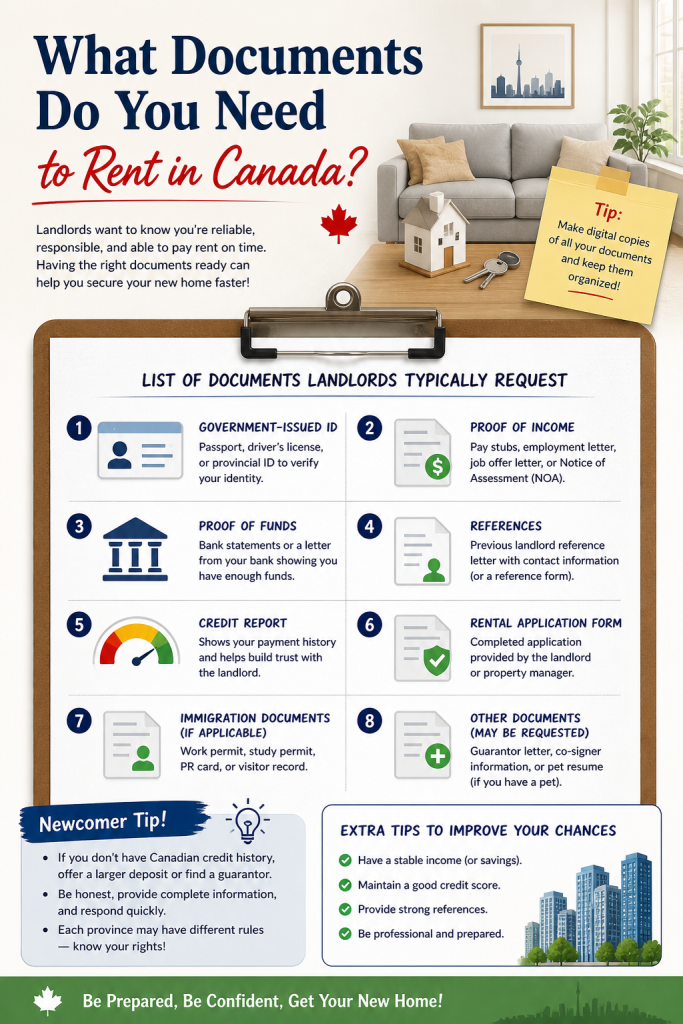
- Residency in Your Province/Territory: Documents showing you live in that province. This can include a rental agreement, utility bills, a bank statement with your address, or a driver’s license. For more details on this, you might find our guide on What Documents Do You Need to Rent in Canada as a Newcomer (2026 Guide) useful.
- Identity: A valid passport, driver’s license, or other government-issued photo ID .
Make sure all documents are originals, not photocopies, unless otherwise specified by the provincial health authority.
Step 3: Locate Your Provincial/Territorial Health Office
You’ll need to apply through the specific health authority of your province or territory. Here are some examples:
- Ontario: ServiceOntario
- British Columbia: Health Insurance BC (part of BC Services Card)
- Alberta: Alberta Health Care Insurance Plan (AHCIP)
- Quebec: Régie de l’assurance maladie du Québec (RAMQ)
- Manitoba: Manitoba Health, Seniors and Active Living
- Saskatchewan: Saskatchewan Health Authority
- Nova Scotia: Nova Scotia Health Card
Check their official websites for the nearest location or online application options.
Step 4: Complete the Application
Applications can often be submitted in person, by mail, or sometimes online. In-person applications are often recommended for newcomers as they allow you to verify documents immediately and ask questions. You will fill out an application form with your personal details.
Step 5: Understand Waiting Periods
Be aware of the waiting period. Most provinces have one, typically up to three months, starting from the date you establish residency. During this time, you are not covered by the provincial plan. Plan for private health insurance to cover this gap.
Step 6: Receive Your Card
Once your application is processed and any waiting period is complete, your health card will be mailed to your address. Keep it safe, as you will need to present it every time you access medical services.
Checklist: Essential Documents for Your Health Card Application
Before you apply, gather these documents:
- & check; Valid Passport
- & check; Immigration Document (e.g., Permanent Resident Card, Confirmation of Permanent Residence, Work Permit, Study Permit)
- & check; Proof of Canadian Residency (e.g., rental agreement, utility bill, bank statement, employment letter)
- & check; Second Piece of Identification (e.g., driver’s license, provincial ID card)
- & check; Completed Application Form (available from the provincial health authority)
Remember that a Canadian bank statement can serve as proof of address. Our guide on How to Open a Bank Account in Canada as a Newcomer can help you with this step.
Provincial Health Card Information at a Glance (Approx. May 2026)
This table provides a general overview. Always check the specific provincial website for the most current and detailed information.
| Province/Territory | Official Name | Waiting Period (Approx.) | Key Documents (Examples) | Official Body (Name) |
|---|---|---|---|---|
| Ontario | OHIP | Up to 3 months | PR card/Work Permit, Proof of Residency, ID | ServiceOntario |
| British Columbia | MSP (BC Services Card) | Up to 3 months | PR card/Work Permit, Proof of Residency, ID | Health Insurance BC |
| Alberta | AHCIP | None (immediate) | PR card/Work Permit, Proof of Residency, ID | Alberta Health |
| Quebec | RAMQ | Up to 3 months | CAQ/Study Permit/Work Permit, Proof of Residency, ID | Régie de l’assurance maladie du Québec |
| Manitoba | Manitoba Health Card | Up to 3 months | PR card/Work Permit, Proof of Residency, ID | Manitoba Health, Seniors and Active Living |
| Saskatchewan | Sask Health Card | None (immediate) | PR card/Work Permit, Proof of Residency, ID | Saskatchewan Health Authority |
| Nova Scotia | Nova Scotia Health Card | None (immediate) | PR card/Work Permit, Proof of Residency, ID | Nova Scotia Health |
| New Brunswick | NB Health Card | None (immediate) | PR card/Work Permit, Proof of Residency, ID | Service New Brunswick |
| Newfoundland & Labrador | MCP (Medical Care Plan) | None (immediate) | PR card/Work Permit, Proof of Residency, ID | Newfoundland & Labrador Health Services |
| Prince Edward Island | PEI Health Card | None (immediate) | PR card/Work Permit, Proof of Residency, ID | Health PEI |
| Yukon | Yukon Health Care Insurance Plan | Up to 3 months | PR card/Work Permit, Proof of Residency, ID | Yukon Health and Social Services |
| Northwest Territories | NWT Health Care Plan | None (immediate) | PR card/Work Permit, Proof of Residency, ID | NWT Health and Social Services |
| Nunavut | Nunavut Health Care Plan | None (immediate) | PR card/Work Permit, Proof of Residency, ID | Nunavut Department of Health |
Common Mistakes to Avoid
To ensure a smooth application process for your Canada health card newcomer guide, avoid these common pitfalls:
- Delaying Application: Apply as soon as you establish residency in your province. The waiting period often starts from your residency date, not your application date.
- Ignoring Waiting Periods: Many newcomers arrive assuming immediate coverage. Always arrange private health insurance to cover the waiting period.
- Missing Documents: Double-check all required documents. Incomplete applications will cause delays.
- Not Updating Information: If you move within your province or to a new province, or if your immigration status changes, you must update your health card information promptly.
- Assuming Federal Coverage: Remember that healthcare is provincial. There is no single federal health card that covers all of Canada universally for residents.
Frequently Asked Questions (FAQ)
Q: Who is eligible for a health card in Canada?
A: Generally, permanent residents, most temporary foreign workers, and international students residing in a province are eligible. Specific criteria vary by province, so it’s crucial to check your provincial health ministry’s website.
Q: What if I need medical care during the waiting period?
A: During the waiting period (up to three months in many provinces), you are not covered by the provincial health plan. It is highly recommended to purchase private health insurance or travel insurance that covers medical emergencies for this period. Without it, you will be responsible for the full cost of any medical services.
Q: Can I use my provincial health card if I travel to another Canadian province?
A: Yes, generally, your provincial health card provides limited coverage for emergency medical services when you travel temporarily to another Canadian province or territory. However, it’s always best to register for a new health card if you are moving permanently to a new province, as your home province’s coverage might not extend to all services in the new province.
Q: What if I don’t have a permanent address right away?
A: Proof of residency is a key requirement. If you’re staying in temporary accommodation, you might need to use an alternative proof of address, such as an official letter from your employer or school confirming your local address, or a bank statement. Contact your provincial health authority for guidance on acceptable documents for temporary residents.
Q: Do international students need a health card?
A: Yes, in many provinces, international students are eligible and required to apply for the provincial health card if their study permit is for a certain duration (e.g., 6 months or more). Some provinces also have mandatory university-specific health plans. Always check the specific requirements for your province of study.
Disclaimer
This article is for general information only and does not provide financial, legal, tax, or immigration advice. Rules, requirements, fees, and programs may change. Always check official sources or speak with a qualified professional before making decisions.
Sources and Official Resources
- Government of Canada – Healthcare: https://www.canada.ca/en/services/health.html%%FYC_PROTECT_389%%%%FYC_PROTECT_390%%%%FYC_PROTECT_391%%ServiceOntario (Ontario Health Insurance Plan – OHIP): Check the official ServiceOntario website.
- Health Insurance BC (Medical Services Plan – MSP): Check the official Health Insurance BC website.
- Alberta Health (Alberta Health Care Insurance Plan – AHCIP): Check the official Alberta Health website.
- Régie de l’assurance maladie du Québec (RAMQ): Check the official RAMQ website.
- Manitoba Health, Seniors and Active Living: Check the official Manitoba Health website.
- Saskatchewan Health Authority: Check the official Saskatchewan Health Authority website.
- Nova Scotia Health: Check the official Nova Scotia Health website.
- Service New Brunswick (NB Health Card): Check the official Service New Brunswick website.
- Newfoundland & Labrador Health Services (Medical Care Plan – MCP): Check the official Newfoundland & Labrador Health Services website.
- Health PEI (PEI Health Card): Check the official Health PEI website.
- Yukon Health and Social Services: Check the official Yukon Government website.
- Northwest Territories Health and Social Services: Check the official NWT Government website.
- Nunavut Department of Health: Check the official Nunavut Government website.
Conclusion
Obtaining your health card is a foundational step in building your new life in Canada. It ensures you have access to the medical care you need, contributing significantly to your peace of mind and overall well-being. By following this Canada health card newcomer guide, gathering your documents carefully, and understanding provincial specifics, you can navigate the application process smoothly. Remember to prioritize private insurance for any waiting periods, and always consult official provincial government websites for the most accurate and up-to-date information relevant to your situation.
”
}