Renting - First Year Canada
First Year Canada
First Year Canada
Start Here
Documents needed to rent in Canada
can be easier to prepare when newcomers understand what landlords commonly ask for, how to show proof of income, and how to explain limited Canadian credit history. Arriving in Canada as a newcomer brings many exciting opportunities, but finding housing is often one of the first major tasks. Rental requirements can vary by province, city, landlord, property type, and rental market conditions. That is why it helps to organize your documents before you start applying for apartments, basement units, condos, student housing, or shared accommodation. This guide explains the most common documents newcomers may need when renting in Canada, including identification, proof of status, proof of income, bank statements, references, credit history alternatives, and deposit information.
Who This Guide Is For
This guide is for newcomers who are preparing to rent a place in Canada for the first time. It may be useful for:
New permanent residents
International students
Temporary workers
Open work permit holders
Newcomers without Canadian credit history
People moving between Canadian cities
People looking for their first apartment in Canada
People with different immigration or temporary status documents, depending on their situation
The goal is to help you prepare a clear rental application package and avoid common mistakes during your housing search.
Documents Needed to Rent in Canada as a Newcomer
Why Rental Documents Matter in Canada
Landlords in Canada usually want to understand whether an applicant can pay rent on time, follow the lease agreement, and take care of the rental property. Because many newcomers do not yet have Canadian credit history, Canadian references, or long employment history in Canada, documents become especially important. A well-prepared rental application can help you show:
Your identity
Your legal status or reason for being in Canada
Your ability to pay rent
Your employment or study situation
Your rental history, if available
Your references
Your understanding of the rental process
Having your documents ready does not guarantee approval, but it can make the rental process smoother and more professional.
Documents Needed to Rent in Canada: Main Checklist
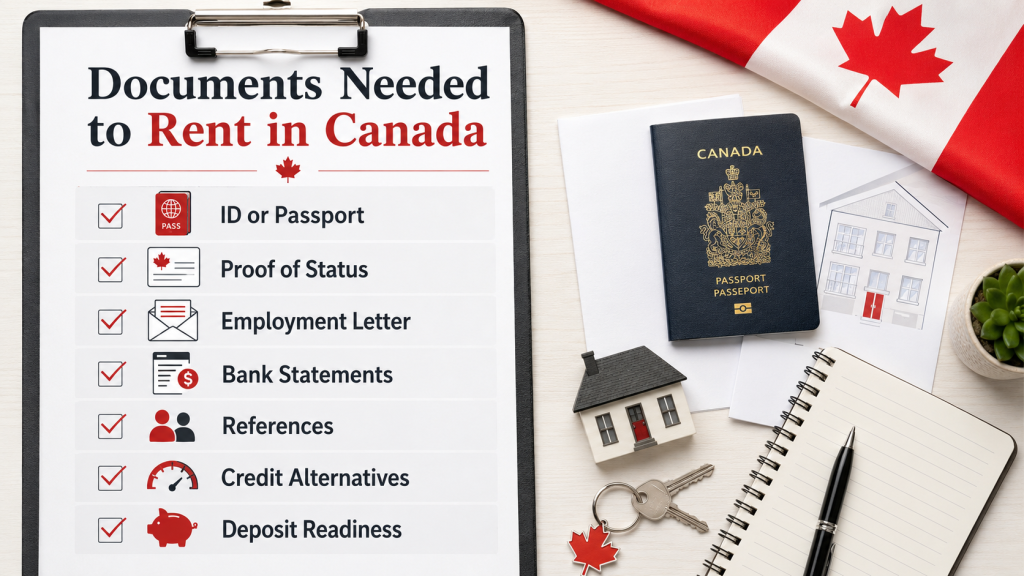
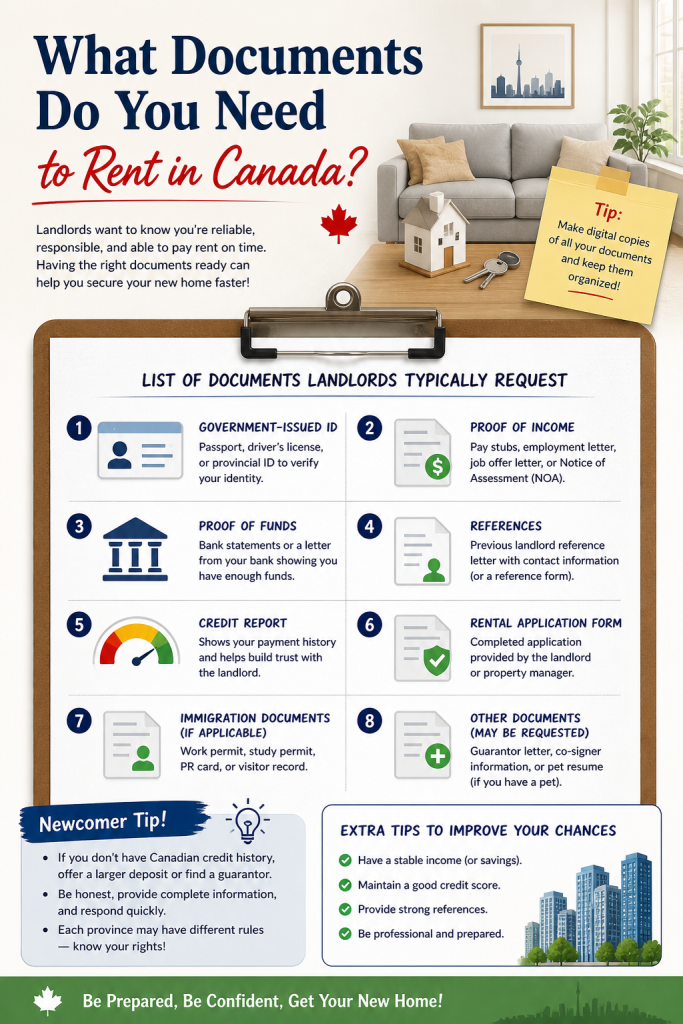
The exact
documents needed to rent in Canada
can vary, but newcomers are commonly asked for the following:
Valid passport or government-issued identification
Proof of status in Canada, such as a PR card, study permit, or work permit
Employment letter or job offer letter, if employed
Recent pay stubs, if available
Canadian bank statements or proof of savings
Student documents, if applicable
References from landlords, employers, professors, or professionals
Credit report, if available
Letter of explanation if you do not have Canadian credit history
Funds for required deposits and first rent payment
You may not need every document for every rental application, but preparing these items can help you respond quickly when you find a suitable place.
1. Identification Documents
The first document category is identification. Landlords usually need to confirm who you are before approving a rental application. Common identification documents may include:
Passport
Canadian driver’s licence, if available
Provincial photo ID card, if available
PR card, if applicable
Study permit, if applicable
Work permit, if applicable
If you are newly arrived, you may not yet have a provincial ID card or Canadian driver’s licence. In that case, your passport and immigration or temporary status documents may be important parts of your application.
2. Proof of Status in Canada
Some landlords may ask for proof that you are legally allowed to live, study, or work in Canada. This does not mean every landlord will ask for the same documents, but newcomers should be ready to show basic status documents when appropriate. Examples may include:
Permanent resident card
Confirmation of permanent residence, if newly landed
Study permit
Work permit
Valid visitor record, if relevant to your situation
Be careful with sensitive documents. You should not send personal documents to random people online before confirming that the rental listing and landlord are legitimate.
3. Proof of Income or Employment
Proof of income is one of the most important parts of a rental application. Landlords commonly want to know whether you can afford the monthly rent. If you are employed in Canada, useful documents may include:
Employment letter
Job offer letter
Recent pay stubs
Employment contract, if applicable
Direct deposit records, if available
An employment letter may include your job title, employer name, employment start date, employment type, and income information. If you are new to your job, a job offer letter may help explain your situation. If you are still job searching, you may need to rely more on proof of savings, student funding, a guarantor, or other supporting documents. Related guide:
How to Find Your First Job in Canada as a Newcomer
4. Bank Statements or Proof of Savings
For newcomers without Canadian employment history, bank statements can be especially important. They may help show that you have enough funds to pay rent while you settle in Canada. Possible proof of funds may include:
Canadian bank statements
Recent statements from a bank in your home country
Proof of savings
Guaranteed Investment Certificate, often used by international students
Scholarship or funding letters, if applicable
If your bank statements are from outside Canada, a landlord may not understand the bank name, currency, or document format. You may need to provide a simple explanation, translated documents if necessary, or Canadian bank statements after opening an account. Related guide:
How to Open a Bank Account in Canada as a Newcomer
5. Credit History or Credit Alternatives
Many rental applications in Canada include a credit check. This can be difficult for newcomers because Canadian credit history usually takes time to build. If you do not have Canadian credit history, you can prepare alternatives such as:
A short letter explaining that you are new to Canada
Proof of savings
Employment letter or job offer
References from employers or previous landlords
A guarantor or co-signer, if available and appropriate
Proof that you have paid rent on time in another country, if available
Do not panic if you do not have Canadian credit history yet. Many newcomers face the same situation. The key is to explain your situation clearly and provide other documents that show reliability. Related guide:
How to Rent an Apartment in Canada Without Credit History
6. References
References help landlords understand whether you are reliable. If you have rented before, previous landlord references can be helpful. If you have not rented before, other professional references may still support your application. Possible references include:
Previous landlords
Current or former employers
Professors or academic supervisors
Professional mentors
Community or settlement workers, if appropriate
Always ask permission before sharing someone’s name, phone number, or email address as a reference.
7. Student Documents
International students may need a slightly different rental package, especially if they do not have full-time employment in Canada. Useful student documents may include:
Letter of acceptance from a Canadian school
Proof of enrolment
Study permit
Student ID, if available
Proof of scholarship or funding
GIC documents, if applicable
Bank statements
Guarantor information, if required
Students should also check whether the rental location is close to campus, public transit, grocery stores, and essential services.
8. Deposit and First Payment Readiness
Once your rental application is approved, you may need to pay certain amounts before moving in. Deposit rules can vary by province or territory, so newcomers should always check official provincial rental rules before paying money. Common payment requests may include:
First month’s rent
Last month’s rent deposit, depending on province
Security or damage deposit, depending on province
Key or fob deposit, where allowed
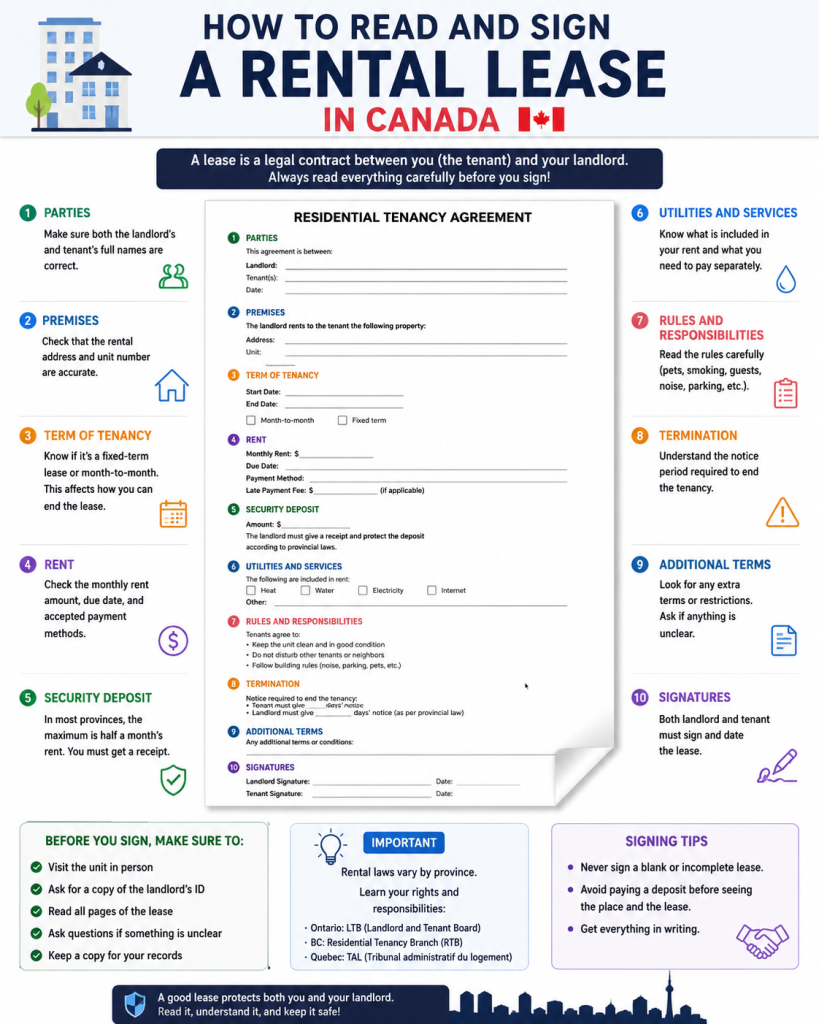
Be careful before sending money. Avoid paying large deposits before confirming the rental is real, seeing the unit when possible, and reviewing the lease agreement. Related guide:
Cost of Living in Canada for Newcomers
Quick Table: Common Rental Documents for Newcomers
Document Type
Examples
Why It May Be Asked
Identification
Passport, provincial ID, PR card
To confirm who you are
Status in Canada
Study permit, work permit, PR documents
To understand your situation in Canada
Income
Employment letter, job offer, pay stubs
To assess ability to pay rent
Funds
Bank statements, savings proof, GIC
To show financial stability
Credit
Credit report or explanation letter
To evaluate payment history
References
Landlord, employer, professor, professional contact
To confirm reliability
Common Mistakes to Avoid
Sending Documents Too Early
Do not send passports, permits, bank statements, or other sensitive documents before you are confident the rental listing and landlord are legitimate.
Paying Before Verifying the Rental
Be cautious if someone asks for money before you view the unit, sign a lease, or confirm ownership or management authority.
Not Checking Provincial Rules
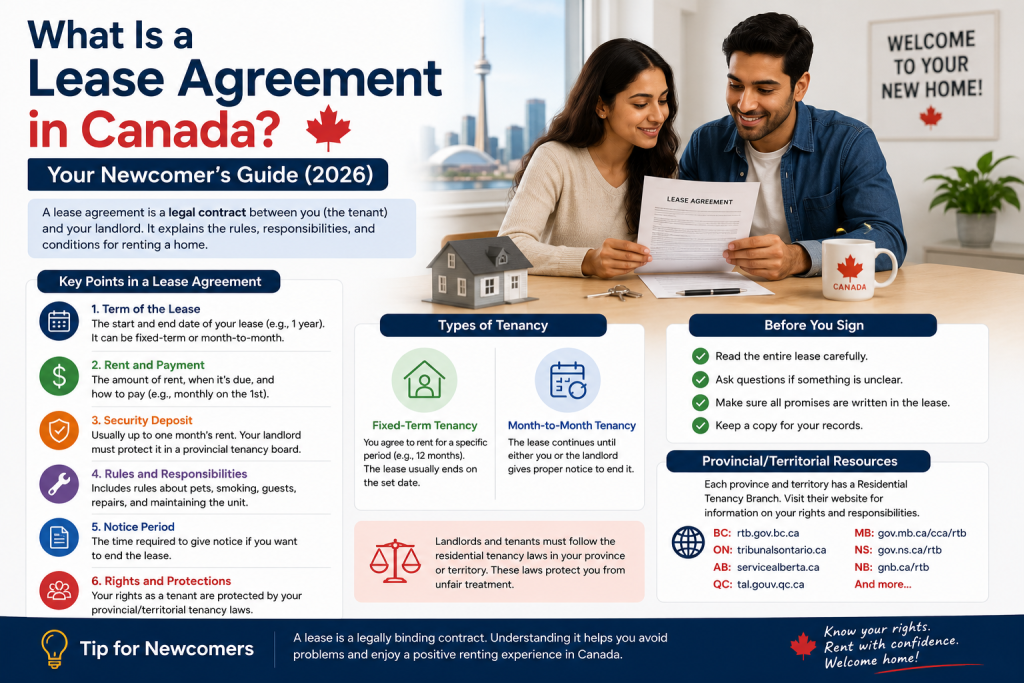
Rental rules vary across Canada. Deposit rules, notice periods, lease forms, and tenant protections may differ by province or territory.
Using One Generic Application for Every Rental
Each rental situation is different. A student rental, family apartment, shared room, and condo rental may each require different supporting documents.
Ignoring Total Housing Costs
Rent is only one part of housing costs. You may also need to budget for utilities, internet, tenant insurance, laundry, parking, transportation, and furniture.
Frequently Asked Questions (FAQ)
What documents are commonly needed to rent in Canada as a newcomer?
The most common documents include identification, proof of status in Canada, proof of income or savings, bank statements, references, and credit information if available. The exact documents needed to rent in Canada can vary by landlord, province, and rental type.
Can newcomers rent in Canada without Canadian credit history?
Yes, some newcomers can rent without Canadian credit history, but they may need to provide alternative documents. These may include proof of savings, an employment letter, a job offer letter, references, a guarantor, or a short explanation letter about being new to Canada.
Do international students need different documents to rent in Canada?
International students may be asked for a study permit, school acceptance letter, proof of enrolment, student ID, GIC documents, scholarship information, bank statements, or guarantor details. Requirements can vary depending on the landlord and the type of housing.
Should I give my passport or bank statement to a landlord?
A landlord may ask to verify identity or financial stability, but newcomers should be careful with sensitive documents. Do not send private documents to suspicious listings or unknown people before verifying that the rental opportunity is legitimate.
How much deposit do newcomers need to rent in Canada?
Deposit rules vary by province and territory. Some provinces commonly use first and last month’s rent, while others may allow security or damage deposits. Always check the official provincial or territorial rental authority before paying any deposit.
Disclaimer
This article is for general information only and does not provide financial, legal, tax, immigration, housing, or professional advice. Rental rules, document requirements, deposits, fees, and programs may change and may vary by province, city, landlord, and personal situation. Always check official sources or speak with a qualified professional before making decisions.
Sources and Official Resources
Canada Mortgage and Housing Corporation
— housing and rental information in Canada.
Immigration, Refugees and Citizenship Canada
— official immigration and status information.
Financial Consumer Agency of Canada
— financial consumer information and banking resources.
Ontario rental rights and responsibilities
— example of a provincial rental information page.
Provincial or territorial rental authority:
Rental rules vary across Canada. Search your province or territory’s official landlord and tenant website before signing a lease or paying a deposit.
Conclusion
Preparing the
documents needed to rent in Canada
can make your housing search less stressful and more organized. Newcomers should focus on identification, proof of status, proof of income or savings, references, credit alternatives, and deposit readiness. You may not have every document a landlord asks for, especially if you are new to Canada and do not yet have Canadian credit history. That is common. The best approach is to be organized, explain your situation clearly, protect your personal information, and verify rental rules through official sources before signing documents or sending money.
Banking
Documents needed to rent in Canada
can be easier to prepare when newcomers understand what landlords commonly ask for, how to show proof of income, and how to explain limited Canadian credit history. Arriving in Canada as a newcomer brings many exciting opportunities, but finding housing is often one of the first major tasks. Rental requirements can vary by province, city, landlord, property type, and rental market conditions. That is why it helps to organize your documents before you start applying for apartments, basement units, condos, student housing, or shared accommodation. This guide explains the most common documents newcomers may need when renting in Canada, including identification, proof of status, proof of income, bank statements, references, credit history alternatives, and deposit information.
Who This Guide Is For
This guide is for newcomers who are preparing to rent a place in Canada for the first time. It may be useful for:
New permanent residents
International students
Temporary workers
Open work permit holders
Newcomers without Canadian credit history
People moving between Canadian cities
People looking for their first apartment in Canada
People with different immigration or temporary status documents, depending on their situation
The goal is to help you prepare a clear rental application package and avoid common mistakes during your housing search.
Documents Needed to Rent in Canada as a Newcomer
Why Rental Documents Matter in Canada
Landlords in Canada usually want to understand whether an applicant can pay rent on time, follow the lease agreement, and take care of the rental property. Because many newcomers do not yet have Canadian credit history, Canadian references, or long employment history in Canada, documents become especially important. A well-prepared rental application can help you show:
Your identity
Your legal status or reason for being in Canada
Your ability to pay rent
Your employment or study situation
Your rental history, if available
Your references
Your understanding of the rental process
Having your documents ready does not guarantee approval, but it can make the rental process smoother and more professional.
Documents Needed to Rent in Canada: Main Checklist
The exact
documents needed to rent in Canada
can vary, but newcomers are commonly asked for the following:
Valid passport or government-issued identification
Proof of status in Canada, such as a PR card, study permit, or work permit
Employment letter or job offer letter, if employed
Recent pay stubs, if available
Canadian bank statements or proof of savings
Student documents, if applicable
References from landlords, employers, professors, or professionals
Credit report, if available
Letter of explanation if you do not have Canadian credit history
Funds for required deposits and first rent payment
You may not need every document for every rental application, but preparing these items can help you respond quickly when you find a suitable place.
1. Identification Documents
The first document category is identification. Landlords usually need to confirm who you are before approving a rental application. Common identification documents may include:
Passport
Canadian driver’s licence, if available
Provincial photo ID card, if available
PR card, if applicable
Study permit, if applicable
Work permit, if applicable
If you are newly arrived, you may not yet have a provincial ID card or Canadian driver’s licence. In that case, your passport and immigration or temporary status documents may be important parts of your application.
2. Proof of Status in Canada
Some landlords may ask for proof that you are legally allowed to live, study, or work in Canada. This does not mean every landlord will ask for the same documents, but newcomers should be ready to show basic status documents when appropriate. Examples may include:
Permanent resident card
Confirmation of permanent residence, if newly landed
Study permit
Work permit
Valid visitor record, if relevant to your situation
Be careful with sensitive documents. You should not send personal documents to random people online before confirming that the rental listing and landlord are legitimate.
3. Proof of Income or Employment
Proof of income is one of the most important parts of a rental application. Landlords commonly want to know whether you can afford the monthly rent. If you are employed in Canada, useful documents may include:
Employment letter
Job offer letter
Recent pay stubs
Employment contract, if applicable
Direct deposit records, if available
An employment letter may include your job title, employer name, employment start date, employment type, and income information. If you are new to your job, a job offer letter may help explain your situation. If you are still job searching, you may need to rely more on proof of savings, student funding, a guarantor, or other supporting documents. Related guide:
How to Find Your First Job in Canada as a Newcomer
4. Bank Statements or Proof of Savings
For newcomers without Canadian employment history, bank statements can be especially important. They may help show that you have enough funds to pay rent while you settle in Canada. Possible proof of funds may include:
Canadian bank statements
Recent statements from a bank in your home country
Proof of savings
Guaranteed Investment Certificate, often used by international students
Scholarship or funding letters, if applicable
If your bank statements are from outside Canada, a landlord may not understand the bank name, currency, or document format. You may need to provide a simple explanation, translated documents if necessary, or Canadian bank statements after opening an account. Related guide:
How to Open a Bank Account in Canada as a Newcomer
5. Credit History or Credit Alternatives
Many rental applications in Canada include a credit check. This can be difficult for newcomers because Canadian credit history usually takes time to build. If you do not have Canadian credit history, you can prepare alternatives such as:
A short letter explaining that you are new to Canada
Proof of savings
Employment letter or job offer
References from employers or previous landlords
A guarantor or co-signer, if available and appropriate
Proof that you have paid rent on time in another country, if available
Do not panic if you do not have Canadian credit history yet. Many newcomers face the same situation. The key is to explain your situation clearly and provide other documents that show reliability. Related guide:
How to Rent an Apartment in Canada Without Credit History
6. References
References help landlords understand whether you are reliable. If you have rented before, previous landlord references can be helpful. If you have not rented before, other professional references may still support your application. Possible references include:
Previous landlords
Current or former employers
Professors or academic supervisors
Professional mentors
Community or settlement workers, if appropriate
Always ask permission before sharing someone’s name, phone number, or email address as a reference.
7. Student Documents
International students may need a slightly different rental package, especially if they do not have full-time employment in Canada. Useful student documents may include:
Letter of acceptance from a Canadian school
Proof of enrolment
Study permit
Student ID, if available
Proof of scholarship or funding
GIC documents, if applicable
Bank statements
Guarantor information, if required
Students should also check whether the rental location is close to campus, public transit, grocery stores, and essential services.
8. Deposit and First Payment Readiness
Once your rental application is approved, you may need to pay certain amounts before moving in. Deposit rules can vary by province or territory, so newcomers should always check official provincial rental rules before paying money. Common payment requests may include:
First month’s rent
Last month’s rent deposit, depending on province
Security or damage deposit, depending on province
Key or fob deposit, where allowed
Be careful before sending money. Avoid paying large deposits before confirming the rental is real, seeing the unit when possible, and reviewing the lease agreement. Related guide:
Cost of Living in Canada for Newcomers
Quick Table: Common Rental Documents for Newcomers
Document Type
Examples
Why It May Be Asked
Identification
Passport, provincial ID, PR card
To confirm who you are
Status in Canada
Study permit, work permit, PR documents
To understand your situation in Canada
Income
Employment letter, job offer, pay stubs
To assess ability to pay rent
Funds
Bank statements, savings proof, GIC
To show financial stability
Credit
Credit report or explanation letter
To evaluate payment history
References
Landlord, employer, professor, professional contact
To confirm reliability
Common Mistakes to Avoid
Sending Documents Too Early
Do not send passports, permits, bank statements, or other sensitive documents before you are confident the rental listing and landlord are legitimate.
Paying Before Verifying the Rental
Be cautious if someone asks for money before you view the unit, sign a lease, or confirm ownership or management authority.
Not Checking Provincial Rules
Rental rules vary across Canada. Deposit rules, notice periods, lease forms, and tenant protections may differ by province or territory.
Using One Generic Application for Every Rental
Each rental situation is different. A student rental, family apartment, shared room, and condo rental may each require different supporting documents.
Ignoring Total Housing Costs
Rent is only one part of housing costs. You may also need to budget for utilities, internet, tenant insurance, laundry, parking, transportation, and furniture.
Frequently Asked Questions (FAQ)
What documents are commonly needed to rent in Canada as a newcomer?
The most common documents include identification, proof of status in Canada, proof of income or savings, bank statements, references, and credit information if available. The exact documents needed to rent in Canada can vary by landlord, province, and rental type.
Can newcomers rent in Canada without Canadian credit history?
Yes, some newcomers can rent without Canadian credit history, but they may need to provide alternative documents. These may include proof of savings, an employment letter, a job offer letter, references, a guarantor, or a short explanation letter about being new to Canada.
Do international students need different documents to rent in Canada?
International students may be asked for a study permit, school acceptance letter, proof of enrolment, student ID, GIC documents, scholarship information, bank statements, or guarantor details. Requirements can vary depending on the landlord and the type of housing.
Should I give my passport or bank statement to a landlord?
A landlord may ask to verify identity or financial stability, but newcomers should be careful with sensitive documents. Do not send private documents to suspicious listings or unknown people before verifying that the rental opportunity is legitimate.
How much deposit do newcomers need to rent in Canada?
Deposit rules vary by province and territory. Some provinces commonly use first and last month’s rent, while others may allow security or damage deposits. Always check the official provincial or territorial rental authority before paying any deposit.
Disclaimer
This article is for general information only and does not provide financial, legal, tax, immigration, housing, or professional advice. Rental rules, document requirements, deposits, fees, and programs may change and may vary by province, city, landlord, and personal situation. Always check official sources or speak with a qualified professional before making decisions.
Sources and Official Resources
Canada Mortgage and Housing Corporation
— housing and rental information in Canada.
Immigration, Refugees and Citizenship Canada
— official immigration and status information.
Financial Consumer Agency of Canada
— financial consumer information and banking resources.
Ontario rental rights and responsibilities
— example of a provincial rental information page.
Provincial or territorial rental authority:
Rental rules vary across Canada. Search your province or territory’s official landlord and tenant website before signing a lease or paying a deposit.
Conclusion
Preparing the
documents needed to rent in Canada
can make your housing search less stressful and more organized. Newcomers should focus on identification, proof of status, proof of income or savings, references, credit alternatives, and deposit readiness. You may not have every document a landlord asks for, especially if you are new to Canada and do not yet have Canadian credit history. That is common. The best approach is to be organized, explain your situation clearly, protect your personal information, and verify rental rules through official sources before signing documents or sending money.
Cost of Living
Documents needed to rent in Canada
can be easier to prepare when newcomers understand what landlords commonly ask for, how to show proof of income, and how to explain limited Canadian credit history. Arriving in Canada as a newcomer brings many exciting opportunities, but finding housing is often one of the first major tasks. Rental requirements can vary by province, city, landlord, property type, and rental market conditions. That is why it helps to organize your documents before you start applying for apartments, basement units, condos, student housing, or shared accommodation. This guide explains the most common documents newcomers may need when renting in Canada, including identification, proof of status, proof of income, bank statements, references, credit history alternatives, and deposit information.
Who This Guide Is For
This guide is for newcomers who are preparing to rent a place in Canada for the first time. It may be useful for:
New permanent residents
International students
Temporary workers
Open work permit holders
Newcomers without Canadian credit history
People moving between Canadian cities
People looking for their first apartment in Canada
People with different immigration or temporary status documents, depending on their situation
The goal is to help you prepare a clear rental application package and avoid common mistakes during your housing search.
Documents Needed to Rent in Canada as a Newcomer
Why Rental Documents Matter in Canada
Landlords in Canada usually want to understand whether an applicant can pay rent on time, follow the lease agreement, and take care of the rental property. Because many newcomers do not yet have Canadian credit history, Canadian references, or long employment history in Canada, documents become especially important. A well-prepared rental application can help you show:
Your identity
Your legal status or reason for being in Canada
Your ability to pay rent
Your employment or study situation
Your rental history, if available
Your references
Your understanding of the rental process
Having your documents ready does not guarantee approval, but it can make the rental process smoother and more professional.
Documents Needed to Rent in Canada: Main Checklist
The exact
documents needed to rent in Canada
can vary, but newcomers are commonly asked for the following:
Valid passport or government-issued identification
Proof of status in Canada, such as a PR card, study permit, or work permit
Employment letter or job offer letter, if employed
Recent pay stubs, if available
Canadian bank statements or proof of savings
Student documents, if applicable
References from landlords, employers, professors, or professionals
Credit report, if available
Letter of explanation if you do not have Canadian credit history
Funds for required deposits and first rent payment
You may not need every document for every rental application, but preparing these items can help you respond quickly when you find a suitable place.
1. Identification Documents
The first document category is identification. Landlords usually need to confirm who you are before approving a rental application. Common identification documents may include:
Passport
Canadian driver’s licence, if available
Provincial photo ID card, if available
PR card, if applicable
Study permit, if applicable
Work permit, if applicable
If you are newly arrived, you may not yet have a provincial ID card or Canadian driver’s licence. In that case, your passport and immigration or temporary status documents may be important parts of your application.
2. Proof of Status in Canada
Some landlords may ask for proof that you are legally allowed to live, study, or work in Canada. This does not mean every landlord will ask for the same documents, but newcomers should be ready to show basic status documents when appropriate. Examples may include:
Permanent resident card
Confirmation of permanent residence, if newly landed
Study permit
Work permit
Valid visitor record, if relevant to your situation
Be careful with sensitive documents. You should not send personal documents to random people online before confirming that the rental listing and landlord are legitimate.
3. Proof of Income or Employment
Proof of income is one of the most important parts of a rental application. Landlords commonly want to know whether you can afford the monthly rent. If you are employed in Canada, useful documents may include:
Employment letter
Job offer letter
Recent pay stubs
Employment contract, if applicable
Direct deposit records, if available
An employment letter may include your job title, employer name, employment start date, employment type, and income information. If you are new to your job, a job offer letter may help explain your situation. If you are still job searching, you may need to rely more on proof of savings, student funding, a guarantor, or other supporting documents. Related guide:
How to Find Your First Job in Canada as a Newcomer
4. Bank Statements or Proof of Savings
For newcomers without Canadian employment history, bank statements can be especially important. They may help show that you have enough funds to pay rent while you settle in Canada. Possible proof of funds may include:
Canadian bank statements
Recent statements from a bank in your home country
Proof of savings
Guaranteed Investment Certificate, often used by international students
Scholarship or funding letters, if applicable
If your bank statements are from outside Canada, a landlord may not understand the bank name, currency, or document format. You may need to provide a simple explanation, translated documents if necessary, or Canadian bank statements after opening an account. Related guide:
How to Open a Bank Account in Canada as a Newcomer
5. Credit History or Credit Alternatives
Many rental applications in Canada include a credit check. This can be difficult for newcomers because Canadian credit history usually takes time to build. If you do not have Canadian credit history, you can prepare alternatives such as:
A short letter explaining that you are new to Canada
Proof of savings
Employment letter or job offer
References from employers or previous landlords
A guarantor or co-signer, if available and appropriate
Proof that you have paid rent on time in another country, if available
Do not panic if you do not have Canadian credit history yet. Many newcomers face the same situation. The key is to explain your situation clearly and provide other documents that show reliability. Related guide:
How to Rent an Apartment in Canada Without Credit History
6. References
References help landlords understand whether you are reliable. If you have rented before, previous landlord references can be helpful. If you have not rented before, other professional references may still support your application. Possible references include:
Previous landlords
Current or former employers
Professors or academic supervisors
Professional mentors
Community or settlement workers, if appropriate
Always ask permission before sharing someone’s name, phone number, or email address as a reference.
7. Student Documents
International students may need a slightly different rental package, especially if they do not have full-time employment in Canada. Useful student documents may include:
Letter of acceptance from a Canadian school
Proof of enrolment
Study permit
Student ID, if available
Proof of scholarship or funding
GIC documents, if applicable
Bank statements
Guarantor information, if required
Students should also check whether the rental location is close to campus, public transit, grocery stores, and essential services.
8. Deposit and First Payment Readiness
Once your rental application is approved, you may need to pay certain amounts before moving in. Deposit rules can vary by province or territory, so newcomers should always check official provincial rental rules before paying money. Common payment requests may include:
First month’s rent
Last month’s rent deposit, depending on province
Security or damage deposit, depending on province
Key or fob deposit, where allowed
Be careful before sending money. Avoid paying large deposits before confirming the rental is real, seeing the unit when possible, and reviewing the lease agreement. Related guide:
Cost of Living in Canada for Newcomers
Quick Table: Common Rental Documents for Newcomers
Document Type
Examples
Why It May Be Asked
Identification
Passport, provincial ID, PR card
To confirm who you are
Status in Canada
Study permit, work permit, PR documents
To understand your situation in Canada
Income
Employment letter, job offer, pay stubs
To assess ability to pay rent
Funds
Bank statements, savings proof, GIC
To show financial stability
Credit
Credit report or explanation letter
To evaluate payment history
References
Landlord, employer, professor, professional contact
To confirm reliability
Common Mistakes to Avoid
Sending Documents Too Early
Do not send passports, permits, bank statements, or other sensitive documents before you are confident the rental listing and landlord are legitimate.
Paying Before Verifying the Rental
Be cautious if someone asks for money before you view the unit, sign a lease, or confirm ownership or management authority.
Not Checking Provincial Rules
Rental rules vary across Canada. Deposit rules, notice periods, lease forms, and tenant protections may differ by province or territory.
Using One Generic Application for Every Rental
Each rental situation is different. A student rental, family apartment, shared room, and condo rental may each require different supporting documents.
Ignoring Total Housing Costs
Rent is only one part of housing costs. You may also need to budget for utilities, internet, tenant insurance, laundry, parking, transportation, and furniture.
Frequently Asked Questions (FAQ)
What documents are commonly needed to rent in Canada as a newcomer?
The most common documents include identification, proof of status in Canada, proof of income or savings, bank statements, references, and credit information if available. The exact documents needed to rent in Canada can vary by landlord, province, and rental type.
Can newcomers rent in Canada without Canadian credit history?
Yes, some newcomers can rent without Canadian credit history, but they may need to provide alternative documents. These may include proof of savings, an employment letter, a job offer letter, references, a guarantor, or a short explanation letter about being new to Canada.
Do international students need different documents to rent in Canada?
International students may be asked for a study permit, school acceptance letter, proof of enrolment, student ID, GIC documents, scholarship information, bank statements, or guarantor details. Requirements can vary depending on the landlord and the type of housing.
Should I give my passport or bank statement to a landlord?
A landlord may ask to verify identity or financial stability, but newcomers should be careful with sensitive documents. Do not send private documents to suspicious listings or unknown people before verifying that the rental opportunity is legitimate.
How much deposit do newcomers need to rent in Canada?
Deposit rules vary by province and territory. Some provinces commonly use first and last month’s rent, while others may allow security or damage deposits. Always check the official provincial or territorial rental authority before paying any deposit.
Disclaimer
This article is for general information only and does not provide financial, legal, tax, immigration, housing, or professional advice. Rental rules, document requirements, deposits, fees, and programs may change and may vary by province, city, landlord, and personal situation. Always check official sources or speak with a qualified professional before making decisions.
Sources and Official Resources
Canada Mortgage and Housing Corporation
— housing and rental information in Canada.
Immigration, Refugees and Citizenship Canada
— official immigration and status information.
Financial Consumer Agency of Canada
— financial consumer information and banking resources.
Ontario rental rights and responsibilities
— example of a provincial rental information page.
Provincial or territorial rental authority:
Rental rules vary across Canada. Search your province or territory’s official landlord and tenant website before signing a lease or paying a deposit.
Conclusion
Preparing the
documents needed to rent in Canada
can make your housing search less stressful and more organized. Newcomers should focus on identification, proof of status, proof of income or savings, references, credit alternatives, and deposit readiness. You may not have every document a landlord asks for, especially if you are new to Canada and do not yet have Canadian credit history. That is common. The best approach is to be organized, explain your situation clearly, protect your personal information, and verify rental rules through official sources before signing documents or sending money.
Credit Score
Documents needed to rent in Canada
can be easier to prepare when newcomers understand what landlords commonly ask for, how to show proof of income, and how to explain limited Canadian credit history. Arriving in Canada as a newcomer brings many exciting opportunities, but finding housing is often one of the first major tasks. Rental requirements can vary by province, city, landlord, property type, and rental market conditions. That is why it helps to organize your documents before you start applying for apartments, basement units, condos, student housing, or shared accommodation. This guide explains the most common documents newcomers may need when renting in Canada, including identification, proof of status, proof of income, bank statements, references, credit history alternatives, and deposit information.
Who This Guide Is For
This guide is for newcomers who are preparing to rent a place in Canada for the first time. It may be useful for:
New permanent residents
International students
Temporary workers
Open work permit holders
Newcomers without Canadian credit history
People moving between Canadian cities
People looking for their first apartment in Canada
People with different immigration or temporary status documents, depending on their situation
The goal is to help you prepare a clear rental application package and avoid common mistakes during your housing search.
Documents Needed to Rent in Canada as a Newcomer
Why Rental Documents Matter in Canada
Landlords in Canada usually want to understand whether an applicant can pay rent on time, follow the lease agreement, and take care of the rental property. Because many newcomers do not yet have Canadian credit history, Canadian references, or long employment history in Canada, documents become especially important. A well-prepared rental application can help you show:
Your identity
Your legal status or reason for being in Canada
Your ability to pay rent
Your employment or study situation
Your rental history, if available
Your references
Your understanding of the rental process
Having your documents ready does not guarantee approval, but it can make the rental process smoother and more professional.
Documents Needed to Rent in Canada: Main Checklist
The exact
documents needed to rent in Canada
can vary, but newcomers are commonly asked for the following:
Valid passport or government-issued identification
Proof of status in Canada, such as a PR card, study permit, or work permit
Employment letter or job offer letter, if employed
Recent pay stubs, if available
Canadian bank statements or proof of savings
Student documents, if applicable
References from landlords, employers, professors, or professionals
Credit report, if available
Letter of explanation if you do not have Canadian credit history
Funds for required deposits and first rent payment
You may not need every document for every rental application, but preparing these items can help you respond quickly when you find a suitable place.
1. Identification Documents
The first document category is identification. Landlords usually need to confirm who you are before approving a rental application. Common identification documents may include:
Passport
Canadian driver’s licence, if available
Provincial photo ID card, if available
PR card, if applicable
Study permit, if applicable
Work permit, if applicable
If you are newly arrived, you may not yet have a provincial ID card or Canadian driver’s licence. In that case, your passport and immigration or temporary status documents may be important parts of your application.
2. Proof of Status in Canada
Some landlords may ask for proof that you are legally allowed to live, study, or work in Canada. This does not mean every landlord will ask for the same documents, but newcomers should be ready to show basic status documents when appropriate. Examples may include:
Permanent resident card
Confirmation of permanent residence, if newly landed
Study permit
Work permit
Valid visitor record, if relevant to your situation
Be careful with sensitive documents. You should not send personal documents to random people online before confirming that the rental listing and landlord are legitimate.
3. Proof of Income or Employment
Proof of income is one of the most important parts of a rental application. Landlords commonly want to know whether you can afford the monthly rent. If you are employed in Canada, useful documents may include:
Employment letter
Job offer letter
Recent pay stubs
Employment contract, if applicable
Direct deposit records, if available
An employment letter may include your job title, employer name, employment start date, employment type, and income information. If you are new to your job, a job offer letter may help explain your situation. If you are still job searching, you may need to rely more on proof of savings, student funding, a guarantor, or other supporting documents. Related guide:
How to Find Your First Job in Canada as a Newcomer
4. Bank Statements or Proof of Savings
For newcomers without Canadian employment history, bank statements can be especially important. They may help show that you have enough funds to pay rent while you settle in Canada. Possible proof of funds may include:
Canadian bank statements
Recent statements from a bank in your home country
Proof of savings
Guaranteed Investment Certificate, often used by international students
Scholarship or funding letters, if applicable
If your bank statements are from outside Canada, a landlord may not understand the bank name, currency, or document format. You may need to provide a simple explanation, translated documents if necessary, or Canadian bank statements after opening an account. Related guide:
How to Open a Bank Account in Canada as a Newcomer
5. Credit History or Credit Alternatives
Many rental applications in Canada include a credit check. This can be difficult for newcomers because Canadian credit history usually takes time to build. If you do not have Canadian credit history, you can prepare alternatives such as:
A short letter explaining that you are new to Canada
Proof of savings
Employment letter or job offer
References from employers or previous landlords
A guarantor or co-signer, if available and appropriate
Proof that you have paid rent on time in another country, if available
Do not panic if you do not have Canadian credit history yet. Many newcomers face the same situation. The key is to explain your situation clearly and provide other documents that show reliability. Related guide:
How to Rent an Apartment in Canada Without Credit History
6. References
References help landlords understand whether you are reliable. If you have rented before, previous landlord references can be helpful. If you have not rented before, other professional references may still support your application. Possible references include:
Previous landlords
Current or former employers
Professors or academic supervisors
Professional mentors
Community or settlement workers, if appropriate
Always ask permission before sharing someone’s name, phone number, or email address as a reference.
7. Student Documents
International students may need a slightly different rental package, especially if they do not have full-time employment in Canada. Useful student documents may include:
Letter of acceptance from a Canadian school
Proof of enrolment
Study permit
Student ID, if available
Proof of scholarship or funding
GIC documents, if applicable
Bank statements
Guarantor information, if required
Students should also check whether the rental location is close to campus, public transit, grocery stores, and essential services.
8. Deposit and First Payment Readiness
Once your rental application is approved, you may need to pay certain amounts before moving in. Deposit rules can vary by province or territory, so newcomers should always check official provincial rental rules before paying money. Common payment requests may include:
First month’s rent
Last month’s rent deposit, depending on province
Security or damage deposit, depending on province
Key or fob deposit, where allowed
Be careful before sending money. Avoid paying large deposits before confirming the rental is real, seeing the unit when possible, and reviewing the lease agreement. Related guide:
Cost of Living in Canada for Newcomers
Quick Table: Common Rental Documents for Newcomers
Document Type
Examples
Why It May Be Asked
Identification
Passport, provincial ID, PR card
To confirm who you are
Status in Canada
Study permit, work permit, PR documents
To understand your situation in Canada
Income
Employment letter, job offer, pay stubs
To assess ability to pay rent
Funds
Bank statements, savings proof, GIC
To show financial stability
Credit
Credit report or explanation letter
To evaluate payment history
References
Landlord, employer, professor, professional contact
To confirm reliability
Common Mistakes to Avoid
Sending Documents Too Early
Do not send passports, permits, bank statements, or other sensitive documents before you are confident the rental listing and landlord are legitimate.
Paying Before Verifying the Rental
Be cautious if someone asks for money before you view the unit, sign a lease, or confirm ownership or management authority.
Not Checking Provincial Rules
Rental rules vary across Canada. Deposit rules, notice periods, lease forms, and tenant protections may differ by province or territory.
Using One Generic Application for Every Rental
Each rental situation is different. A student rental, family apartment, shared room, and condo rental may each require different supporting documents.
Ignoring Total Housing Costs
Rent is only one part of housing costs. You may also need to budget for utilities, internet, tenant insurance, laundry, parking, transportation, and furniture.
Frequently Asked Questions (FAQ)
What documents are commonly needed to rent in Canada as a newcomer?
The most common documents include identification, proof of status in Canada, proof of income or savings, bank statements, references, and credit information if available. The exact documents needed to rent in Canada can vary by landlord, province, and rental type.
Can newcomers rent in Canada without Canadian credit history?
Yes, some newcomers can rent without Canadian credit history, but they may need to provide alternative documents. These may include proof of savings, an employment letter, a job offer letter, references, a guarantor, or a short explanation letter about being new to Canada.
Do international students need different documents to rent in Canada?
International students may be asked for a study permit, school acceptance letter, proof of enrolment, student ID, GIC documents, scholarship information, bank statements, or guarantor details. Requirements can vary depending on the landlord and the type of housing.
Should I give my passport or bank statement to a landlord?
A landlord may ask to verify identity or financial stability, but newcomers should be careful with sensitive documents. Do not send private documents to suspicious listings or unknown people before verifying that the rental opportunity is legitimate.
How much deposit do newcomers need to rent in Canada?
Deposit rules vary by province and territory. Some provinces commonly use first and last month’s rent, while others may allow security or damage deposits. Always check the official provincial or territorial rental authority before paying any deposit.
Disclaimer
This article is for general information only and does not provide financial, legal, tax, immigration, housing, or professional advice. Rental rules, document requirements, deposits, fees, and programs may change and may vary by province, city, landlord, and personal situation. Always check official sources or speak with a qualified professional before making decisions.
Sources and Official Resources
Canada Mortgage and Housing Corporation
— housing and rental information in Canada.
Immigration, Refugees and Citizenship Canada
— official immigration and status information.
Financial Consumer Agency of Canada
— financial consumer information and banking resources.
Ontario rental rights and responsibilities
— example of a provincial rental information page.
Provincial or territorial rental authority:
Rental rules vary across Canada. Search your province or territory’s official landlord and tenant website before signing a lease or paying a deposit.
Conclusion
Preparing the
documents needed to rent in Canada
can make your housing search less stressful and more organized. Newcomers should focus on identification, proof of status, proof of income or savings, references, credit alternatives, and deposit readiness. You may not have every document a landlord asks for, especially if you are new to Canada and do not yet have Canadian credit history. That is common. The best approach is to be organized, explain your situation clearly, protect your personal information, and verify rental rules through official sources before signing documents or sending money.
Documents & Taxes
Documents needed to rent in Canada
can be easier to prepare when newcomers understand what landlords commonly ask for, how to show proof of income, and how to explain limited Canadian credit history. Arriving in Canada as a newcomer brings many exciting opportunities, but finding housing is often one of the first major tasks. Rental requirements can vary by province, city, landlord, property type, and rental market conditions. That is why it helps to organize your documents before you start applying for apartments, basement units, condos, student housing, or shared accommodation. This guide explains the most common documents newcomers may need when renting in Canada, including identification, proof of status, proof of income, bank statements, references, credit history alternatives, and deposit information.
Who This Guide Is For
This guide is for newcomers who are preparing to rent a place in Canada for the first time. It may be useful for:
New permanent residents
International students
Temporary workers
Open work permit holders
Newcomers without Canadian credit history
People moving between Canadian cities
People looking for their first apartment in Canada
People with different immigration or temporary status documents, depending on their situation
The goal is to help you prepare a clear rental application package and avoid common mistakes during your housing search.
Documents Needed to Rent in Canada as a Newcomer
Why Rental Documents Matter in Canada
Landlords in Canada usually want to understand whether an applicant can pay rent on time, follow the lease agreement, and take care of the rental property. Because many newcomers do not yet have Canadian credit history, Canadian references, or long employment history in Canada, documents become especially important. A well-prepared rental application can help you show:
Your identity
Your legal status or reason for being in Canada
Your ability to pay rent
Your employment or study situation
Your rental history, if available
Your references
Your understanding of the rental process
Having your documents ready does not guarantee approval, but it can make the rental process smoother and more professional.
Documents Needed to Rent in Canada: Main Checklist
The exact
documents needed to rent in Canada
can vary, but newcomers are commonly asked for the following:
Valid passport or government-issued identification
Proof of status in Canada, such as a PR card, study permit, or work permit
Employment letter or job offer letter, if employed
Recent pay stubs, if available
Canadian bank statements or proof of savings
Student documents, if applicable
References from landlords, employers, professors, or professionals
Credit report, if available
Letter of explanation if you do not have Canadian credit history
Funds for required deposits and first rent payment
You may not need every document for every rental application, but preparing these items can help you respond quickly when you find a suitable place.
1. Identification Documents
The first document category is identification. Landlords usually need to confirm who you are before approving a rental application. Common identification documents may include:
Passport
Canadian driver’s licence, if available
Provincial photo ID card, if available
PR card, if applicable
Study permit, if applicable
Work permit, if applicable
If you are newly arrived, you may not yet have a provincial ID card or Canadian driver’s licence. In that case, your passport and immigration or temporary status documents may be important parts of your application.
2. Proof of Status in Canada
Some landlords may ask for proof that you are legally allowed to live, study, or work in Canada. This does not mean every landlord will ask for the same documents, but newcomers should be ready to show basic status documents when appropriate. Examples may include:
Permanent resident card
Confirmation of permanent residence, if newly landed
Study permit
Work permit
Valid visitor record, if relevant to your situation
Be careful with sensitive documents. You should not send personal documents to random people online before confirming that the rental listing and landlord are legitimate.
3. Proof of Income or Employment
Proof of income is one of the most important parts of a rental application. Landlords commonly want to know whether you can afford the monthly rent. If you are employed in Canada, useful documents may include:
Employment letter
Job offer letter
Recent pay stubs
Employment contract, if applicable
Direct deposit records, if available
An employment letter may include your job title, employer name, employment start date, employment type, and income information. If you are new to your job, a job offer letter may help explain your situation. If you are still job searching, you may need to rely more on proof of savings, student funding, a guarantor, or other supporting documents. Related guide:
How to Find Your First Job in Canada as a Newcomer
4. Bank Statements or Proof of Savings
For newcomers without Canadian employment history, bank statements can be especially important. They may help show that you have enough funds to pay rent while you settle in Canada. Possible proof of funds may include:
Canadian bank statements
Recent statements from a bank in your home country
Proof of savings
Guaranteed Investment Certificate, often used by international students
Scholarship or funding letters, if applicable
If your bank statements are from outside Canada, a landlord may not understand the bank name, currency, or document format. You may need to provide a simple explanation, translated documents if necessary, or Canadian bank statements after opening an account. Related guide:
How to Open a Bank Account in Canada as a Newcomer
5. Credit History or Credit Alternatives
Many rental applications in Canada include a credit check. This can be difficult for newcomers because Canadian credit history usually takes time to build. If you do not have Canadian credit history, you can prepare alternatives such as:
A short letter explaining that you are new to Canada
Proof of savings
Employment letter or job offer
References from employers or previous landlords
A guarantor or co-signer, if available and appropriate
Proof that you have paid rent on time in another country, if available
Do not panic if you do not have Canadian credit history yet. Many newcomers face the same situation. The key is to explain your situation clearly and provide other documents that show reliability. Related guide:
How to Rent an Apartment in Canada Without Credit History
6. References
References help landlords understand whether you are reliable. If you have rented before, previous landlord references can be helpful. If you have not rented before, other professional references may still support your application. Possible references include:
Previous landlords
Current or former employers
Professors or academic supervisors
Professional mentors
Community or settlement workers, if appropriate
Always ask permission before sharing someone’s name, phone number, or email address as a reference.
7. Student Documents
International students may need a slightly different rental package, especially if they do not have full-time employment in Canada. Useful student documents may include:
Letter of acceptance from a Canadian school
Proof of enrolment
Study permit
Student ID, if available
Proof of scholarship or funding
GIC documents, if applicable
Bank statements
Guarantor information, if required
Students should also check whether the rental location is close to campus, public transit, grocery stores, and essential services.
8. Deposit and First Payment Readiness
Once your rental application is approved, you may need to pay certain amounts before moving in. Deposit rules can vary by province or territory, so newcomers should always check official provincial rental rules before paying money. Common payment requests may include:
First month’s rent
Last month’s rent deposit, depending on province
Security or damage deposit, depending on province
Key or fob deposit, where allowed
Be careful before sending money. Avoid paying large deposits before confirming the rental is real, seeing the unit when possible, and reviewing the lease agreement. Related guide:
Cost of Living in Canada for Newcomers
Quick Table: Common Rental Documents for Newcomers
Document Type
Examples
Why It May Be Asked
Identification
Passport, provincial ID, PR card
To confirm who you are
Status in Canada
Study permit, work permit, PR documents
To understand your situation in Canada
Income
Employment letter, job offer, pay stubs
To assess ability to pay rent
Funds
Bank statements, savings proof, GIC
To show financial stability
Credit
Credit report or explanation letter
To evaluate payment history
References
Landlord, employer, professor, professional contact
To confirm reliability
Common Mistakes to Avoid
Sending Documents Too Early
Do not send passports, permits, bank statements, or other sensitive documents before you are confident the rental listing and landlord are legitimate.
Paying Before Verifying the Rental
Be cautious if someone asks for money before you view the unit, sign a lease, or confirm ownership or management authority.
Not Checking Provincial Rules
Rental rules vary across Canada. Deposit rules, notice periods, lease forms, and tenant protections may differ by province or territory.
Using One Generic Application for Every Rental
Each rental situation is different. A student rental, family apartment, shared room, and condo rental may each require different supporting documents.
Ignoring Total Housing Costs
Rent is only one part of housing costs. You may also need to budget for utilities, internet, tenant insurance, laundry, parking, transportation, and furniture.
Frequently Asked Questions (FAQ)
What documents are commonly needed to rent in Canada as a newcomer?
The most common documents include identification, proof of status in Canada, proof of income or savings, bank statements, references, and credit information if available. The exact documents needed to rent in Canada can vary by landlord, province, and rental type.
Can newcomers rent in Canada without Canadian credit history?
Yes, some newcomers can rent without Canadian credit history, but they may need to provide alternative documents. These may include proof of savings, an employment letter, a job offer letter, references, a guarantor, or a short explanation letter about being new to Canada.
Do international students need different documents to rent in Canada?
International students may be asked for a study permit, school acceptance letter, proof of enrolment, student ID, GIC documents, scholarship information, bank statements, or guarantor details. Requirements can vary depending on the landlord and the type of housing.
Should I give my passport or bank statement to a landlord?
A landlord may ask to verify identity or financial stability, but newcomers should be careful with sensitive documents. Do not send private documents to suspicious listings or unknown people before verifying that the rental opportunity is legitimate.
How much deposit do newcomers need to rent in Canada?
Deposit rules vary by province and territory. Some provinces commonly use first and last month’s rent, while others may allow security or damage deposits. Always check the official provincial or territorial rental authority before paying any deposit.
Disclaimer
This article is for general information only and does not provide financial, legal, tax, immigration, housing, or professional advice. Rental rules, document requirements, deposits, fees, and programs may change and may vary by province, city, landlord, and personal situation. Always check official sources or speak with a qualified professional before making decisions.
Sources and Official Resources
Canada Mortgage and Housing Corporation
— housing and rental information in Canada.
Immigration, Refugees and Citizenship Canada
— official immigration and status information.
Financial Consumer Agency of Canada
— financial consumer information and banking resources.
Ontario rental rights and responsibilities
— example of a provincial rental information page.
Provincial or territorial rental authority:
Rental rules vary across Canada. Search your province or territory’s official landlord and tenant website before signing a lease or paying a deposit.
Conclusion
Preparing the
documents needed to rent in Canada
can make your housing search less stressful and more organized. Newcomers should focus on identification, proof of status, proof of income or savings, references, credit alternatives, and deposit readiness. You may not have every document a landlord asks for, especially if you are new to Canada and do not yet have Canadian credit history. That is common. The best approach is to be organized, explain your situation clearly, protect your personal information, and verify rental rules through official sources before signing documents or sending money.
Jobs
Documents needed to rent in Canada
can be easier to prepare when newcomers understand what landlords commonly ask for, how to show proof of income, and how to explain limited Canadian credit history. Arriving in Canada as a newcomer brings many exciting opportunities, but finding housing is often one of the first major tasks. Rental requirements can vary by province, city, landlord, property type, and rental market conditions. That is why it helps to organize your documents before you start applying for apartments, basement units, condos, student housing, or shared accommodation. This guide explains the most common documents newcomers may need when renting in Canada, including identification, proof of status, proof of income, bank statements, references, credit history alternatives, and deposit information.
Who This Guide Is For
This guide is for newcomers who are preparing to rent a place in Canada for the first time. It may be useful for:
New permanent residents
International students
Temporary workers
Open work permit holders
Newcomers without Canadian credit history
People moving between Canadian cities
People looking for their first apartment in Canada
People with different immigration or temporary status documents, depending on their situation
The goal is to help you prepare a clear rental application package and avoid common mistakes during your housing search.
Documents Needed to Rent in Canada as a Newcomer
Why Rental Documents Matter in Canada
Landlords in Canada usually want to understand whether an applicant can pay rent on time, follow the lease agreement, and take care of the rental property. Because many newcomers do not yet have Canadian credit history, Canadian references, or long employment history in Canada, documents become especially important. A well-prepared rental application can help you show:
Your identity
Your legal status or reason for being in Canada
Your ability to pay rent
Your employment or study situation
Your rental history, if available
Your references
Your understanding of the rental process
Having your documents ready does not guarantee approval, but it can make the rental process smoother and more professional.
Documents Needed to Rent in Canada: Main Checklist
The exact
documents needed to rent in Canada
can vary, but newcomers are commonly asked for the following:
Valid passport or government-issued identification
Proof of status in Canada, such as a PR card, study permit, or work permit
Employment letter or job offer letter, if employed
Recent pay stubs, if available
Canadian bank statements or proof of savings
Student documents, if applicable
References from landlords, employers, professors, or professionals
Credit report, if available
Letter of explanation if you do not have Canadian credit history
Funds for required deposits and first rent payment
You may not need every document for every rental application, but preparing these items can help you respond quickly when you find a suitable place.
1. Identification Documents
The first document category is identification. Landlords usually need to confirm who you are before approving a rental application. Common identification documents may include:
Passport
Canadian driver’s licence, if available
Provincial photo ID card, if available
PR card, if applicable
Study permit, if applicable
Work permit, if applicable
If you are newly arrived, you may not yet have a provincial ID card or Canadian driver’s licence. In that case, your passport and immigration or temporary status documents may be important parts of your application.
2. Proof of Status in Canada
Some landlords may ask for proof that you are legally allowed to live, study, or work in Canada. This does not mean every landlord will ask for the same documents, but newcomers should be ready to show basic status documents when appropriate. Examples may include:
Permanent resident card
Confirmation of permanent residence, if newly landed
Study permit
Work permit
Valid visitor record, if relevant to your situation
Be careful with sensitive documents. You should not send personal documents to random people online before confirming that the rental listing and landlord are legitimate.
3. Proof of Income or Employment
Proof of income is one of the most important parts of a rental application. Landlords commonly want to know whether you can afford the monthly rent. If you are employed in Canada, useful documents may include:
Employment letter
Job offer letter
Recent pay stubs
Employment contract, if applicable
Direct deposit records, if available
An employment letter may include your job title, employer name, employment start date, employment type, and income information. If you are new to your job, a job offer letter may help explain your situation. If you are still job searching, you may need to rely more on proof of savings, student funding, a guarantor, or other supporting documents. Related guide:
How to Find Your First Job in Canada as a Newcomer
4. Bank Statements or Proof of Savings
For newcomers without Canadian employment history, bank statements can be especially important. They may help show that you have enough funds to pay rent while you settle in Canada. Possible proof of funds may include:
Canadian bank statements
Recent statements from a bank in your home country
Proof of savings
Guaranteed Investment Certificate, often used by international students
Scholarship or funding letters, if applicable
If your bank statements are from outside Canada, a landlord may not understand the bank name, currency, or document format. You may need to provide a simple explanation, translated documents if necessary, or Canadian bank statements after opening an account. Related guide:
How to Open a Bank Account in Canada as a Newcomer
5. Credit History or Credit Alternatives
Many rental applications in Canada include a credit check. This can be difficult for newcomers because Canadian credit history usually takes time to build. If you do not have Canadian credit history, you can prepare alternatives such as:
A short letter explaining that you are new to Canada
Proof of savings
Employment letter or job offer
References from employers or previous landlords
A guarantor or co-signer, if available and appropriate
Proof that you have paid rent on time in another country, if available
Do not panic if you do not have Canadian credit history yet. Many newcomers face the same situation. The key is to explain your situation clearly and provide other documents that show reliability. Related guide:
How to Rent an Apartment in Canada Without Credit History
6. References
References help landlords understand whether you are reliable. If you have rented before, previous landlord references can be helpful. If you have not rented before, other professional references may still support your application. Possible references include:
Previous landlords
Current or former employers
Professors or academic supervisors
Professional mentors
Community or settlement workers, if appropriate
Always ask permission before sharing someone’s name, phone number, or email address as a reference.
7. Student Documents
International students may need a slightly different rental package, especially if they do not have full-time employment in Canada. Useful student documents may include:
Letter of acceptance from a Canadian school
Proof of enrolment
Study permit
Student ID, if available
Proof of scholarship or funding
GIC documents, if applicable
Bank statements
Guarantor information, if required
Students should also check whether the rental location is close to campus, public transit, grocery stores, and essential services.
8. Deposit and First Payment Readiness
Once your rental application is approved, you may need to pay certain amounts before moving in. Deposit rules can vary by province or territory, so newcomers should always check official provincial rental rules before paying money. Common payment requests may include:
First month’s rent
Last month’s rent deposit, depending on province
Security or damage deposit, depending on province
Key or fob deposit, where allowed
Be careful before sending money. Avoid paying large deposits before confirming the rental is real, seeing the unit when possible, and reviewing the lease agreement. Related guide:
Cost of Living in Canada for Newcomers
Quick Table: Common Rental Documents for Newcomers
Document Type
Examples
Why It May Be Asked
Identification
Passport, provincial ID, PR card
To confirm who you are
Status in Canada
Study permit, work permit, PR documents
To understand your situation in Canada
Income
Employment letter, job offer, pay stubs
To assess ability to pay rent
Funds
Bank statements, savings proof, GIC
To show financial stability
Credit
Credit report or explanation letter
To evaluate payment history
References
Landlord, employer, professor, professional contact
To confirm reliability
Common Mistakes to Avoid
Sending Documents Too Early
Do not send passports, permits, bank statements, or other sensitive documents before you are confident the rental listing and landlord are legitimate.
Paying Before Verifying the Rental
Be cautious if someone asks for money before you view the unit, sign a lease, or confirm ownership or management authority.
Not Checking Provincial Rules
Rental rules vary across Canada. Deposit rules, notice periods, lease forms, and tenant protections may differ by province or territory.
Using One Generic Application for Every Rental
Each rental situation is different. A student rental, family apartment, shared room, and condo rental may each require different supporting documents.
Ignoring Total Housing Costs
Rent is only one part of housing costs. You may also need to budget for utilities, internet, tenant insurance, laundry, parking, transportation, and furniture.
Frequently Asked Questions (FAQ)
What documents are commonly needed to rent in Canada as a newcomer?
The most common documents include identification, proof of status in Canada, proof of income or savings, bank statements, references, and credit information if available. The exact documents needed to rent in Canada can vary by landlord, province, and rental type.
Can newcomers rent in Canada without Canadian credit history?
Yes, some newcomers can rent without Canadian credit history, but they may need to provide alternative documents. These may include proof of savings, an employment letter, a job offer letter, references, a guarantor, or a short explanation letter about being new to Canada.
Do international students need different documents to rent in Canada?
International students may be asked for a study permit, school acceptance letter, proof of enrolment, student ID, GIC documents, scholarship information, bank statements, or guarantor details. Requirements can vary depending on the landlord and the type of housing.
Should I give my passport or bank statement to a landlord?
A landlord may ask to verify identity or financial stability, but newcomers should be careful with sensitive documents. Do not send private documents to suspicious listings or unknown people before verifying that the rental opportunity is legitimate.
How much deposit do newcomers need to rent in Canada?
Deposit rules vary by province and territory. Some provinces commonly use first and last month’s rent, while others may allow security or damage deposits. Always check the official provincial or territorial rental authority before paying any deposit.
Disclaimer
This article is for general information only and does not provide financial, legal, tax, immigration, housing, or professional advice. Rental rules, document requirements, deposits, fees, and programs may change and may vary by province, city, landlord, and personal situation. Always check official sources or speak with a qualified professional before making decisions.
Sources and Official Resources
Canada Mortgage and Housing Corporation
— housing and rental information in Canada.
Immigration, Refugees and Citizenship Canada
— official immigration and status information.
Financial Consumer Agency of Canada
— financial consumer information and banking resources.
Ontario rental rights and responsibilities
— example of a provincial rental information page.
Provincial or territorial rental authority:
Rental rules vary across Canada. Search your province or territory’s official landlord and tenant website before signing a lease or paying a deposit.
Conclusion
Preparing the
documents needed to rent in Canada
can make your housing search less stressful and more organized. Newcomers should focus on identification, proof of status, proof of income or savings, references, credit alternatives, and deposit readiness. You may not have every document a landlord asks for, especially if you are new to Canada and do not yet have Canadian credit history. That is common. The best approach is to be organized, explain your situation clearly, protect your personal information, and verify rental rules through official sources before signing documents or sending money.
Renting
Documents needed to rent in Canada
can be easier to prepare when newcomers understand what landlords commonly ask for, how to show proof of income, and how to explain limited Canadian credit history. Arriving in Canada as a newcomer brings many exciting opportunities, but finding housing is often one of the first major tasks. Rental requirements can vary by province, city, landlord, property type, and rental market conditions. That is why it helps to organize your documents before you start applying for apartments, basement units, condos, student housing, or shared accommodation. This guide explains the most common documents newcomers may need when renting in Canada, including identification, proof of status, proof of income, bank statements, references, credit history alternatives, and deposit information.
Who This Guide Is For
This guide is for newcomers who are preparing to rent a place in Canada for the first time. It may be useful for:
New permanent residents
International students
Temporary workers
Open work permit holders
Newcomers without Canadian credit history
People moving between Canadian cities
People looking for their first apartment in Canada
People with different immigration or temporary status documents, depending on their situation
The goal is to help you prepare a clear rental application package and avoid common mistakes during your housing search.
Documents Needed to Rent in Canada as a Newcomer
Why Rental Documents Matter in Canada
Landlords in Canada usually want to understand whether an applicant can pay rent on time, follow the lease agreement, and take care of the rental property. Because many newcomers do not yet have Canadian credit history, Canadian references, or long employment history in Canada, documents become especially important. A well-prepared rental application can help you show:
Your identity
Your legal status or reason for being in Canada
Your ability to pay rent
Your employment or study situation
Your rental history, if available
Your references
Your understanding of the rental process
Having your documents ready does not guarantee approval, but it can make the rental process smoother and more professional.
Documents Needed to Rent in Canada: Main Checklist
The exact
documents needed to rent in Canada
can vary, but newcomers are commonly asked for the following:
Valid passport or government-issued identification
Proof of status in Canada, such as a PR card, study permit, or work permit
Employment letter or job offer letter, if employed
Recent pay stubs, if available
Canadian bank statements or proof of savings
Student documents, if applicable
References from landlords, employers, professors, or professionals
Credit report, if available
Letter of explanation if you do not have Canadian credit history
Funds for required deposits and first rent payment
You may not need every document for every rental application, but preparing these items can help you respond quickly when you find a suitable place.
1. Identification Documents
The first document category is identification. Landlords usually need to confirm who you are before approving a rental application. Common identification documents may include:
Passport
Canadian driver’s licence, if available
Provincial photo ID card, if available
PR card, if applicable
Study permit, if applicable
Work permit, if applicable
If you are newly arrived, you may not yet have a provincial ID card or Canadian driver’s licence. In that case, your passport and immigration or temporary status documents may be important parts of your application.
2. Proof of Status in Canada
Some landlords may ask for proof that you are legally allowed to live, study, or work in Canada. This does not mean every landlord will ask for the same documents, but newcomers should be ready to show basic status documents when appropriate. Examples may include:
Permanent resident card
Confirmation of permanent residence, if newly landed
Study permit
Work permit
Valid visitor record, if relevant to your situation
Be careful with sensitive documents. You should not send personal documents to random people online before confirming that the rental listing and landlord are legitimate.
3. Proof of Income or Employment
Proof of income is one of the most important parts of a rental application. Landlords commonly want to know whether you can afford the monthly rent. If you are employed in Canada, useful documents may include:
Employment letter
Job offer letter
Recent pay stubs
Employment contract, if applicable
Direct deposit records, if available
An employment letter may include your job title, employer name, employment start date, employment type, and income information. If you are new to your job, a job offer letter may help explain your situation. If you are still job searching, you may need to rely more on proof of savings, student funding, a guarantor, or other supporting documents. Related guide:
How to Find Your First Job in Canada as a Newcomer
4. Bank Statements or Proof of Savings
For newcomers without Canadian employment history, bank statements can be especially important. They may help show that you have enough funds to pay rent while you settle in Canada. Possible proof of funds may include:
Canadian bank statements
Recent statements from a bank in your home country
Proof of savings
Guaranteed Investment Certificate, often used by international students
Scholarship or funding letters, if applicable
If your bank statements are from outside Canada, a landlord may not understand the bank name, currency, or document format. You may need to provide a simple explanation, translated documents if necessary, or Canadian bank statements after opening an account. Related guide:
How to Open a Bank Account in Canada as a Newcomer
5. Credit History or Credit Alternatives
Many rental applications in Canada include a credit check. This can be difficult for newcomers because Canadian credit history usually takes time to build. If you do not have Canadian credit history, you can prepare alternatives such as:
A short letter explaining that you are new to Canada
Proof of savings
Employment letter or job offer
References from employers or previous landlords
A guarantor or co-signer, if available and appropriate
Proof that you have paid rent on time in another country, if available
Do not panic if you do not have Canadian credit history yet. Many newcomers face the same situation. The key is to explain your situation clearly and provide other documents that show reliability. Related guide:
How to Rent an Apartment in Canada Without Credit History
6. References
References help landlords understand whether you are reliable. If you have rented before, previous landlord references can be helpful. If you have not rented before, other professional references may still support your application. Possible references include:
Previous landlords
Current or former employers
Professors or academic supervisors
Professional mentors
Community or settlement workers, if appropriate
Always ask permission before sharing someone’s name, phone number, or email address as a reference.
7. Student Documents
International students may need a slightly different rental package, especially if they do not have full-time employment in Canada. Useful student documents may include:
Letter of acceptance from a Canadian school
Proof of enrolment
Study permit
Student ID, if available
Proof of scholarship or funding
GIC documents, if applicable
Bank statements
Guarantor information, if required
Students should also check whether the rental location is close to campus, public transit, grocery stores, and essential services.
8. Deposit and First Payment Readiness
Once your rental application is approved, you may need to pay certain amounts before moving in. Deposit rules can vary by province or territory, so newcomers should always check official provincial rental rules before paying money. Common payment requests may include:
First month’s rent
Last month’s rent deposit, depending on province
Security or damage deposit, depending on province
Key or fob deposit, where allowed
Be careful before sending money. Avoid paying large deposits before confirming the rental is real, seeing the unit when possible, and reviewing the lease agreement. Related guide:
Cost of Living in Canada for Newcomers
Quick Table: Common Rental Documents for Newcomers
Document Type
Examples
Why It May Be Asked
Identification
Passport, provincial ID, PR card
To confirm who you are
Status in Canada
Study permit, work permit, PR documents
To understand your situation in Canada
Income
Employment letter, job offer, pay stubs
To assess ability to pay rent
Funds
Bank statements, savings proof, GIC
To show financial stability
Credit
Credit report or explanation letter
To evaluate payment history
References
Landlord, employer, professor, professional contact
To confirm reliability
Common Mistakes to Avoid
Sending Documents Too Early
Do not send passports, permits, bank statements, or other sensitive documents before you are confident the rental listing and landlord are legitimate.
Paying Before Verifying the Rental
Be cautious if someone asks for money before you view the unit, sign a lease, or confirm ownership or management authority.
Not Checking Provincial Rules
Rental rules vary across Canada. Deposit rules, notice periods, lease forms, and tenant protections may differ by province or territory.
Using One Generic Application for Every Rental
Each rental situation is different. A student rental, family apartment, shared room, and condo rental may each require different supporting documents.
Ignoring Total Housing Costs
Rent is only one part of housing costs. You may also need to budget for utilities, internet, tenant insurance, laundry, parking, transportation, and furniture.
Frequently Asked Questions (FAQ)
What documents are commonly needed to rent in Canada as a newcomer?
The most common documents include identification, proof of status in Canada, proof of income or savings, bank statements, references, and credit information if available. The exact documents needed to rent in Canada can vary by landlord, province, and rental type.
Can newcomers rent in Canada without Canadian credit history?
Yes, some newcomers can rent without Canadian credit history, but they may need to provide alternative documents. These may include proof of savings, an employment letter, a job offer letter, references, a guarantor, or a short explanation letter about being new to Canada.
Do international students need different documents to rent in Canada?
International students may be asked for a study permit, school acceptance letter, proof of enrolment, student ID, GIC documents, scholarship information, bank statements, or guarantor details. Requirements can vary depending on the landlord and the type of housing.
Should I give my passport or bank statement to a landlord?
A landlord may ask to verify identity or financial stability, but newcomers should be careful with sensitive documents. Do not send private documents to suspicious listings or unknown people before verifying that the rental opportunity is legitimate.
How much deposit do newcomers need to rent in Canada?
Deposit rules vary by province and territory. Some provinces commonly use first and last month’s rent, while others may allow security or damage deposits. Always check the official provincial or territorial rental authority before paying any deposit.
Disclaimer
This article is for general information only and does not provide financial, legal, tax, immigration, housing, or professional advice. Rental rules, document requirements, deposits, fees, and programs may change and may vary by province, city, landlord, and personal situation. Always check official sources or speak with a qualified professional before making decisions.
Sources and Official Resources
Canada Mortgage and Housing Corporation
— housing and rental information in Canada.
Immigration, Refugees and Citizenship Canada
— official immigration and status information.
Financial Consumer Agency of Canada
— financial consumer information and banking resources.
Ontario rental rights and responsibilities
— example of a provincial rental information page.
Provincial or territorial rental authority:
Rental rules vary across Canada. Search your province or territory’s official landlord and tenant website before signing a lease or paying a deposit.
Conclusion
Preparing the
documents needed to rent in Canada
can make your housing search less stressful and more organized. Newcomers should focus on identification, proof of status, proof of income or savings, references, credit alternatives, and deposit readiness. You may not have every document a landlord asks for, especially if you are new to Canada and do not yet have Canadian credit history. That is common. The best approach is to be organized, explain your situation clearly, protect your personal information, and verify rental rules through official sources before signing documents or sending money.
Student Life
Documents needed to rent in Canada
can be easier to prepare when newcomers understand what landlords commonly ask for, how to show proof of income, and how to explain limited Canadian credit history. Arriving in Canada as a newcomer brings many exciting opportunities, but finding housing is often one of the first major tasks. Rental requirements can vary by province, city, landlord, property type, and rental market conditions. That is why it helps to organize your documents before you start applying for apartments, basement units, condos, student housing, or shared accommodation. This guide explains the most common documents newcomers may need when renting in Canada, including identification, proof of status, proof of income, bank statements, references, credit history alternatives, and deposit information.
Who This Guide Is For
This guide is for newcomers who are preparing to rent a place in Canada for the first time. It may be useful for:
New permanent residents
International students
Temporary workers
Open work permit holders
Newcomers without Canadian credit history
People moving between Canadian cities
People looking for their first apartment in Canada
People with different immigration or temporary status documents, depending on their situation
The goal is to help you prepare a clear rental application package and avoid common mistakes during your housing search.
Documents Needed to Rent in Canada as a Newcomer
Why Rental Documents Matter in Canada
Landlords in Canada usually want to understand whether an applicant can pay rent on time, follow the lease agreement, and take care of the rental property. Because many newcomers do not yet have Canadian credit history, Canadian references, or long employment history in Canada, documents become especially important. A well-prepared rental application can help you show:
Your identity
Your legal status or reason for being in Canada
Your ability to pay rent
Your employment or study situation
Your rental history, if available
Your references
Your understanding of the rental process
Having your documents ready does not guarantee approval, but it can make the rental process smoother and more professional.
Documents Needed to Rent in Canada: Main Checklist
The exact
documents needed to rent in Canada
can vary, but newcomers are commonly asked for the following:
Valid passport or government-issued identification
Proof of status in Canada, such as a PR card, study permit, or work permit
Employment letter or job offer letter, if employed
Recent pay stubs, if available
Canadian bank statements or proof of savings
Student documents, if applicable
References from landlords, employers, professors, or professionals
Credit report, if available
Letter of explanation if you do not have Canadian credit history
Funds for required deposits and first rent payment
You may not need every document for every rental application, but preparing these items can help you respond quickly when you find a suitable place.
1. Identification Documents
The first document category is identification. Landlords usually need to confirm who you are before approving a rental application. Common identification documents may include:
Passport
Canadian driver’s licence, if available
Provincial photo ID card, if available
PR card, if applicable
Study permit, if applicable
Work permit, if applicable
If you are newly arrived, you may not yet have a provincial ID card or Canadian driver’s licence. In that case, your passport and immigration or temporary status documents may be important parts of your application.
2. Proof of Status in Canada
Some landlords may ask for proof that you are legally allowed to live, study, or work in Canada. This does not mean every landlord will ask for the same documents, but newcomers should be ready to show basic status documents when appropriate. Examples may include:
Permanent resident card
Confirmation of permanent residence, if newly landed
Study permit
Work permit
Valid visitor record, if relevant to your situation
Be careful with sensitive documents. You should not send personal documents to random people online before confirming that the rental listing and landlord are legitimate.
3. Proof of Income or Employment
Proof of income is one of the most important parts of a rental application. Landlords commonly want to know whether you can afford the monthly rent. If you are employed in Canada, useful documents may include:
Employment letter
Job offer letter
Recent pay stubs
Employment contract, if applicable
Direct deposit records, if available
An employment letter may include your job title, employer name, employment start date, employment type, and income information. If you are new to your job, a job offer letter may help explain your situation. If you are still job searching, you may need to rely more on proof of savings, student funding, a guarantor, or other supporting documents. Related guide:
How to Find Your First Job in Canada as a Newcomer
4. Bank Statements or Proof of Savings
For newcomers without Canadian employment history, bank statements can be especially important. They may help show that you have enough funds to pay rent while you settle in Canada. Possible proof of funds may include:
Canadian bank statements
Recent statements from a bank in your home country
Proof of savings
Guaranteed Investment Certificate, often used by international students
Scholarship or funding letters, if applicable
If your bank statements are from outside Canada, a landlord may not understand the bank name, currency, or document format. You may need to provide a simple explanation, translated documents if necessary, or Canadian bank statements after opening an account. Related guide:
How to Open a Bank Account in Canada as a Newcomer
5. Credit History or Credit Alternatives
Many rental applications in Canada include a credit check. This can be difficult for newcomers because Canadian credit history usually takes time to build. If you do not have Canadian credit history, you can prepare alternatives such as:
A short letter explaining that you are new to Canada
Proof of savings
Employment letter or job offer
References from employers or previous landlords
A guarantor or co-signer, if available and appropriate
Proof that you have paid rent on time in another country, if available
Do not panic if you do not have Canadian credit history yet. Many newcomers face the same situation. The key is to explain your situation clearly and provide other documents that show reliability. Related guide:
How to Rent an Apartment in Canada Without Credit History
6. References
References help landlords understand whether you are reliable. If you have rented before, previous landlord references can be helpful. If you have not rented before, other professional references may still support your application. Possible references include:
Previous landlords
Current or former employers
Professors or academic supervisors
Professional mentors
Community or settlement workers, if appropriate
Always ask permission before sharing someone’s name, phone number, or email address as a reference.
7. Student Documents
International students may need a slightly different rental package, especially if they do not have full-time employment in Canada. Useful student documents may include:
Letter of acceptance from a Canadian school
Proof of enrolment
Study permit
Student ID, if available
Proof of scholarship or funding
GIC documents, if applicable
Bank statements
Guarantor information, if required
Students should also check whether the rental location is close to campus, public transit, grocery stores, and essential services.
8. Deposit and First Payment Readiness
Once your rental application is approved, you may need to pay certain amounts before moving in. Deposit rules can vary by province or territory, so newcomers should always check official provincial rental rules before paying money. Common payment requests may include:
First month’s rent
Last month’s rent deposit, depending on province
Security or damage deposit, depending on province
Key or fob deposit, where allowed
Be careful before sending money. Avoid paying large deposits before confirming the rental is real, seeing the unit when possible, and reviewing the lease agreement. Related guide:
Cost of Living in Canada for Newcomers
Quick Table: Common Rental Documents for Newcomers
Document Type
Examples
Why It May Be Asked
Identification
Passport, provincial ID, PR card
To confirm who you are
Status in Canada
Study permit, work permit, PR documents
To understand your situation in Canada
Income
Employment letter, job offer, pay stubs
To assess ability to pay rent
Funds
Bank statements, savings proof, GIC
To show financial stability
Credit
Credit report or explanation letter
To evaluate payment history
References
Landlord, employer, professor, professional contact
To confirm reliability
Common Mistakes to Avoid
Sending Documents Too Early
Do not send passports, permits, bank statements, or other sensitive documents before you are confident the rental listing and landlord are legitimate.
Paying Before Verifying the Rental
Be cautious if someone asks for money before you view the unit, sign a lease, or confirm ownership or management authority.
Not Checking Provincial Rules
Rental rules vary across Canada. Deposit rules, notice periods, lease forms, and tenant protections may differ by province or territory.
Using One Generic Application for Every Rental
Each rental situation is different. A student rental, family apartment, shared room, and condo rental may each require different supporting documents.
Ignoring Total Housing Costs
Rent is only one part of housing costs. You may also need to budget for utilities, internet, tenant insurance, laundry, parking, transportation, and furniture.
Frequently Asked Questions (FAQ)
What documents are commonly needed to rent in Canada as a newcomer?
The most common documents include identification, proof of status in Canada, proof of income or savings, bank statements, references, and credit information if available. The exact documents needed to rent in Canada can vary by landlord, province, and rental type.
Can newcomers rent in Canada without Canadian credit history?
Yes, some newcomers can rent without Canadian credit history, but they may need to provide alternative documents. These may include proof of savings, an employment letter, a job offer letter, references, a guarantor, or a short explanation letter about being new to Canada.
Do international students need different documents to rent in Canada?
International students may be asked for a study permit, school acceptance letter, proof of enrolment, student ID, GIC documents, scholarship information, bank statements, or guarantor details. Requirements can vary depending on the landlord and the type of housing.
Should I give my passport or bank statement to a landlord?
A landlord may ask to verify identity or financial stability, but newcomers should be careful with sensitive documents. Do not send private documents to suspicious listings or unknown people before verifying that the rental opportunity is legitimate.
How much deposit do newcomers need to rent in Canada?
Deposit rules vary by province and territory. Some provinces commonly use first and last month’s rent, while others may allow security or damage deposits. Always check the official provincial or territorial rental authority before paying any deposit.
Disclaimer
This article is for general information only and does not provide financial, legal, tax, immigration, housing, or professional advice. Rental rules, document requirements, deposits, fees, and programs may change and may vary by province, city, landlord, and personal situation. Always check official sources or speak with a qualified professional before making decisions.
Sources and Official Resources
Canada Mortgage and Housing Corporation
— housing and rental information in Canada.
Immigration, Refugees and Citizenship Canada
— official immigration and status information.
Financial Consumer Agency of Canada
— financial consumer information and banking resources.
Ontario rental rights and responsibilities
— example of a provincial rental information page.
Provincial or territorial rental authority:
Rental rules vary across Canada. Search your province or territory’s official landlord and tenant website before signing a lease or paying a deposit.
Conclusion
Preparing the
documents needed to rent in Canada
can make your housing search less stressful and more organized. Newcomers should focus on identification, proof of status, proof of income or savings, references, credit alternatives, and deposit readiness. You may not have every document a landlord asks for, especially if you are new to Canada and do not yet have Canadian credit history. That is common. The best approach is to be organized, explain your situation clearly, protect your personal information, and verify rental rules through official sources before signing documents or sending money.
Category: Renting
Home
Renting
Documents Needed to Rent in Canada as a Newcomer
First Year Canada Editorial Team
May 9, 2026
16 min read
What Is a Lease Agreement in Canada? Your Newcomer’s Guide (2026)
First Year Canada Editorial Team
May 8, 2026
15 min read
What Documents Do You Need to Rent in Canada as a Newcomer (2026 Guide)
First Year Canada Editorial Team
May 2, 2026
15 min read