internet - First Year Canada
First Year Canada

First Year Canada

  • Start Here

    How to Understand Utility Bills in Canada: A Newcomer's Guide (2026)

    Moving to a new country involves many adjustments , and one of the most practical is learning how household services operate. For newcomers , understanding utility bills in Canada is a crucial step towards managing your monthly budget and ensuring a comfortable living situation. Unlike some countries where utility costs might be included in rent , or where billing structures are simpler , Canada often presents a more detailed breakdown of charges for essential services like electricity , natural gas , water , and internet. This comprehensive guide , updated for May 2026 , aims to demystify Canadian utility bills , helping you understand what each charge means , how to set up services , and practical tips for managing your household expenses effectively.

    Who This Guide Is For

    This guide is specifically designed for newcomers to Canada , including immigrants , international students , temporary workers , and first-time residents. If you are new to the Canadian billing system , or simply want to ensure you are accurately interpreting your monthly statements , this resource will provide the foundational knowledge you need.

    Practical Explanation of Canadian Utility Services

    Utilities are essential services that keep your home functional and comfortable. In Canada , these typically include:
    • Electricity: Powers lights , appliances , heating/cooling systems , and electronics.
    • Natural Gas: Commonly used for heating homes , water heaters , and cooking stoves.
    • Water & Wastewater: Supplies fresh water for drinking , cleaning , and bathing , and removes wastewater.
    • Internet & Home Phone/TV: Communication and entertainment services.
    • Waste Collection: Although often included in property taxes , it can sometimes appear as a separate municipal charge.
    Billing cycles can vary , but most utilities are billed monthly or bi-monthly (every two months). It is important to know your billing cycle to anticipate expenses.

    Key Terms on Your Utility Bill

    • Consumption/Usage: The amount of a utility you have used (e.g. , kilowatt-hours for electricity , gigajoules for natural gas , cubic metres for water).
    • Meter Reading: How your consumption is measured. This can be actual (read by a technician or smart meter) or estimated (based on past usage).
    • Fixed Charges/Basic Service Fee: A flat fee charged regardless of usage , covering administrative costs and infrastructure maintenance.
    • Variable Charges: Costs that fluctuate based on your consumption.
    • Delivery/Distribution Charges: Fees for transporting the utility to your home through pipelines or power lines.
    • Regulatory Charges: Costs associated with governing the utility industry.
    • Taxes: Provincial Sales Tax (PST) or Harmonized Sales Tax (HST) may apply to certain utility services , depending on your province.
    • Carbon Tax/Levy: A federal or provincial charge applied to carbon-based fuels like natural gas , aimed at reducing greenhouse gas emissions.

    Understanding Specific Utility Bills

    Electricity

    Electricity bills can be complex. You will typically see charges for:
    • Generation: The cost of producing electricity.
    • Transmission & Distribution: Getting the electricity from the generator to your home. These are often significant portions of the bill.
    • Regulatory Charges: Fees to operate and maintain the provincial electricity system.
    • Debt Retirement Charge (Ontario specific , phased out): Some provinces may have specific charges that evolve.
    • Time-of-Use (TOU) or Tiered Pricing: In some provinces , electricity rates vary based on the time of day (peak , mid-peak , off-peak) or the amount consumed. Understanding these can help reduce costs.
    Major providers include Hydro One (Ontario) , BC Hydro (British Columbia) , Hydro-Québec (Quebec) , and various municipal utilities across the country.

    Natural Gas

    Natural gas bills also include multiple components:
    • Commodity/Gas Cost: The price of the natural gas itself. This can fluctuate based on market prices.
    • Delivery/Transportation: The cost to transport the gas through pipelines to your home.
    • Storage: Charges for storing natural gas before it is delivered.
    • Carbon Tax: A federal or provincial tax applied to natural gas consumption.
    Key providers include Enbridge Gas (Ontario) , FortisBC (British Columbia) , and ATCO Gas (Alberta).

    Water & Wastewater

    Water and wastewater services are usually provided by your municipality. Bills typically include:
    • Water Usage: Charged per cubic metre (m³) of water consumed.
    • Wastewater/Sewer Surcharge: A fee for treating and disposing of the water that goes down your drains. This is often calculated as a percentage of your water usage.
    • Fixed Charges: A base rate for access to the water and sewer infrastructure.
    In many cases , water and wastewater are billed together on a single municipal statement , sometimes alongside other municipal services.

    Internet , TV , and Home Phone

    These services are typically bundled or offered separately by private telecommunication companies. Prices vary widely based on speed , data limits , and package inclusions. Major providers include Bell , Rogers , Telus , Shaw , and various smaller regional providers.

    Step-by-Step: Setting Up and Understanding Your Bills

    1. Setting Up Utilities

    1. Determine Included Utilities: When renting , clarify with your landlord which utilities are included in your rent and which you need to set up yourself. This is a critical step in understanding what documents you need to rent in Canada and your overall housing costs.
    2. Identify Providers: Find out which utility companies serve your specific address. Your landlord or previous tenant can usually provide this information.
    3. Contact Providers: Call or visit the websites of the relevant utility companies (electricity , gas , water , internet/phone) to set up accounts. Do this a few weeks before moving in.
    4. Provide Information: You will typically need to provide your personal identification (e.g. , passport , Permanent Resident card) , proof of address (lease agreement) , and sometimes a social insurance number (SIN). A security deposit may be required , especially if you do not have a Canadian credit history.

    2. Reading Your Utility Bill

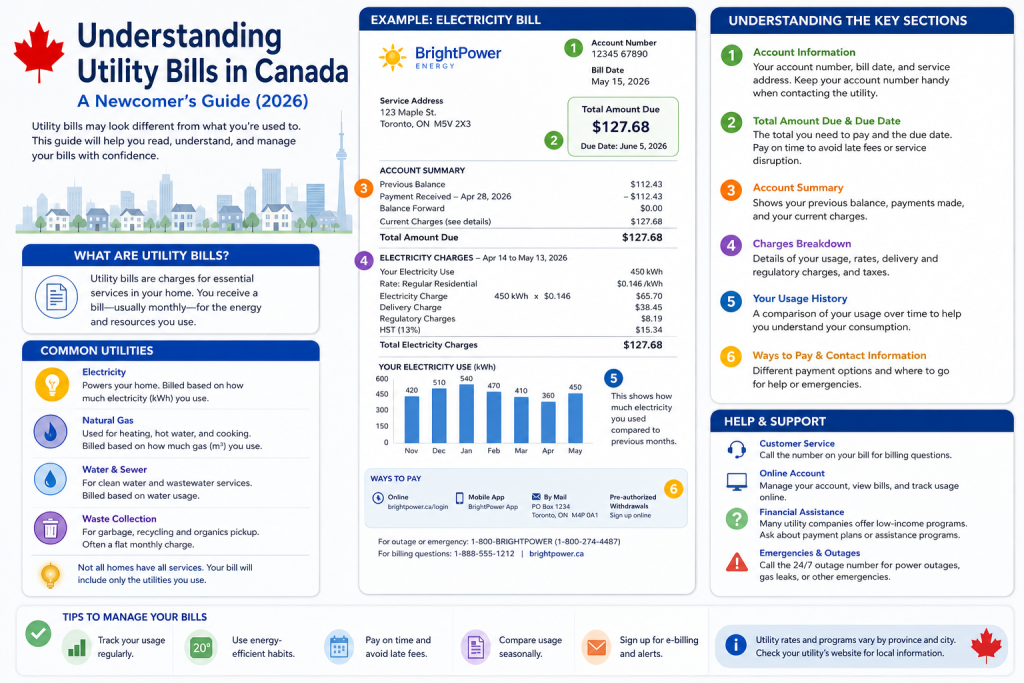
    While layouts vary , most bills contain the following sections:
    Section Description Action/Understanding
    Account Information Your account number , service address , and contact details. Keep this handy for inquiries.
    Billing Period The dates for which the services were used and billed. Helps track usage trends.
    Usage Summary Total consumption (e.g. , kWh , GJ , m³) for the billing period. May show current and previous meter readings. Compare with previous months to identify changes.
    Charges Breakdown Detailed list of all fees: commodity , delivery , regulatory , taxes , fixed charges. Understand what you are paying for; identify variable vs. fixed costs.
    Total Amount Due The complete sum you owe for the billing period. Your total payment.
    Due Date The last day to pay without incurring late fees. Mark this on your calendar!
    Payment Options Methods to pay your bill (online , mail , bank , pre-authorized). Choose the most convenient method for you.

    3. Paying Your Bills

    Most utility companies offer several convenient payment methods:
    • Online Banking: The most common method. You can add the utility company as a payee through your Canadian bank account. If you haven't yet , learn how to open a bank account in Canada as a newcomer.
    • Pre-authorized Payments (PAP): Payments are automatically withdrawn from your bank account on the due date. This avoids late fees.
    • Credit Card: Some providers accept credit card payments , though a convenience fee may apply.
    • Mail: Send a cheque or money order.
    • In Person: At authorized payment locations or post offices.

    Checklist: What to Look For on Your Utility Bill

    • Your Name and Account Number: Ensure they are correct.
    • Service Address: Verify it matches your current residence.
    • Billing Period: Confirm the dates covered by the bill.
    • Usage Data: Check if the meter reading is actual or estimated. If estimated , note that your next bill might be adjusted.
    • Rate Charges: Understand the rate per unit (e.g. , per kWh , per GJ) and if time-of-use or tiered rates apply.
    • Fixed vs. Variable Charges: Distinguish between charges that change with usage and those that are constant.
    • Taxes and Levies: Note any applicable taxes like HST/PST or carbon levies.
    • Total Amount Due and Due Date: These are the most critical figures for payment.
    • Contact Information for the Utility Company: For any questions or disputes.

    Common Mistakes to Avoid

    1. Ignoring Bills: Unpaid bills can lead to late fees , service disconnection , and negatively impact your credit history.
    2. Not Understanding Charges: If something on your bill is unclear , contact the utility provider for an explanation. It is your right to understand what you are paying for.
    3. Missing Due Dates: Set up reminders or pre-authorized payments to avoid late payment penalties.
    4. Not Comparing Internet/Phone Plans: These services have competitive markets. Shop around for the best deals , especially when you are setting up your first month in Canada checklist.
    5. Assuming Utilities Are Included in Rent: Always clarify this with your landlord before signing a lease. This is a key part of how to rent an apartment in Canada.
    6. Not Monitoring Usage: Being aware of your consumption can help you identify ways to save money , especially for electricity and natural gas. Refer to your bills for historical data.

    Frequently Asked Questions About Utility Bills in Canada

    What if I can't pay my bill on time?

    If you anticipate difficulty paying a bill , contact your utility provider immediately. Many companies have programs or payment arrangements for customers facing financial hardship. Ignoring the bill is the worst option , as it can lead to service interruption and additional fees.

    Are utilities always included in rent in Canada?

    No , utilities are not always included in rent. This varies significantly by rental agreement , landlord , and type of property. Always confirm with your landlord what is included (e.g. , "heat and hot water included") and what you are responsible for (e.g. , "hydro extra"). Be sure this is clearly stated in your lease agreement.

    How can I reduce my utility costs?

    There are many ways to reduce utility costs: turn off lights and electronics when not in use , use energy-efficient appliances , adjust your thermostat (lower in winter , higher in summer) , take shorter showers , fix leaky faucets , and unplug chargers. For natural gas , ensure your windows and doors are properly sealed. For internet/phone , review your plan regularly to ensure it meets your needs without overpaying.

    What is a "security deposit" for utilities?

    Many utility companies require a security deposit from new customers , especially those without a Canadian credit history. This deposit acts as collateral in case of unpaid bills. It is usually returned to you (with interest in some provinces) after a certain period of good payment history (e.g. , one year) or when you close your account. This is a common practice for newcomers , and it's part of the initial cost of living in Canada setup.

    How do I transfer utilities when moving?

    When moving , you need to contact your utility providers to arrange for service disconnection at your old address and connection at your new address. Provide ample notice (usually 2-4 weeks) to ensure a smooth transition. You'll need to provide your move-out and move-in dates , and possibly your new address for the final bill or account transfer.

    Disclaimer

    This article is for general information only and does not provide financial , legal , tax , or immigration advice. Rules , requirements , fees , and programs may change. Always check official sources or speak with a qualified professional before making decisions.

    Sources and Official Resources

    • Financial Consumer Agency of Canada (FCAC): For general budgeting and financial literacy information. Visit FCAC Website
    • Government of Canada (Canada.ca): For information on taxes , including carbon tax. Visit Canada.ca
    • Provincial Energy Regulator Websites: Each province has its own energy board or commission that regulates utility rates and practices. Search for your province's specific regulator (e.g. , Ontario Energy Board , BC Utilities Commission).
    • Major Utility Providers: Directly consult the websites of your specific electricity , natural gas , and water providers for detailed billing explanations and rate information. Examples include Hydro One , Enbridge Gas , BC Hydro , FortisBC , Hydro-Québec , and your municipal water utility.

    Conclusion

    Navigating understanding utility bills in Canada can seem daunting at first , but with a clear grasp of the different components and billing practices , you will be well-equipped to manage your household expenses. By paying close attention to your statements , understanding your consumption , and being proactive about payment , you can ensure a smooth transition into your new life in Canada. Remember , don't hesitate to reach out to utility providers if you have questions or need assistance. Being informed is the best way to control your costs and avoid surprises.
  • Banking

    How to Understand Utility Bills in Canada: A Newcomer's Guide (2026)

    Moving to a new country involves many adjustments , and one of the most practical is learning how household services operate. For newcomers , understanding utility bills in Canada is a crucial step towards managing your monthly budget and ensuring a comfortable living situation. Unlike some countries where utility costs might be included in rent , or where billing structures are simpler , Canada often presents a more detailed breakdown of charges for essential services like electricity , natural gas , water , and internet. This comprehensive guide , updated for May 2026 , aims to demystify Canadian utility bills , helping you understand what each charge means , how to set up services , and practical tips for managing your household expenses effectively.

    Who This Guide Is For

    This guide is specifically designed for newcomers to Canada , including immigrants , international students , temporary workers , and first-time residents. If you are new to the Canadian billing system , or simply want to ensure you are accurately interpreting your monthly statements , this resource will provide the foundational knowledge you need.

    Practical Explanation of Canadian Utility Services

    Utilities are essential services that keep your home functional and comfortable. In Canada , these typically include:
    • Electricity: Powers lights , appliances , heating/cooling systems , and electronics.
    • Natural Gas: Commonly used for heating homes , water heaters , and cooking stoves.
    • Water & Wastewater: Supplies fresh water for drinking , cleaning , and bathing , and removes wastewater.
    • Internet & Home Phone/TV: Communication and entertainment services.
    • Waste Collection: Although often included in property taxes , it can sometimes appear as a separate municipal charge.
    Billing cycles can vary , but most utilities are billed monthly or bi-monthly (every two months). It is important to know your billing cycle to anticipate expenses.

    Key Terms on Your Utility Bill

    • Consumption/Usage: The amount of a utility you have used (e.g. , kilowatt-hours for electricity , gigajoules for natural gas , cubic metres for water).
    • Meter Reading: How your consumption is measured. This can be actual (read by a technician or smart meter) or estimated (based on past usage).
    • Fixed Charges/Basic Service Fee: A flat fee charged regardless of usage , covering administrative costs and infrastructure maintenance.
    • Variable Charges: Costs that fluctuate based on your consumption.
    • Delivery/Distribution Charges: Fees for transporting the utility to your home through pipelines or power lines.
    • Regulatory Charges: Costs associated with governing the utility industry.
    • Taxes: Provincial Sales Tax (PST) or Harmonized Sales Tax (HST) may apply to certain utility services , depending on your province.
    • Carbon Tax/Levy: A federal or provincial charge applied to carbon-based fuels like natural gas , aimed at reducing greenhouse gas emissions.

    Understanding Specific Utility Bills

    Electricity

    Electricity bills can be complex. You will typically see charges for:
    • Generation: The cost of producing electricity.
    • Transmission & Distribution: Getting the electricity from the generator to your home. These are often significant portions of the bill.
    • Regulatory Charges: Fees to operate and maintain the provincial electricity system.
    • Debt Retirement Charge (Ontario specific , phased out): Some provinces may have specific charges that evolve.
    • Time-of-Use (TOU) or Tiered Pricing: In some provinces , electricity rates vary based on the time of day (peak , mid-peak , off-peak) or the amount consumed. Understanding these can help reduce costs.
    Major providers include Hydro One (Ontario) , BC Hydro (British Columbia) , Hydro-Québec (Quebec) , and various municipal utilities across the country.

    Natural Gas

    Natural gas bills also include multiple components:
    • Commodity/Gas Cost: The price of the natural gas itself. This can fluctuate based on market prices.
    • Delivery/Transportation: The cost to transport the gas through pipelines to your home.
    • Storage: Charges for storing natural gas before it is delivered.
    • Carbon Tax: A federal or provincial tax applied to natural gas consumption.
    Key providers include Enbridge Gas (Ontario) , FortisBC (British Columbia) , and ATCO Gas (Alberta).

    Water & Wastewater

    Water and wastewater services are usually provided by your municipality. Bills typically include:
    • Water Usage: Charged per cubic metre (m³) of water consumed.
    • Wastewater/Sewer Surcharge: A fee for treating and disposing of the water that goes down your drains. This is often calculated as a percentage of your water usage.
    • Fixed Charges: A base rate for access to the water and sewer infrastructure.
    In many cases , water and wastewater are billed together on a single municipal statement , sometimes alongside other municipal services.

    Internet , TV , and Home Phone

    These services are typically bundled or offered separately by private telecommunication companies. Prices vary widely based on speed , data limits , and package inclusions. Major providers include Bell , Rogers , Telus , Shaw , and various smaller regional providers.

    Step-by-Step: Setting Up and Understanding Your Bills

    1. Setting Up Utilities

    1. Determine Included Utilities: When renting , clarify with your landlord which utilities are included in your rent and which you need to set up yourself. This is a critical step in understanding what documents you need to rent in Canada and your overall housing costs.
    2. Identify Providers: Find out which utility companies serve your specific address. Your landlord or previous tenant can usually provide this information.
    3. Contact Providers: Call or visit the websites of the relevant utility companies (electricity , gas , water , internet/phone) to set up accounts. Do this a few weeks before moving in.
    4. Provide Information: You will typically need to provide your personal identification (e.g. , passport , Permanent Resident card) , proof of address (lease agreement) , and sometimes a social insurance number (SIN). A security deposit may be required , especially if you do not have a Canadian credit history.

    2. Reading Your Utility Bill

    While layouts vary , most bills contain the following sections:
    Section Description Action/Understanding
    Account Information Your account number , service address , and contact details. Keep this handy for inquiries.
    Billing Period The dates for which the services were used and billed. Helps track usage trends.
    Usage Summary Total consumption (e.g. , kWh , GJ , m³) for the billing period. May show current and previous meter readings. Compare with previous months to identify changes.
    Charges Breakdown Detailed list of all fees: commodity , delivery , regulatory , taxes , fixed charges. Understand what you are paying for; identify variable vs. fixed costs.
    Total Amount Due The complete sum you owe for the billing period. Your total payment.
    Due Date The last day to pay without incurring late fees. Mark this on your calendar!
    Payment Options Methods to pay your bill (online , mail , bank , pre-authorized). Choose the most convenient method for you.

    3. Paying Your Bills

    Most utility companies offer several convenient payment methods:
    • Online Banking: The most common method. You can add the utility company as a payee through your Canadian bank account. If you haven't yet , learn how to open a bank account in Canada as a newcomer.
    • Pre-authorized Payments (PAP): Payments are automatically withdrawn from your bank account on the due date. This avoids late fees.
    • Credit Card: Some providers accept credit card payments , though a convenience fee may apply.
    • Mail: Send a cheque or money order.
    • In Person: At authorized payment locations or post offices.

    Checklist: What to Look For on Your Utility Bill

    • Your Name and Account Number: Ensure they are correct.
    • Service Address: Verify it matches your current residence.
    • Billing Period: Confirm the dates covered by the bill.
    • Usage Data: Check if the meter reading is actual or estimated. If estimated , note that your next bill might be adjusted.
    • Rate Charges: Understand the rate per unit (e.g. , per kWh , per GJ) and if time-of-use or tiered rates apply.
    • Fixed vs. Variable Charges: Distinguish between charges that change with usage and those that are constant.
    • Taxes and Levies: Note any applicable taxes like HST/PST or carbon levies.
    • Total Amount Due and Due Date: These are the most critical figures for payment.
    • Contact Information for the Utility Company: For any questions or disputes.

    Common Mistakes to Avoid

    1. Ignoring Bills: Unpaid bills can lead to late fees , service disconnection , and negatively impact your credit history.
    2. Not Understanding Charges: If something on your bill is unclear , contact the utility provider for an explanation. It is your right to understand what you are paying for.
    3. Missing Due Dates: Set up reminders or pre-authorized payments to avoid late payment penalties.
    4. Not Comparing Internet/Phone Plans: These services have competitive markets. Shop around for the best deals , especially when you are setting up your first month in Canada checklist.
    5. Assuming Utilities Are Included in Rent: Always clarify this with your landlord before signing a lease. This is a key part of how to rent an apartment in Canada.
    6. Not Monitoring Usage: Being aware of your consumption can help you identify ways to save money , especially for electricity and natural gas. Refer to your bills for historical data.

    Frequently Asked Questions About Utility Bills in Canada

    What if I can't pay my bill on time?

    If you anticipate difficulty paying a bill , contact your utility provider immediately. Many companies have programs or payment arrangements for customers facing financial hardship. Ignoring the bill is the worst option , as it can lead to service interruption and additional fees.

    Are utilities always included in rent in Canada?

    No , utilities are not always included in rent. This varies significantly by rental agreement , landlord , and type of property. Always confirm with your landlord what is included (e.g. , "heat and hot water included") and what you are responsible for (e.g. , "hydro extra"). Be sure this is clearly stated in your lease agreement.

    How can I reduce my utility costs?

    There are many ways to reduce utility costs: turn off lights and electronics when not in use , use energy-efficient appliances , adjust your thermostat (lower in winter , higher in summer) , take shorter showers , fix leaky faucets , and unplug chargers. For natural gas , ensure your windows and doors are properly sealed. For internet/phone , review your plan regularly to ensure it meets your needs without overpaying.

    What is a "security deposit" for utilities?

    Many utility companies require a security deposit from new customers , especially those without a Canadian credit history. This deposit acts as collateral in case of unpaid bills. It is usually returned to you (with interest in some provinces) after a certain period of good payment history (e.g. , one year) or when you close your account. This is a common practice for newcomers , and it's part of the initial cost of living in Canada setup.

    How do I transfer utilities when moving?

    When moving , you need to contact your utility providers to arrange for service disconnection at your old address and connection at your new address. Provide ample notice (usually 2-4 weeks) to ensure a smooth transition. You'll need to provide your move-out and move-in dates , and possibly your new address for the final bill or account transfer.

    Disclaimer

    This article is for general information only and does not provide financial , legal , tax , or immigration advice. Rules , requirements , fees , and programs may change. Always check official sources or speak with a qualified professional before making decisions.

    Sources and Official Resources

    • Financial Consumer Agency of Canada (FCAC): For general budgeting and financial literacy information. Visit FCAC Website
    • Government of Canada (Canada.ca): For information on taxes , including carbon tax. Visit Canada.ca
    • Provincial Energy Regulator Websites: Each province has its own energy board or commission that regulates utility rates and practices. Search for your province's specific regulator (e.g. , Ontario Energy Board , BC Utilities Commission).
    • Major Utility Providers: Directly consult the websites of your specific electricity , natural gas , and water providers for detailed billing explanations and rate information. Examples include Hydro One , Enbridge Gas , BC Hydro , FortisBC , Hydro-Québec , and your municipal water utility.

    Conclusion

    Navigating understanding utility bills in Canada can seem daunting at first , but with a clear grasp of the different components and billing practices , you will be well-equipped to manage your household expenses. By paying close attention to your statements , understanding your consumption , and being proactive about payment , you can ensure a smooth transition into your new life in Canada. Remember , don't hesitate to reach out to utility providers if you have questions or need assistance. Being informed is the best way to control your costs and avoid surprises.
  • Cost of Living

    How to Understand Utility Bills in Canada: A Newcomer's Guide (2026)

    Moving to a new country involves many adjustments , and one of the most practical is learning how household services operate. For newcomers , understanding utility bills in Canada is a crucial step towards managing your monthly budget and ensuring a comfortable living situation. Unlike some countries where utility costs might be included in rent , or where billing structures are simpler , Canada often presents a more detailed breakdown of charges for essential services like electricity , natural gas , water , and internet. This comprehensive guide , updated for May 2026 , aims to demystify Canadian utility bills , helping you understand what each charge means , how to set up services , and practical tips for managing your household expenses effectively.

    Who This Guide Is For

    This guide is specifically designed for newcomers to Canada , including immigrants , international students , temporary workers , and first-time residents. If you are new to the Canadian billing system , or simply want to ensure you are accurately interpreting your monthly statements , this resource will provide the foundational knowledge you need.

    Practical Explanation of Canadian Utility Services

    Utilities are essential services that keep your home functional and comfortable. In Canada , these typically include:
    • Electricity: Powers lights , appliances , heating/cooling systems , and electronics.
    • Natural Gas: Commonly used for heating homes , water heaters , and cooking stoves.
    • Water & Wastewater: Supplies fresh water for drinking , cleaning , and bathing , and removes wastewater.
    • Internet & Home Phone/TV: Communication and entertainment services.
    • Waste Collection: Although often included in property taxes , it can sometimes appear as a separate municipal charge.
    Billing cycles can vary , but most utilities are billed monthly or bi-monthly (every two months). It is important to know your billing cycle to anticipate expenses.

    Key Terms on Your Utility Bill

    • Consumption/Usage: The amount of a utility you have used (e.g. , kilowatt-hours for electricity , gigajoules for natural gas , cubic metres for water).
    • Meter Reading: How your consumption is measured. This can be actual (read by a technician or smart meter) or estimated (based on past usage).
    • Fixed Charges/Basic Service Fee: A flat fee charged regardless of usage , covering administrative costs and infrastructure maintenance.
    • Variable Charges: Costs that fluctuate based on your consumption.
    • Delivery/Distribution Charges: Fees for transporting the utility to your home through pipelines or power lines.
    • Regulatory Charges: Costs associated with governing the utility industry.
    • Taxes: Provincial Sales Tax (PST) or Harmonized Sales Tax (HST) may apply to certain utility services , depending on your province.
    • Carbon Tax/Levy: A federal or provincial charge applied to carbon-based fuels like natural gas , aimed at reducing greenhouse gas emissions.

    Understanding Specific Utility Bills

    Electricity

    Electricity bills can be complex. You will typically see charges for:
    • Generation: The cost of producing electricity.
    • Transmission & Distribution: Getting the electricity from the generator to your home. These are often significant portions of the bill.
    • Regulatory Charges: Fees to operate and maintain the provincial electricity system.
    • Debt Retirement Charge (Ontario specific , phased out): Some provinces may have specific charges that evolve.
    • Time-of-Use (TOU) or Tiered Pricing: In some provinces , electricity rates vary based on the time of day (peak , mid-peak , off-peak) or the amount consumed. Understanding these can help reduce costs.
    Major providers include Hydro One (Ontario) , BC Hydro (British Columbia) , Hydro-Québec (Quebec) , and various municipal utilities across the country.

    Natural Gas

    Natural gas bills also include multiple components:
    • Commodity/Gas Cost: The price of the natural gas itself. This can fluctuate based on market prices.
    • Delivery/Transportation: The cost to transport the gas through pipelines to your home.
    • Storage: Charges for storing natural gas before it is delivered.
    • Carbon Tax: A federal or provincial tax applied to natural gas consumption.
    Key providers include Enbridge Gas (Ontario) , FortisBC (British Columbia) , and ATCO Gas (Alberta).

    Water & Wastewater

    Water and wastewater services are usually provided by your municipality. Bills typically include:
    • Water Usage: Charged per cubic metre (m³) of water consumed.
    • Wastewater/Sewer Surcharge: A fee for treating and disposing of the water that goes down your drains. This is often calculated as a percentage of your water usage.
    • Fixed Charges: A base rate for access to the water and sewer infrastructure.
    In many cases , water and wastewater are billed together on a single municipal statement , sometimes alongside other municipal services.

    Internet , TV , and Home Phone

    These services are typically bundled or offered separately by private telecommunication companies. Prices vary widely based on speed , data limits , and package inclusions. Major providers include Bell , Rogers , Telus , Shaw , and various smaller regional providers.

    Step-by-Step: Setting Up and Understanding Your Bills

    1. Setting Up Utilities

    1. Determine Included Utilities: When renting , clarify with your landlord which utilities are included in your rent and which you need to set up yourself. This is a critical step in understanding what documents you need to rent in Canada and your overall housing costs.
    2. Identify Providers: Find out which utility companies serve your specific address. Your landlord or previous tenant can usually provide this information.
    3. Contact Providers: Call or visit the websites of the relevant utility companies (electricity , gas , water , internet/phone) to set up accounts. Do this a few weeks before moving in.
    4. Provide Information: You will typically need to provide your personal identification (e.g. , passport , Permanent Resident card) , proof of address (lease agreement) , and sometimes a social insurance number (SIN). A security deposit may be required , especially if you do not have a Canadian credit history.

    2. Reading Your Utility Bill

    While layouts vary , most bills contain the following sections:
    Section Description Action/Understanding
    Account Information Your account number , service address , and contact details. Keep this handy for inquiries.
    Billing Period The dates for which the services were used and billed. Helps track usage trends.
    Usage Summary Total consumption (e.g. , kWh , GJ , m³) for the billing period. May show current and previous meter readings. Compare with previous months to identify changes.
    Charges Breakdown Detailed list of all fees: commodity , delivery , regulatory , taxes , fixed charges. Understand what you are paying for; identify variable vs. fixed costs.
    Total Amount Due The complete sum you owe for the billing period. Your total payment.
    Due Date The last day to pay without incurring late fees. Mark this on your calendar!
    Payment Options Methods to pay your bill (online , mail , bank , pre-authorized). Choose the most convenient method for you.

    3. Paying Your Bills

    Most utility companies offer several convenient payment methods:
    • Online Banking: The most common method. You can add the utility company as a payee through your Canadian bank account. If you haven't yet , learn how to open a bank account in Canada as a newcomer.
    • Pre-authorized Payments (PAP): Payments are automatically withdrawn from your bank account on the due date. This avoids late fees.
    • Credit Card: Some providers accept credit card payments , though a convenience fee may apply.
    • Mail: Send a cheque or money order.
    • In Person: At authorized payment locations or post offices.

    Checklist: What to Look For on Your Utility Bill

    • Your Name and Account Number: Ensure they are correct.
    • Service Address: Verify it matches your current residence.
    • Billing Period: Confirm the dates covered by the bill.
    • Usage Data: Check if the meter reading is actual or estimated. If estimated , note that your next bill might be adjusted.
    • Rate Charges: Understand the rate per unit (e.g. , per kWh , per GJ) and if time-of-use or tiered rates apply.
    • Fixed vs. Variable Charges: Distinguish between charges that change with usage and those that are constant.
    • Taxes and Levies: Note any applicable taxes like HST/PST or carbon levies.
    • Total Amount Due and Due Date: These are the most critical figures for payment.
    • Contact Information for the Utility Company: For any questions or disputes.

    Common Mistakes to Avoid

    1. Ignoring Bills: Unpaid bills can lead to late fees , service disconnection , and negatively impact your credit history.
    2. Not Understanding Charges: If something on your bill is unclear , contact the utility provider for an explanation. It is your right to understand what you are paying for.
    3. Missing Due Dates: Set up reminders or pre-authorized payments to avoid late payment penalties.
    4. Not Comparing Internet/Phone Plans: These services have competitive markets. Shop around for the best deals , especially when you are setting up your first month in Canada checklist.
    5. Assuming Utilities Are Included in Rent: Always clarify this with your landlord before signing a lease. This is a key part of how to rent an apartment in Canada.
    6. Not Monitoring Usage: Being aware of your consumption can help you identify ways to save money , especially for electricity and natural gas. Refer to your bills for historical data.

    Frequently Asked Questions About Utility Bills in Canada

    What if I can't pay my bill on time?

    If you anticipate difficulty paying a bill , contact your utility provider immediately. Many companies have programs or payment arrangements for customers facing financial hardship. Ignoring the bill is the worst option , as it can lead to service interruption and additional fees.

    Are utilities always included in rent in Canada?

    No , utilities are not always included in rent. This varies significantly by rental agreement , landlord , and type of property. Always confirm with your landlord what is included (e.g. , "heat and hot water included") and what you are responsible for (e.g. , "hydro extra"). Be sure this is clearly stated in your lease agreement.

    How can I reduce my utility costs?

    There are many ways to reduce utility costs: turn off lights and electronics when not in use , use energy-efficient appliances , adjust your thermostat (lower in winter , higher in summer) , take shorter showers , fix leaky faucets , and unplug chargers. For natural gas , ensure your windows and doors are properly sealed. For internet/phone , review your plan regularly to ensure it meets your needs without overpaying.

    What is a "security deposit" for utilities?

    Many utility companies require a security deposit from new customers , especially those without a Canadian credit history. This deposit acts as collateral in case of unpaid bills. It is usually returned to you (with interest in some provinces) after a certain period of good payment history (e.g. , one year) or when you close your account. This is a common practice for newcomers , and it's part of the initial cost of living in Canada setup.

    How do I transfer utilities when moving?

    When moving , you need to contact your utility providers to arrange for service disconnection at your old address and connection at your new address. Provide ample notice (usually 2-4 weeks) to ensure a smooth transition. You'll need to provide your move-out and move-in dates , and possibly your new address for the final bill or account transfer.

    Disclaimer

    This article is for general information only and does not provide financial , legal , tax , or immigration advice. Rules , requirements , fees , and programs may change. Always check official sources or speak with a qualified professional before making decisions.

    Sources and Official Resources

    • Financial Consumer Agency of Canada (FCAC): For general budgeting and financial literacy information. Visit FCAC Website
    • Government of Canada (Canada.ca): For information on taxes , including carbon tax. Visit Canada.ca
    • Provincial Energy Regulator Websites: Each province has its own energy board or commission that regulates utility rates and practices. Search for your province's specific regulator (e.g. , Ontario Energy Board , BC Utilities Commission).
    • Major Utility Providers: Directly consult the websites of your specific electricity , natural gas , and water providers for detailed billing explanations and rate information. Examples include Hydro One , Enbridge Gas , BC Hydro , FortisBC , Hydro-Québec , and your municipal water utility.

    Conclusion

    Navigating understanding utility bills in Canada can seem daunting at first , but with a clear grasp of the different components and billing practices , you will be well-equipped to manage your household expenses. By paying close attention to your statements , understanding your consumption , and being proactive about payment , you can ensure a smooth transition into your new life in Canada. Remember , don't hesitate to reach out to utility providers if you have questions or need assistance. Being informed is the best way to control your costs and avoid surprises.
  • Credit Score

    How to Understand Utility Bills in Canada: A Newcomer's Guide (2026)

    Moving to a new country involves many adjustments , and one of the most practical is learning how household services operate. For newcomers , understanding utility bills in Canada is a crucial step towards managing your monthly budget and ensuring a comfortable living situation. Unlike some countries where utility costs might be included in rent , or where billing structures are simpler , Canada often presents a more detailed breakdown of charges for essential services like electricity , natural gas , water , and internet. This comprehensive guide , updated for May 2026 , aims to demystify Canadian utility bills , helping you understand what each charge means , how to set up services , and practical tips for managing your household expenses effectively.

    Who This Guide Is For

    This guide is specifically designed for newcomers to Canada , including immigrants , international students , temporary workers , and first-time residents. If you are new to the Canadian billing system , or simply want to ensure you are accurately interpreting your monthly statements , this resource will provide the foundational knowledge you need.

    Practical Explanation of Canadian Utility Services

    Utilities are essential services that keep your home functional and comfortable. In Canada , these typically include:
    • Electricity: Powers lights , appliances , heating/cooling systems , and electronics.
    • Natural Gas: Commonly used for heating homes , water heaters , and cooking stoves.
    • Water & Wastewater: Supplies fresh water for drinking , cleaning , and bathing , and removes wastewater.
    • Internet & Home Phone/TV: Communication and entertainment services.
    • Waste Collection: Although often included in property taxes , it can sometimes appear as a separate municipal charge.
    Billing cycles can vary , but most utilities are billed monthly or bi-monthly (every two months). It is important to know your billing cycle to anticipate expenses.

    Key Terms on Your Utility Bill

    • Consumption/Usage: The amount of a utility you have used (e.g. , kilowatt-hours for electricity , gigajoules for natural gas , cubic metres for water).
    • Meter Reading: How your consumption is measured. This can be actual (read by a technician or smart meter) or estimated (based on past usage).
    • Fixed Charges/Basic Service Fee: A flat fee charged regardless of usage , covering administrative costs and infrastructure maintenance.
    • Variable Charges: Costs that fluctuate based on your consumption.
    • Delivery/Distribution Charges: Fees for transporting the utility to your home through pipelines or power lines.
    • Regulatory Charges: Costs associated with governing the utility industry.
    • Taxes: Provincial Sales Tax (PST) or Harmonized Sales Tax (HST) may apply to certain utility services , depending on your province.
    • Carbon Tax/Levy: A federal or provincial charge applied to carbon-based fuels like natural gas , aimed at reducing greenhouse gas emissions.

    Understanding Specific Utility Bills

    Electricity

    Electricity bills can be complex. You will typically see charges for:
    • Generation: The cost of producing electricity.
    • Transmission & Distribution: Getting the electricity from the generator to your home. These are often significant portions of the bill.
    • Regulatory Charges: Fees to operate and maintain the provincial electricity system.
    • Debt Retirement Charge (Ontario specific , phased out): Some provinces may have specific charges that evolve.
    • Time-of-Use (TOU) or Tiered Pricing: In some provinces , electricity rates vary based on the time of day (peak , mid-peak , off-peak) or the amount consumed. Understanding these can help reduce costs.
    Major providers include Hydro One (Ontario) , BC Hydro (British Columbia) , Hydro-Québec (Quebec) , and various municipal utilities across the country.

    Natural Gas

    Natural gas bills also include multiple components:
    • Commodity/Gas Cost: The price of the natural gas itself. This can fluctuate based on market prices.
    • Delivery/Transportation: The cost to transport the gas through pipelines to your home.
    • Storage: Charges for storing natural gas before it is delivered.
    • Carbon Tax: A federal or provincial tax applied to natural gas consumption.
    Key providers include Enbridge Gas (Ontario) , FortisBC (British Columbia) , and ATCO Gas (Alberta).

    Water & Wastewater

    Water and wastewater services are usually provided by your municipality. Bills typically include:
    • Water Usage: Charged per cubic metre (m³) of water consumed.
    • Wastewater/Sewer Surcharge: A fee for treating and disposing of the water that goes down your drains. This is often calculated as a percentage of your water usage.
    • Fixed Charges: A base rate for access to the water and sewer infrastructure.
    In many cases , water and wastewater are billed together on a single municipal statement , sometimes alongside other municipal services.

    Internet , TV , and Home Phone

    These services are typically bundled or offered separately by private telecommunication companies. Prices vary widely based on speed , data limits , and package inclusions. Major providers include Bell , Rogers , Telus , Shaw , and various smaller regional providers.

    Step-by-Step: Setting Up and Understanding Your Bills

    1. Setting Up Utilities

    1. Determine Included Utilities: When renting , clarify with your landlord which utilities are included in your rent and which you need to set up yourself. This is a critical step in understanding what documents you need to rent in Canada and your overall housing costs.
    2. Identify Providers: Find out which utility companies serve your specific address. Your landlord or previous tenant can usually provide this information.
    3. Contact Providers: Call or visit the websites of the relevant utility companies (electricity , gas , water , internet/phone) to set up accounts. Do this a few weeks before moving in.
    4. Provide Information: You will typically need to provide your personal identification (e.g. , passport , Permanent Resident card) , proof of address (lease agreement) , and sometimes a social insurance number (SIN). A security deposit may be required , especially if you do not have a Canadian credit history.

    2. Reading Your Utility Bill

    While layouts vary , most bills contain the following sections:
    Section Description Action/Understanding
    Account Information Your account number , service address , and contact details. Keep this handy for inquiries.
    Billing Period The dates for which the services were used and billed. Helps track usage trends.
    Usage Summary Total consumption (e.g. , kWh , GJ , m³) for the billing period. May show current and previous meter readings. Compare with previous months to identify changes.
    Charges Breakdown Detailed list of all fees: commodity , delivery , regulatory , taxes , fixed charges. Understand what you are paying for; identify variable vs. fixed costs.
    Total Amount Due The complete sum you owe for the billing period. Your total payment.
    Due Date The last day to pay without incurring late fees. Mark this on your calendar!
    Payment Options Methods to pay your bill (online , mail , bank , pre-authorized). Choose the most convenient method for you.

    3. Paying Your Bills

    Most utility companies offer several convenient payment methods:
    • Online Banking: The most common method. You can add the utility company as a payee through your Canadian bank account. If you haven't yet , learn how to open a bank account in Canada as a newcomer.
    • Pre-authorized Payments (PAP): Payments are automatically withdrawn from your bank account on the due date. This avoids late fees.
    • Credit Card: Some providers accept credit card payments , though a convenience fee may apply.
    • Mail: Send a cheque or money order.
    • In Person: At authorized payment locations or post offices.

    Checklist: What to Look For on Your Utility Bill

    • Your Name and Account Number: Ensure they are correct.
    • Service Address: Verify it matches your current residence.
    • Billing Period: Confirm the dates covered by the bill.
    • Usage Data: Check if the meter reading is actual or estimated. If estimated , note that your next bill might be adjusted.
    • Rate Charges: Understand the rate per unit (e.g. , per kWh , per GJ) and if time-of-use or tiered rates apply.
    • Fixed vs. Variable Charges: Distinguish between charges that change with usage and those that are constant.
    • Taxes and Levies: Note any applicable taxes like HST/PST or carbon levies.
    • Total Amount Due and Due Date: These are the most critical figures for payment.
    • Contact Information for the Utility Company: For any questions or disputes.

    Common Mistakes to Avoid

    1. Ignoring Bills: Unpaid bills can lead to late fees , service disconnection , and negatively impact your credit history.
    2. Not Understanding Charges: If something on your bill is unclear , contact the utility provider for an explanation. It is your right to understand what you are paying for.
    3. Missing Due Dates: Set up reminders or pre-authorized payments to avoid late payment penalties.
    4. Not Comparing Internet/Phone Plans: These services have competitive markets. Shop around for the best deals , especially when you are setting up your first month in Canada checklist.
    5. Assuming Utilities Are Included in Rent: Always clarify this with your landlord before signing a lease. This is a key part of how to rent an apartment in Canada.
    6. Not Monitoring Usage: Being aware of your consumption can help you identify ways to save money , especially for electricity and natural gas. Refer to your bills for historical data.

    Frequently Asked Questions About Utility Bills in Canada

    What if I can't pay my bill on time?

    If you anticipate difficulty paying a bill , contact your utility provider immediately. Many companies have programs or payment arrangements for customers facing financial hardship. Ignoring the bill is the worst option , as it can lead to service interruption and additional fees.

    Are utilities always included in rent in Canada?

    No , utilities are not always included in rent. This varies significantly by rental agreement , landlord , and type of property. Always confirm with your landlord what is included (e.g. , "heat and hot water included") and what you are responsible for (e.g. , "hydro extra"). Be sure this is clearly stated in your lease agreement.

    How can I reduce my utility costs?

    There are many ways to reduce utility costs: turn off lights and electronics when not in use , use energy-efficient appliances , adjust your thermostat (lower in winter , higher in summer) , take shorter showers , fix leaky faucets , and unplug chargers. For natural gas , ensure your windows and doors are properly sealed. For internet/phone , review your plan regularly to ensure it meets your needs without overpaying.

    What is a "security deposit" for utilities?

    Many utility companies require a security deposit from new customers , especially those without a Canadian credit history. This deposit acts as collateral in case of unpaid bills. It is usually returned to you (with interest in some provinces) after a certain period of good payment history (e.g. , one year) or when you close your account. This is a common practice for newcomers , and it's part of the initial cost of living in Canada setup.

    How do I transfer utilities when moving?

    When moving , you need to contact your utility providers to arrange for service disconnection at your old address and connection at your new address. Provide ample notice (usually 2-4 weeks) to ensure a smooth transition. You'll need to provide your move-out and move-in dates , and possibly your new address for the final bill or account transfer.

    Disclaimer

    This article is for general information only and does not provide financial , legal , tax , or immigration advice. Rules , requirements , fees , and programs may change. Always check official sources or speak with a qualified professional before making decisions.

    Sources and Official Resources

    • Financial Consumer Agency of Canada (FCAC): For general budgeting and financial literacy information. Visit FCAC Website
    • Government of Canada (Canada.ca): For information on taxes , including carbon tax. Visit Canada.ca
    • Provincial Energy Regulator Websites: Each province has its own energy board or commission that regulates utility rates and practices. Search for your province's specific regulator (e.g. , Ontario Energy Board , BC Utilities Commission).
    • Major Utility Providers: Directly consult the websites of your specific electricity , natural gas , and water providers for detailed billing explanations and rate information. Examples include Hydro One , Enbridge Gas , BC Hydro , FortisBC , Hydro-Québec , and your municipal water utility.

    Conclusion

    Navigating understanding utility bills in Canada can seem daunting at first , but with a clear grasp of the different components and billing practices , you will be well-equipped to manage your household expenses. By paying close attention to your statements , understanding your consumption , and being proactive about payment , you can ensure a smooth transition into your new life in Canada. Remember , don't hesitate to reach out to utility providers if you have questions or need assistance. Being informed is the best way to control your costs and avoid surprises.
  • Documents & Taxes

    How to Understand Utility Bills in Canada: A Newcomer's Guide (2026)

    Moving to a new country involves many adjustments , and one of the most practical is learning how household services operate. For newcomers , understanding utility bills in Canada is a crucial step towards managing your monthly budget and ensuring a comfortable living situation. Unlike some countries where utility costs might be included in rent , or where billing structures are simpler , Canada often presents a more detailed breakdown of charges for essential services like electricity , natural gas , water , and internet. This comprehensive guide , updated for May 2026 , aims to demystify Canadian utility bills , helping you understand what each charge means , how to set up services , and practical tips for managing your household expenses effectively.

    Who This Guide Is For

    This guide is specifically designed for newcomers to Canada , including immigrants , international students , temporary workers , and first-time residents. If you are new to the Canadian billing system , or simply want to ensure you are accurately interpreting your monthly statements , this resource will provide the foundational knowledge you need.

    Practical Explanation of Canadian Utility Services

    Utilities are essential services that keep your home functional and comfortable. In Canada , these typically include:
    • Electricity: Powers lights , appliances , heating/cooling systems , and electronics.
    • Natural Gas: Commonly used for heating homes , water heaters , and cooking stoves.
    • Water & Wastewater: Supplies fresh water for drinking , cleaning , and bathing , and removes wastewater.
    • Internet & Home Phone/TV: Communication and entertainment services.
    • Waste Collection: Although often included in property taxes , it can sometimes appear as a separate municipal charge.
    Billing cycles can vary , but most utilities are billed monthly or bi-monthly (every two months). It is important to know your billing cycle to anticipate expenses.

    Key Terms on Your Utility Bill

    • Consumption/Usage: The amount of a utility you have used (e.g. , kilowatt-hours for electricity , gigajoules for natural gas , cubic metres for water).
    • Meter Reading: How your consumption is measured. This can be actual (read by a technician or smart meter) or estimated (based on past usage).
    • Fixed Charges/Basic Service Fee: A flat fee charged regardless of usage , covering administrative costs and infrastructure maintenance.
    • Variable Charges: Costs that fluctuate based on your consumption.
    • Delivery/Distribution Charges: Fees for transporting the utility to your home through pipelines or power lines.
    • Regulatory Charges: Costs associated with governing the utility industry.
    • Taxes: Provincial Sales Tax (PST) or Harmonized Sales Tax (HST) may apply to certain utility services , depending on your province.
    • Carbon Tax/Levy: A federal or provincial charge applied to carbon-based fuels like natural gas , aimed at reducing greenhouse gas emissions.

    Understanding Specific Utility Bills

    Electricity

    Electricity bills can be complex. You will typically see charges for:
    • Generation: The cost of producing electricity.
    • Transmission & Distribution: Getting the electricity from the generator to your home. These are often significant portions of the bill.
    • Regulatory Charges: Fees to operate and maintain the provincial electricity system.
    • Debt Retirement Charge (Ontario specific , phased out): Some provinces may have specific charges that evolve.
    • Time-of-Use (TOU) or Tiered Pricing: In some provinces , electricity rates vary based on the time of day (peak , mid-peak , off-peak) or the amount consumed. Understanding these can help reduce costs.
    Major providers include Hydro One (Ontario) , BC Hydro (British Columbia) , Hydro-Québec (Quebec) , and various municipal utilities across the country.

    Natural Gas

    Natural gas bills also include multiple components:
    • Commodity/Gas Cost: The price of the natural gas itself. This can fluctuate based on market prices.
    • Delivery/Transportation: The cost to transport the gas through pipelines to your home.
    • Storage: Charges for storing natural gas before it is delivered.
    • Carbon Tax: A federal or provincial tax applied to natural gas consumption.
    Key providers include Enbridge Gas (Ontario) , FortisBC (British Columbia) , and ATCO Gas (Alberta).

    Water & Wastewater

    Water and wastewater services are usually provided by your municipality. Bills typically include:
    • Water Usage: Charged per cubic metre (m³) of water consumed.
    • Wastewater/Sewer Surcharge: A fee for treating and disposing of the water that goes down your drains. This is often calculated as a percentage of your water usage.
    • Fixed Charges: A base rate for access to the water and sewer infrastructure.
    In many cases , water and wastewater are billed together on a single municipal statement , sometimes alongside other municipal services.

    Internet , TV , and Home Phone

    These services are typically bundled or offered separately by private telecommunication companies. Prices vary widely based on speed , data limits , and package inclusions. Major providers include Bell , Rogers , Telus , Shaw , and various smaller regional providers.

    Step-by-Step: Setting Up and Understanding Your Bills

    1. Setting Up Utilities

    1. Determine Included Utilities: When renting , clarify with your landlord which utilities are included in your rent and which you need to set up yourself. This is a critical step in understanding what documents you need to rent in Canada and your overall housing costs.
    2. Identify Providers: Find out which utility companies serve your specific address. Your landlord or previous tenant can usually provide this information.
    3. Contact Providers: Call or visit the websites of the relevant utility companies (electricity , gas , water , internet/phone) to set up accounts. Do this a few weeks before moving in.
    4. Provide Information: You will typically need to provide your personal identification (e.g. , passport , Permanent Resident card) , proof of address (lease agreement) , and sometimes a social insurance number (SIN). A security deposit may be required , especially if you do not have a Canadian credit history.

    2. Reading Your Utility Bill

    While layouts vary , most bills contain the following sections:
    Section Description Action/Understanding
    Account Information Your account number , service address , and contact details. Keep this handy for inquiries.
    Billing Period The dates for which the services were used and billed. Helps track usage trends.
    Usage Summary Total consumption (e.g. , kWh , GJ , m³) for the billing period. May show current and previous meter readings. Compare with previous months to identify changes.
    Charges Breakdown Detailed list of all fees: commodity , delivery , regulatory , taxes , fixed charges. Understand what you are paying for; identify variable vs. fixed costs.
    Total Amount Due The complete sum you owe for the billing period. Your total payment.
    Due Date The last day to pay without incurring late fees. Mark this on your calendar!
    Payment Options Methods to pay your bill (online , mail , bank , pre-authorized). Choose the most convenient method for you.

    3. Paying Your Bills

    Most utility companies offer several convenient payment methods:
    • Online Banking: The most common method. You can add the utility company as a payee through your Canadian bank account. If you haven't yet , learn how to open a bank account in Canada as a newcomer.
    • Pre-authorized Payments (PAP): Payments are automatically withdrawn from your bank account on the due date. This avoids late fees.
    • Credit Card: Some providers accept credit card payments , though a convenience fee may apply.
    • Mail: Send a cheque or money order.
    • In Person: At authorized payment locations or post offices.

    Checklist: What to Look For on Your Utility Bill

    • Your Name and Account Number: Ensure they are correct.
    • Service Address: Verify it matches your current residence.
    • Billing Period: Confirm the dates covered by the bill.
    • Usage Data: Check if the meter reading is actual or estimated. If estimated , note that your next bill might be adjusted.
    • Rate Charges: Understand the rate per unit (e.g. , per kWh , per GJ) and if time-of-use or tiered rates apply.
    • Fixed vs. Variable Charges: Distinguish between charges that change with usage and those that are constant.
    • Taxes and Levies: Note any applicable taxes like HST/PST or carbon levies.
    • Total Amount Due and Due Date: These are the most critical figures for payment.
    • Contact Information for the Utility Company: For any questions or disputes.

    Common Mistakes to Avoid

    1. Ignoring Bills: Unpaid bills can lead to late fees , service disconnection , and negatively impact your credit history.
    2. Not Understanding Charges: If something on your bill is unclear , contact the utility provider for an explanation. It is your right to understand what you are paying for.
    3. Missing Due Dates: Set up reminders or pre-authorized payments to avoid late payment penalties.
    4. Not Comparing Internet/Phone Plans: These services have competitive markets. Shop around for the best deals , especially when you are setting up your first month in Canada checklist.
    5. Assuming Utilities Are Included in Rent: Always clarify this with your landlord before signing a lease. This is a key part of how to rent an apartment in Canada.
    6. Not Monitoring Usage: Being aware of your consumption can help you identify ways to save money , especially for electricity and natural gas. Refer to your bills for historical data.

    Frequently Asked Questions About Utility Bills in Canada

    What if I can't pay my bill on time?

    If you anticipate difficulty paying a bill , contact your utility provider immediately. Many companies have programs or payment arrangements for customers facing financial hardship. Ignoring the bill is the worst option , as it can lead to service interruption and additional fees.

    Are utilities always included in rent in Canada?

    No , utilities are not always included in rent. This varies significantly by rental agreement , landlord , and type of property. Always confirm with your landlord what is included (e.g. , "heat and hot water included") and what you are responsible for (e.g. , "hydro extra"). Be sure this is clearly stated in your lease agreement.

    How can I reduce my utility costs?

    There are many ways to reduce utility costs: turn off lights and electronics when not in use , use energy-efficient appliances , adjust your thermostat (lower in winter , higher in summer) , take shorter showers , fix leaky faucets , and unplug chargers. For natural gas , ensure your windows and doors are properly sealed. For internet/phone , review your plan regularly to ensure it meets your needs without overpaying.

    What is a "security deposit" for utilities?

    Many utility companies require a security deposit from new customers , especially those without a Canadian credit history. This deposit acts as collateral in case of unpaid bills. It is usually returned to you (with interest in some provinces) after a certain period of good payment history (e.g. , one year) or when you close your account. This is a common practice for newcomers , and it's part of the initial cost of living in Canada setup.

    How do I transfer utilities when moving?

    When moving , you need to contact your utility providers to arrange for service disconnection at your old address and connection at your new address. Provide ample notice (usually 2-4 weeks) to ensure a smooth transition. You'll need to provide your move-out and move-in dates , and possibly your new address for the final bill or account transfer.

    Disclaimer

    This article is for general information only and does not provide financial , legal , tax , or immigration advice. Rules , requirements , fees , and programs may change. Always check official sources or speak with a qualified professional before making decisions.

    Sources and Official Resources

    • Financial Consumer Agency of Canada (FCAC): For general budgeting and financial literacy information. Visit FCAC Website
    • Government of Canada (Canada.ca): For information on taxes , including carbon tax. Visit Canada.ca
    • Provincial Energy Regulator Websites: Each province has its own energy board or commission that regulates utility rates and practices. Search for your province's specific regulator (e.g. , Ontario Energy Board , BC Utilities Commission).
    • Major Utility Providers: Directly consult the websites of your specific electricity , natural gas , and water providers for detailed billing explanations and rate information. Examples include Hydro One , Enbridge Gas , BC Hydro , FortisBC , Hydro-Québec , and your municipal water utility.

    Conclusion

    Navigating understanding utility bills in Canada can seem daunting at first , but with a clear grasp of the different components and billing practices , you will be well-equipped to manage your household expenses. By paying close attention to your statements , understanding your consumption , and being proactive about payment , you can ensure a smooth transition into your new life in Canada. Remember , don't hesitate to reach out to utility providers if you have questions or need assistance. Being informed is the best way to control your costs and avoid surprises.
  • Jobs

    How to Understand Utility Bills in Canada: A Newcomer's Guide (2026)

    Moving to a new country involves many adjustments , and one of the most practical is learning how household services operate. For newcomers , understanding utility bills in Canada is a crucial step towards managing your monthly budget and ensuring a comfortable living situation. Unlike some countries where utility costs might be included in rent , or where billing structures are simpler , Canada often presents a more detailed breakdown of charges for essential services like electricity , natural gas , water , and internet. This comprehensive guide , updated for May 2026 , aims to demystify Canadian utility bills , helping you understand what each charge means , how to set up services , and practical tips for managing your household expenses effectively.

    Who This Guide Is For

    This guide is specifically designed for newcomers to Canada , including immigrants , international students , temporary workers , and first-time residents. If you are new to the Canadian billing system , or simply want to ensure you are accurately interpreting your monthly statements , this resource will provide the foundational knowledge you need.

    Practical Explanation of Canadian Utility Services

    Utilities are essential services that keep your home functional and comfortable. In Canada , these typically include:
    • Electricity: Powers lights , appliances , heating/cooling systems , and electronics.
    • Natural Gas: Commonly used for heating homes , water heaters , and cooking stoves.
    • Water & Wastewater: Supplies fresh water for drinking , cleaning , and bathing , and removes wastewater.
    • Internet & Home Phone/TV: Communication and entertainment services.
    • Waste Collection: Although often included in property taxes , it can sometimes appear as a separate municipal charge.
    Billing cycles can vary , but most utilities are billed monthly or bi-monthly (every two months). It is important to know your billing cycle to anticipate expenses.

    Key Terms on Your Utility Bill

    • Consumption/Usage: The amount of a utility you have used (e.g. , kilowatt-hours for electricity , gigajoules for natural gas , cubic metres for water).
    • Meter Reading: How your consumption is measured. This can be actual (read by a technician or smart meter) or estimated (based on past usage).
    • Fixed Charges/Basic Service Fee: A flat fee charged regardless of usage , covering administrative costs and infrastructure maintenance.
    • Variable Charges: Costs that fluctuate based on your consumption.
    • Delivery/Distribution Charges: Fees for transporting the utility to your home through pipelines or power lines.
    • Regulatory Charges: Costs associated with governing the utility industry.
    • Taxes: Provincial Sales Tax (PST) or Harmonized Sales Tax (HST) may apply to certain utility services , depending on your province.
    • Carbon Tax/Levy: A federal or provincial charge applied to carbon-based fuels like natural gas , aimed at reducing greenhouse gas emissions.

    Understanding Specific Utility Bills

    Electricity

    Electricity bills can be complex. You will typically see charges for:
    • Generation: The cost of producing electricity.
    • Transmission & Distribution: Getting the electricity from the generator to your home. These are often significant portions of the bill.
    • Regulatory Charges: Fees to operate and maintain the provincial electricity system.
    • Debt Retirement Charge (Ontario specific , phased out): Some provinces may have specific charges that evolve.
    • Time-of-Use (TOU) or Tiered Pricing: In some provinces , electricity rates vary based on the time of day (peak , mid-peak , off-peak) or the amount consumed. Understanding these can help reduce costs.
    Major providers include Hydro One (Ontario) , BC Hydro (British Columbia) , Hydro-Québec (Quebec) , and various municipal utilities across the country.

    Natural Gas

    Natural gas bills also include multiple components:
    • Commodity/Gas Cost: The price of the natural gas itself. This can fluctuate based on market prices.
    • Delivery/Transportation: The cost to transport the gas through pipelines to your home.
    • Storage: Charges for storing natural gas before it is delivered.
    • Carbon Tax: A federal or provincial tax applied to natural gas consumption.
    Key providers include Enbridge Gas (Ontario) , FortisBC (British Columbia) , and ATCO Gas (Alberta).

    Water & Wastewater

    Water and wastewater services are usually provided by your municipality. Bills typically include:
    • Water Usage: Charged per cubic metre (m³) of water consumed.
    • Wastewater/Sewer Surcharge: A fee for treating and disposing of the water that goes down your drains. This is often calculated as a percentage of your water usage.
    • Fixed Charges: A base rate for access to the water and sewer infrastructure.
    In many cases , water and wastewater are billed together on a single municipal statement , sometimes alongside other municipal services.

    Internet , TV , and Home Phone

    These services are typically bundled or offered separately by private telecommunication companies. Prices vary widely based on speed , data limits , and package inclusions. Major providers include Bell , Rogers , Telus , Shaw , and various smaller regional providers.

    Step-by-Step: Setting Up and Understanding Your Bills

    1. Setting Up Utilities

    1. Determine Included Utilities: When renting , clarify with your landlord which utilities are included in your rent and which you need to set up yourself. This is a critical step in understanding what documents you need to rent in Canada and your overall housing costs.
    2. Identify Providers: Find out which utility companies serve your specific address. Your landlord or previous tenant can usually provide this information.
    3. Contact Providers: Call or visit the websites of the relevant utility companies (electricity , gas , water , internet/phone) to set up accounts. Do this a few weeks before moving in.
    4. Provide Information: You will typically need to provide your personal identification (e.g. , passport , Permanent Resident card) , proof of address (lease agreement) , and sometimes a social insurance number (SIN). A security deposit may be required , especially if you do not have a Canadian credit history.

    2. Reading Your Utility Bill

    While layouts vary , most bills contain the following sections:
    Section Description Action/Understanding
    Account Information Your account number , service address , and contact details. Keep this handy for inquiries.
    Billing Period The dates for which the services were used and billed. Helps track usage trends.
    Usage Summary Total consumption (e.g. , kWh , GJ , m³) for the billing period. May show current and previous meter readings. Compare with previous months to identify changes.
    Charges Breakdown Detailed list of all fees: commodity , delivery , regulatory , taxes , fixed charges. Understand what you are paying for; identify variable vs. fixed costs.
    Total Amount Due The complete sum you owe for the billing period. Your total payment.
    Due Date The last day to pay without incurring late fees. Mark this on your calendar!
    Payment Options Methods to pay your bill (online , mail , bank , pre-authorized). Choose the most convenient method for you.

    3. Paying Your Bills

    Most utility companies offer several convenient payment methods:
    • Online Banking: The most common method. You can add the utility company as a payee through your Canadian bank account. If you haven't yet , learn how to open a bank account in Canada as a newcomer.
    • Pre-authorized Payments (PAP): Payments are automatically withdrawn from your bank account on the due date. This avoids late fees.
    • Credit Card: Some providers accept credit card payments , though a convenience fee may apply.
    • Mail: Send a cheque or money order.
    • In Person: At authorized payment locations or post offices.

    Checklist: What to Look For on Your Utility Bill

    • Your Name and Account Number: Ensure they are correct.
    • Service Address: Verify it matches your current residence.
    • Billing Period: Confirm the dates covered by the bill.
    • Usage Data: Check if the meter reading is actual or estimated. If estimated , note that your next bill might be adjusted.
    • Rate Charges: Understand the rate per unit (e.g. , per kWh , per GJ) and if time-of-use or tiered rates apply.
    • Fixed vs. Variable Charges: Distinguish between charges that change with usage and those that are constant.
    • Taxes and Levies: Note any applicable taxes like HST/PST or carbon levies.
    • Total Amount Due and Due Date: These are the most critical figures for payment.
    • Contact Information for the Utility Company: For any questions or disputes.

    Common Mistakes to Avoid

    1. Ignoring Bills: Unpaid bills can lead to late fees , service disconnection , and negatively impact your credit history.
    2. Not Understanding Charges: If something on your bill is unclear , contact the utility provider for an explanation. It is your right to understand what you are paying for.
    3. Missing Due Dates: Set up reminders or pre-authorized payments to avoid late payment penalties.
    4. Not Comparing Internet/Phone Plans: These services have competitive markets. Shop around for the best deals , especially when you are setting up your first month in Canada checklist.
    5. Assuming Utilities Are Included in Rent: Always clarify this with your landlord before signing a lease. This is a key part of how to rent an apartment in Canada.
    6. Not Monitoring Usage: Being aware of your consumption can help you identify ways to save money , especially for electricity and natural gas. Refer to your bills for historical data.

    Frequently Asked Questions About Utility Bills in Canada

    What if I can't pay my bill on time?

    If you anticipate difficulty paying a bill , contact your utility provider immediately. Many companies have programs or payment arrangements for customers facing financial hardship. Ignoring the bill is the worst option , as it can lead to service interruption and additional fees.

    Are utilities always included in rent in Canada?

    No , utilities are not always included in rent. This varies significantly by rental agreement , landlord , and type of property. Always confirm with your landlord what is included (e.g. , "heat and hot water included") and what you are responsible for (e.g. , "hydro extra"). Be sure this is clearly stated in your lease agreement.

    How can I reduce my utility costs?

    There are many ways to reduce utility costs: turn off lights and electronics when not in use , use energy-efficient appliances , adjust your thermostat (lower in winter , higher in summer) , take shorter showers , fix leaky faucets , and unplug chargers. For natural gas , ensure your windows and doors are properly sealed. For internet/phone , review your plan regularly to ensure it meets your needs without overpaying.

    What is a "security deposit" for utilities?

    Many utility companies require a security deposit from new customers , especially those without a Canadian credit history. This deposit acts as collateral in case of unpaid bills. It is usually returned to you (with interest in some provinces) after a certain period of good payment history (e.g. , one year) or when you close your account. This is a common practice for newcomers , and it's part of the initial cost of living in Canada setup.

    How do I transfer utilities when moving?

    When moving , you need to contact your utility providers to arrange for service disconnection at your old address and connection at your new address. Provide ample notice (usually 2-4 weeks) to ensure a smooth transition. You'll need to provide your move-out and move-in dates , and possibly your new address for the final bill or account transfer.

    Disclaimer

    This article is for general information only and does not provide financial , legal , tax , or immigration advice. Rules , requirements , fees , and programs may change. Always check official sources or speak with a qualified professional before making decisions.

    Sources and Official Resources

    • Financial Consumer Agency of Canada (FCAC): For general budgeting and financial literacy information. Visit FCAC Website
    • Government of Canada (Canada.ca): For information on taxes , including carbon tax. Visit Canada.ca
    • Provincial Energy Regulator Websites: Each province has its own energy board or commission that regulates utility rates and practices. Search for your province's specific regulator (e.g. , Ontario Energy Board , BC Utilities Commission).
    • Major Utility Providers: Directly consult the websites of your specific electricity , natural gas , and water providers for detailed billing explanations and rate information. Examples include Hydro One , Enbridge Gas , BC Hydro , FortisBC , Hydro-Québec , and your municipal water utility.

    Conclusion

    Navigating understanding utility bills in Canada can seem daunting at first , but with a clear grasp of the different components and billing practices , you will be well-equipped to manage your household expenses. By paying close attention to your statements , understanding your consumption , and being proactive about payment , you can ensure a smooth transition into your new life in Canada. Remember , don't hesitate to reach out to utility providers if you have questions or need assistance. Being informed is the best way to control your costs and avoid surprises.
  • Renting

    How to Understand Utility Bills in Canada: A Newcomer's Guide (2026)

    Moving to a new country involves many adjustments , and one of the most practical is learning how household services operate. For newcomers , understanding utility bills in Canada is a crucial step towards managing your monthly budget and ensuring a comfortable living situation. Unlike some countries where utility costs might be included in rent , or where billing structures are simpler , Canada often presents a more detailed breakdown of charges for essential services like electricity , natural gas , water , and internet. This comprehensive guide , updated for May 2026 , aims to demystify Canadian utility bills , helping you understand what each charge means , how to set up services , and practical tips for managing your household expenses effectively.

    Who This Guide Is For

    This guide is specifically designed for newcomers to Canada , including immigrants , international students , temporary workers , and first-time residents. If you are new to the Canadian billing system , or simply want to ensure you are accurately interpreting your monthly statements , this resource will provide the foundational knowledge you need.

    Practical Explanation of Canadian Utility Services

    Utilities are essential services that keep your home functional and comfortable. In Canada , these typically include:
    • Electricity: Powers lights , appliances , heating/cooling systems , and electronics.
    • Natural Gas: Commonly used for heating homes , water heaters , and cooking stoves.
    • Water & Wastewater: Supplies fresh water for drinking , cleaning , and bathing , and removes wastewater.
    • Internet & Home Phone/TV: Communication and entertainment services.
    • Waste Collection: Although often included in property taxes , it can sometimes appear as a separate municipal charge.
    Billing cycles can vary , but most utilities are billed monthly or bi-monthly (every two months). It is important to know your billing cycle to anticipate expenses.

    Key Terms on Your Utility Bill

    • Consumption/Usage: The amount of a utility you have used (e.g. , kilowatt-hours for electricity , gigajoules for natural gas , cubic metres for water).
    • Meter Reading: How your consumption is measured. This can be actual (read by a technician or smart meter) or estimated (based on past usage).
    • Fixed Charges/Basic Service Fee: A flat fee charged regardless of usage , covering administrative costs and infrastructure maintenance.
    • Variable Charges: Costs that fluctuate based on your consumption.
    • Delivery/Distribution Charges: Fees for transporting the utility to your home through pipelines or power lines.
    • Regulatory Charges: Costs associated with governing the utility industry.
    • Taxes: Provincial Sales Tax (PST) or Harmonized Sales Tax (HST) may apply to certain utility services , depending on your province.
    • Carbon Tax/Levy: A federal or provincial charge applied to carbon-based fuels like natural gas , aimed at reducing greenhouse gas emissions.

    Understanding Specific Utility Bills

    Electricity

    Electricity bills can be complex. You will typically see charges for:
    • Generation: The cost of producing electricity.
    • Transmission & Distribution: Getting the electricity from the generator to your home. These are often significant portions of the bill.
    • Regulatory Charges: Fees to operate and maintain the provincial electricity system.
    • Debt Retirement Charge (Ontario specific , phased out): Some provinces may have specific charges that evolve.
    • Time-of-Use (TOU) or Tiered Pricing: In some provinces , electricity rates vary based on the time of day (peak , mid-peak , off-peak) or the amount consumed. Understanding these can help reduce costs.
    Major providers include Hydro One (Ontario) , BC Hydro (British Columbia) , Hydro-Québec (Quebec) , and various municipal utilities across the country.

    Natural Gas

    Natural gas bills also include multiple components:
    • Commodity/Gas Cost: The price of the natural gas itself. This can fluctuate based on market prices.
    • Delivery/Transportation: The cost to transport the gas through pipelines to your home.
    • Storage: Charges for storing natural gas before it is delivered.
    • Carbon Tax: A federal or provincial tax applied to natural gas consumption.
    Key providers include Enbridge Gas (Ontario) , FortisBC (British Columbia) , and ATCO Gas (Alberta).

    Water & Wastewater

    Water and wastewater services are usually provided by your municipality. Bills typically include:
    • Water Usage: Charged per cubic metre (m³) of water consumed.
    • Wastewater/Sewer Surcharge: A fee for treating and disposing of the water that goes down your drains. This is often calculated as a percentage of your water usage.
    • Fixed Charges: A base rate for access to the water and sewer infrastructure.
    In many cases , water and wastewater are billed together on a single municipal statement , sometimes alongside other municipal services.

    Internet , TV , and Home Phone

    These services are typically bundled or offered separately by private telecommunication companies. Prices vary widely based on speed , data limits , and package inclusions. Major providers include Bell , Rogers , Telus , Shaw , and various smaller regional providers.

    Step-by-Step: Setting Up and Understanding Your Bills

    1. Setting Up Utilities

    1. Determine Included Utilities: When renting , clarify with your landlord which utilities are included in your rent and which you need to set up yourself. This is a critical step in understanding what documents you need to rent in Canada and your overall housing costs.
    2. Identify Providers: Find out which utility companies serve your specific address. Your landlord or previous tenant can usually provide this information.
    3. Contact Providers: Call or visit the websites of the relevant utility companies (electricity , gas , water , internet/phone) to set up accounts. Do this a few weeks before moving in.
    4. Provide Information: You will typically need to provide your personal identification (e.g. , passport , Permanent Resident card) , proof of address (lease agreement) , and sometimes a social insurance number (SIN). A security deposit may be required , especially if you do not have a Canadian credit history.

    2. Reading Your Utility Bill

    While layouts vary , most bills contain the following sections:
    Section Description Action/Understanding
    Account Information Your account number , service address , and contact details. Keep this handy for inquiries.
    Billing Period The dates for which the services were used and billed. Helps track usage trends.
    Usage Summary Total consumption (e.g. , kWh , GJ , m³) for the billing period. May show current and previous meter readings. Compare with previous months to identify changes.
    Charges Breakdown Detailed list of all fees: commodity , delivery , regulatory , taxes , fixed charges. Understand what you are paying for; identify variable vs. fixed costs.
    Total Amount Due The complete sum you owe for the billing period. Your total payment.
    Due Date The last day to pay without incurring late fees. Mark this on your calendar!
    Payment Options Methods to pay your bill (online , mail , bank , pre-authorized). Choose the most convenient method for you.

    3. Paying Your Bills

    Most utility companies offer several convenient payment methods:
    • Online Banking: The most common method. You can add the utility company as a payee through your Canadian bank account. If you haven't yet , learn how to open a bank account in Canada as a newcomer.
    • Pre-authorized Payments (PAP): Payments are automatically withdrawn from your bank account on the due date. This avoids late fees.
    • Credit Card: Some providers accept credit card payments , though a convenience fee may apply.
    • Mail: Send a cheque or money order.
    • In Person: At authorized payment locations or post offices.

    Checklist: What to Look For on Your Utility Bill

    • Your Name and Account Number: Ensure they are correct.
    • Service Address: Verify it matches your current residence.
    • Billing Period: Confirm the dates covered by the bill.
    • Usage Data: Check if the meter reading is actual or estimated. If estimated , note that your next bill might be adjusted.
    • Rate Charges: Understand the rate per unit (e.g. , per kWh , per GJ) and if time-of-use or tiered rates apply.
    • Fixed vs. Variable Charges: Distinguish between charges that change with usage and those that are constant.
    • Taxes and Levies: Note any applicable taxes like HST/PST or carbon levies.
    • Total Amount Due and Due Date: These are the most critical figures for payment.
    • Contact Information for the Utility Company: For any questions or disputes.

    Common Mistakes to Avoid

    1. Ignoring Bills: Unpaid bills can lead to late fees , service disconnection , and negatively impact your credit history.
    2. Not Understanding Charges: If something on your bill is unclear , contact the utility provider for an explanation. It is your right to understand what you are paying for.
    3. Missing Due Dates: Set up reminders or pre-authorized payments to avoid late payment penalties.
    4. Not Comparing Internet/Phone Plans: These services have competitive markets. Shop around for the best deals , especially when you are setting up your first month in Canada checklist.
    5. Assuming Utilities Are Included in Rent: Always clarify this with your landlord before signing a lease. This is a key part of how to rent an apartment in Canada.
    6. Not Monitoring Usage: Being aware of your consumption can help you identify ways to save money , especially for electricity and natural gas. Refer to your bills for historical data.

    Frequently Asked Questions About Utility Bills in Canada

    What if I can't pay my bill on time?

    If you anticipate difficulty paying a bill , contact your utility provider immediately. Many companies have programs or payment arrangements for customers facing financial hardship. Ignoring the bill is the worst option , as it can lead to service interruption and additional fees.

    Are utilities always included in rent in Canada?

    No , utilities are not always included in rent. This varies significantly by rental agreement , landlord , and type of property. Always confirm with your landlord what is included (e.g. , "heat and hot water included") and what you are responsible for (e.g. , "hydro extra"). Be sure this is clearly stated in your lease agreement.

    How can I reduce my utility costs?

    There are many ways to reduce utility costs: turn off lights and electronics when not in use , use energy-efficient appliances , adjust your thermostat (lower in winter , higher in summer) , take shorter showers , fix leaky faucets , and unplug chargers. For natural gas , ensure your windows and doors are properly sealed. For internet/phone , review your plan regularly to ensure it meets your needs without overpaying.

    What is a "security deposit" for utilities?

    Many utility companies require a security deposit from new customers , especially those without a Canadian credit history. This deposit acts as collateral in case of unpaid bills. It is usually returned to you (with interest in some provinces) after a certain period of good payment history (e.g. , one year) or when you close your account. This is a common practice for newcomers , and it's part of the initial cost of living in Canada setup.

    How do I transfer utilities when moving?

    When moving , you need to contact your utility providers to arrange for service disconnection at your old address and connection at your new address. Provide ample notice (usually 2-4 weeks) to ensure a smooth transition. You'll need to provide your move-out and move-in dates , and possibly your new address for the final bill or account transfer.

    Disclaimer

    This article is for general information only and does not provide financial , legal , tax , or immigration advice. Rules , requirements , fees , and programs may change. Always check official sources or speak with a qualified professional before making decisions.

    Sources and Official Resources

    • Financial Consumer Agency of Canada (FCAC): For general budgeting and financial literacy information. Visit FCAC Website
    • Government of Canada (Canada.ca): For information on taxes , including carbon tax. Visit Canada.ca
    • Provincial Energy Regulator Websites: Each province has its own energy board or commission that regulates utility rates and practices. Search for your province's specific regulator (e.g. , Ontario Energy Board , BC Utilities Commission).
    • Major Utility Providers: Directly consult the websites of your specific electricity , natural gas , and water providers for detailed billing explanations and rate information. Examples include Hydro One , Enbridge Gas , BC Hydro , FortisBC , Hydro-Québec , and your municipal water utility.

    Conclusion

    Navigating understanding utility bills in Canada can seem daunting at first , but with a clear grasp of the different components and billing practices , you will be well-equipped to manage your household expenses. By paying close attention to your statements , understanding your consumption , and being proactive about payment , you can ensure a smooth transition into your new life in Canada. Remember , don't hesitate to reach out to utility providers if you have questions or need assistance. Being informed is the best way to control your costs and avoid surprises.
  • Student Life

    How to Understand Utility Bills in Canada: A Newcomer's Guide (2026)

    Moving to a new country involves many adjustments , and one of the most practical is learning how household services operate. For newcomers , understanding utility bills in Canada is a crucial step towards managing your monthly budget and ensuring a comfortable living situation. Unlike some countries where utility costs might be included in rent , or where billing structures are simpler , Canada often presents a more detailed breakdown of charges for essential services like electricity , natural gas , water , and internet. This comprehensive guide , updated for May 2026 , aims to demystify Canadian utility bills , helping you understand what each charge means , how to set up services , and practical tips for managing your household expenses effectively.

    Who This Guide Is For

    This guide is specifically designed for newcomers to Canada , including immigrants , international students , temporary workers , and first-time residents. If you are new to the Canadian billing system , or simply want to ensure you are accurately interpreting your monthly statements , this resource will provide the foundational knowledge you need.

    Practical Explanation of Canadian Utility Services

    Utilities are essential services that keep your home functional and comfortable. In Canada , these typically include:
    • Electricity: Powers lights , appliances , heating/cooling systems , and electronics.
    • Natural Gas: Commonly used for heating homes , water heaters , and cooking stoves.
    • Water & Wastewater: Supplies fresh water for drinking , cleaning , and bathing , and removes wastewater.
    • Internet & Home Phone/TV: Communication and entertainment services.
    • Waste Collection: Although often included in property taxes , it can sometimes appear as a separate municipal charge.
    Billing cycles can vary , but most utilities are billed monthly or bi-monthly (every two months). It is important to know your billing cycle to anticipate expenses.

    Key Terms on Your Utility Bill

    • Consumption/Usage: The amount of a utility you have used (e.g. , kilowatt-hours for electricity , gigajoules for natural gas , cubic metres for water).
    • Meter Reading: How your consumption is measured. This can be actual (read by a technician or smart meter) or estimated (based on past usage).
    • Fixed Charges/Basic Service Fee: A flat fee charged regardless of usage , covering administrative costs and infrastructure maintenance.
    • Variable Charges: Costs that fluctuate based on your consumption.
    • Delivery/Distribution Charges: Fees for transporting the utility to your home through pipelines or power lines.
    • Regulatory Charges: Costs associated with governing the utility industry.
    • Taxes: Provincial Sales Tax (PST) or Harmonized Sales Tax (HST) may apply to certain utility services , depending on your province.
    • Carbon Tax/Levy: A federal or provincial charge applied to carbon-based fuels like natural gas , aimed at reducing greenhouse gas emissions.

    Understanding Specific Utility Bills

    Electricity

    Electricity bills can be complex. You will typically see charges for:
    • Generation: The cost of producing electricity.
    • Transmission & Distribution: Getting the electricity from the generator to your home. These are often significant portions of the bill.
    • Regulatory Charges: Fees to operate and maintain the provincial electricity system.
    • Debt Retirement Charge (Ontario specific , phased out): Some provinces may have specific charges that evolve.
    • Time-of-Use (TOU) or Tiered Pricing: In some provinces , electricity rates vary based on the time of day (peak , mid-peak , off-peak) or the amount consumed. Understanding these can help reduce costs.
    Major providers include Hydro One (Ontario) , BC Hydro (British Columbia) , Hydro-Québec (Quebec) , and various municipal utilities across the country.

    Natural Gas

    Natural gas bills also include multiple components:
    • Commodity/Gas Cost: The price of the natural gas itself. This can fluctuate based on market prices.
    • Delivery/Transportation: The cost to transport the gas through pipelines to your home.
    • Storage: Charges for storing natural gas before it is delivered.
    • Carbon Tax: A federal or provincial tax applied to natural gas consumption.
    Key providers include Enbridge Gas (Ontario) , FortisBC (British Columbia) , and ATCO Gas (Alberta).

    Water & Wastewater

    Water and wastewater services are usually provided by your municipality. Bills typically include:
    • Water Usage: Charged per cubic metre (m³) of water consumed.
    • Wastewater/Sewer Surcharge: A fee for treating and disposing of the water that goes down your drains. This is often calculated as a percentage of your water usage.
    • Fixed Charges: A base rate for access to the water and sewer infrastructure.
    In many cases , water and wastewater are billed together on a single municipal statement , sometimes alongside other municipal services.

    Internet , TV , and Home Phone

    These services are typically bundled or offered separately by private telecommunication companies. Prices vary widely based on speed , data limits , and package inclusions. Major providers include Bell , Rogers , Telus , Shaw , and various smaller regional providers.

    Step-by-Step: Setting Up and Understanding Your Bills

    1. Setting Up Utilities

    1. Determine Included Utilities: When renting , clarify with your landlord which utilities are included in your rent and which you need to set up yourself. This is a critical step in understanding what documents you need to rent in Canada and your overall housing costs.
    2. Identify Providers: Find out which utility companies serve your specific address. Your landlord or previous tenant can usually provide this information.
    3. Contact Providers: Call or visit the websites of the relevant utility companies (electricity , gas , water , internet/phone) to set up accounts. Do this a few weeks before moving in.
    4. Provide Information: You will typically need to provide your personal identification (e.g. , passport , Permanent Resident card) , proof of address (lease agreement) , and sometimes a social insurance number (SIN). A security deposit may be required , especially if you do not have a Canadian credit history.

    2. Reading Your Utility Bill

    While layouts vary , most bills contain the following sections:
    Section Description Action/Understanding
    Account Information Your account number , service address , and contact details. Keep this handy for inquiries.
    Billing Period The dates for which the services were used and billed. Helps track usage trends.
    Usage Summary Total consumption (e.g. , kWh , GJ , m³) for the billing period. May show current and previous meter readings. Compare with previous months to identify changes.
    Charges Breakdown Detailed list of all fees: commodity , delivery , regulatory , taxes , fixed charges. Understand what you are paying for; identify variable vs. fixed costs.
    Total Amount Due The complete sum you owe for the billing period. Your total payment.
    Due Date The last day to pay without incurring late fees. Mark this on your calendar!
    Payment Options Methods to pay your bill (online , mail , bank , pre-authorized). Choose the most convenient method for you.

    3. Paying Your Bills

    Most utility companies offer several convenient payment methods:
    • Online Banking: The most common method. You can add the utility company as a payee through your Canadian bank account. If you haven't yet , learn how to open a bank account in Canada as a newcomer.
    • Pre-authorized Payments (PAP): Payments are automatically withdrawn from your bank account on the due date. This avoids late fees.
    • Credit Card: Some providers accept credit card payments , though a convenience fee may apply.
    • Mail: Send a cheque or money order.
    • In Person: At authorized payment locations or post offices.

    Checklist: What to Look For on Your Utility Bill

    • Your Name and Account Number: Ensure they are correct.
    • Service Address: Verify it matches your current residence.
    • Billing Period: Confirm the dates covered by the bill.
    • Usage Data: Check if the meter reading is actual or estimated. If estimated , note that your next bill might be adjusted.
    • Rate Charges: Understand the rate per unit (e.g. , per kWh , per GJ) and if time-of-use or tiered rates apply.
    • Fixed vs. Variable Charges: Distinguish between charges that change with usage and those that are constant.
    • Taxes and Levies: Note any applicable taxes like HST/PST or carbon levies.
    • Total Amount Due and Due Date: These are the most critical figures for payment.
    • Contact Information for the Utility Company: For any questions or disputes.

    Common Mistakes to Avoid

    1. Ignoring Bills: Unpaid bills can lead to late fees , service disconnection , and negatively impact your credit history.
    2. Not Understanding Charges: If something on your bill is unclear , contact the utility provider for an explanation. It is your right to understand what you are paying for.
    3. Missing Due Dates: Set up reminders or pre-authorized payments to avoid late payment penalties.
    4. Not Comparing Internet/Phone Plans: These services have competitive markets. Shop around for the best deals , especially when you are setting up your first month in Canada checklist.
    5. Assuming Utilities Are Included in Rent: Always clarify this with your landlord before signing a lease. This is a key part of how to rent an apartment in Canada.
    6. Not Monitoring Usage: Being aware of your consumption can help you identify ways to save money , especially for electricity and natural gas. Refer to your bills for historical data.

    Frequently Asked Questions About Utility Bills in Canada

    What if I can't pay my bill on time?

    If you anticipate difficulty paying a bill , contact your utility provider immediately. Many companies have programs or payment arrangements for customers facing financial hardship. Ignoring the bill is the worst option , as it can lead to service interruption and additional fees.

    Are utilities always included in rent in Canada?

    No , utilities are not always included in rent. This varies significantly by rental agreement , landlord , and type of property. Always confirm with your landlord what is included (e.g. , "heat and hot water included") and what you are responsible for (e.g. , "hydro extra"). Be sure this is clearly stated in your lease agreement.

    How can I reduce my utility costs?

    There are many ways to reduce utility costs: turn off lights and electronics when not in use , use energy-efficient appliances , adjust your thermostat (lower in winter , higher in summer) , take shorter showers , fix leaky faucets , and unplug chargers. For natural gas , ensure your windows and doors are properly sealed. For internet/phone , review your plan regularly to ensure it meets your needs without overpaying.

    What is a "security deposit" for utilities?

    Many utility companies require a security deposit from new customers , especially those without a Canadian credit history. This deposit acts as collateral in case of unpaid bills. It is usually returned to you (with interest in some provinces) after a certain period of good payment history (e.g. , one year) or when you close your account. This is a common practice for newcomers , and it's part of the initial cost of living in Canada setup.

    How do I transfer utilities when moving?

    When moving , you need to contact your utility providers to arrange for service disconnection at your old address and connection at your new address. Provide ample notice (usually 2-4 weeks) to ensure a smooth transition. You'll need to provide your move-out and move-in dates , and possibly your new address for the final bill or account transfer.

    Disclaimer

    This article is for general information only and does not provide financial , legal , tax , or immigration advice. Rules , requirements , fees , and programs may change. Always check official sources or speak with a qualified professional before making decisions.

    Sources and Official Resources

    • Financial Consumer Agency of Canada (FCAC): For general budgeting and financial literacy information. Visit FCAC Website
    • Government of Canada (Canada.ca): For information on taxes , including carbon tax. Visit Canada.ca
    • Provincial Energy Regulator Websites: Each province has its own energy board or commission that regulates utility rates and practices. Search for your province's specific regulator (e.g. , Ontario Energy Board , BC Utilities Commission).
    • Major Utility Providers: Directly consult the websites of your specific electricity , natural gas , and water providers for detailed billing explanations and rate information. Examples include Hydro One , Enbridge Gas , BC Hydro , FortisBC , Hydro-Québec , and your municipal water utility.

    Conclusion

    Navigating understanding utility bills in Canada can seem daunting at first , but with a clear grasp of the different components and billing practices , you will be well-equipped to manage your household expenses. By paying close attention to your statements , understanding your consumption , and being proactive about payment , you can ensure a smooth transition into your new life in Canada. Remember , don't hesitate to reach out to utility providers if you have questions or need assistance. Being informed is the best way to control your costs and avoid surprises.

Tag: internet

  • Home
  • Posts Tagged internet
  • Cost of Living
  • 0
  • 16 min read

Understanding utility bills in Canada – How to Understand Utility Bills in Canada: A Newcomer’s Guide (2026)

  • First Year Canada Editorial Team
  • May 10, 2026
Understanding utility bills in Canada – How to Understand Utility Bills in Canada: A Newcomer’s Guide (2026)

Navigating utility bills in a new country can be challenging. This guide provides a clear explanation for newcomers on understanding utility bills in Canada, covering everything from electricity to internet.

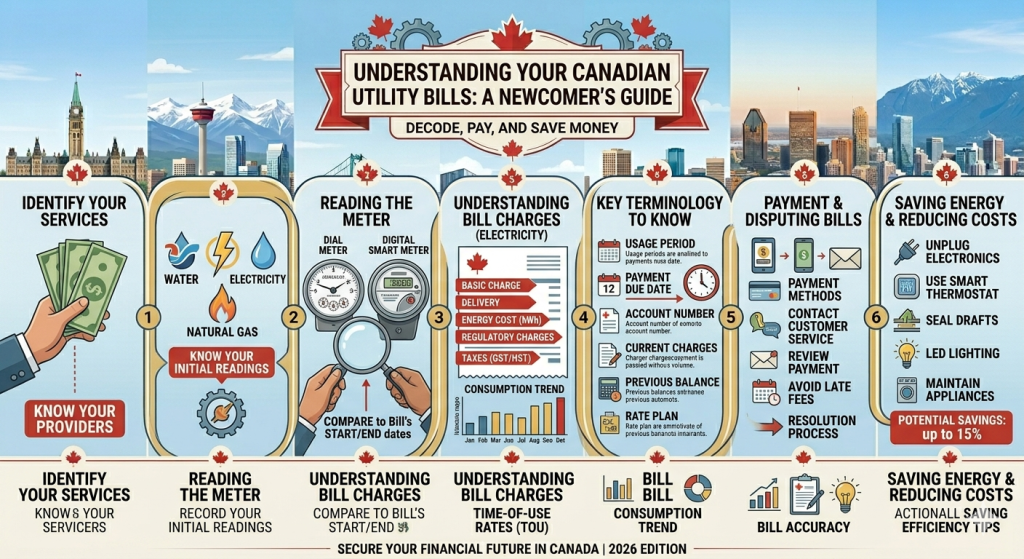
  • Cost of Living
  • 0
  • 15 min read

Understanding Canadian utility bills – How to Understand Your Utility Bills in Canada: A Newcomer’s Guide

  • First Year Canada Editorial Team
  • May 3, 2026
Understanding Canadian utility bills – How to Understand Your Utility Bills in Canada: A Newcomer’s Guide

Navigating utility bills in a new country can be challenging. This guide provides newcomers to Canada with a clear, practical explanation of how to read, understand, and manage their Canadian utility bills, covering electricity, natural gas, water, and more.

Recent Posts

  • Understanding utility bills in Canada – How to Understand Utility Bills in Canada: A Newcomer’s Guide (2026)
  • Documents Needed to Rent in Canada as a Newcomer
  • What Is a Lease Agreement in Canada? Your Newcomer’s Guide (2026)
  • Finding a Family Doctor in Canada – Finding the Right Family Doctor in Canada as a Newcomer
  • LinkedIn Tips Canada for Newcomers
  1. Cost of Living in Canada for Newcomers: Your 2026 Guide on Your Essential Student Budget in Canada Guide for Newcomers
  2. choose a bank Canada newcomer - How to Choose a Bank in Canada as a Newcomer in 2026 on First Month in Canada: Your Essential Checklist for Newcomers
  3. Avoid Common Newcomer Mistakes Canada: Your 2026 Guide on Cost of Living in Canada for Newcomers Your 2026 Guide
  4. best cities in Canada - Best Cities for Newcomers in Canada: Your 2026 Guide on First job Canada no experience – How to Find Your First Job in Canada Without Canadian Experience
  5. first job Canada no experience - Find Your First Job in Canada Without Canadian Experience on How to Open a Bank Account in Canada as a Newcomer 2026 Guide
First Year Canada
First Year Canada helps newcomers understand their first year in Canada with practical guides on banking, renting, credit score, jobs, documents, taxes, cost of living, and everyday life.

Quick Links

  • Contact
  • Privacy Policy
  • Editorial Policy
  • Disclaimer
  • Terms of Use
  • About

Cloud Tags

banking bills budgeting Canada Canada guide cost of living credit score day jobs Canada documents electricity employment essentials expenses finance Finding a Doctor in Canada first apartment Canada first job Canada first year first year Canada gas guide Healthcare in Canada housing immigrants international students internet job search Canada landlord LinkedIn mistakes newcomer Newcomer Benefits newcomer jobs newcomers newcomers in Canada newcomer work rental contract renting renting in Canada rent without credit history settlement tenant rights utilities utility bills water
First Year Canada 2026  |  Privacy Policy