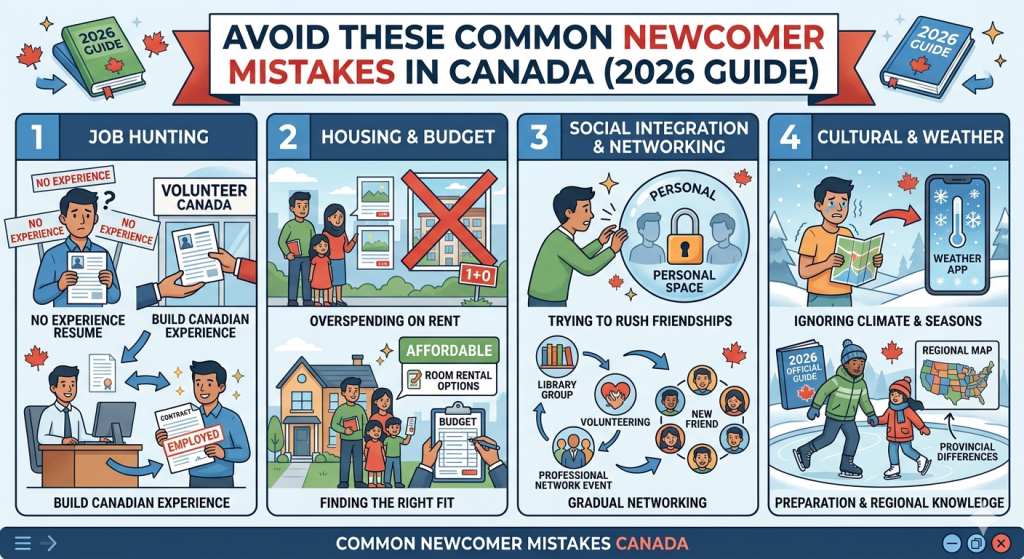

Common newcomer mistakes Canada is a practical topic for newcomers who want clear, begi
er-friendly information about their first year in Canada.
Introduction
Welcome to Canada! Embarking on a new chapter in a different country is an exciting journey, but it comes with its unique set of challenges. Many newcomers, despite thorough pla
ing, often encounter unexpected hurdles simply due to unfamiliarity with Canadian systems and culture. Understanding and avoiding common newcomer mistakes Canada can significantly ease your transition and set you up for success from day one. This guide, updated for May 2026, provides practical advice to help you navigate your first year with confidence.
Who This Guide Is For
This guide is designed for anyone new to Canada, including:
- New Immigrants: Individuals and families granted permanent residency.
- International Students: Those pursuing education at Canadian institutions.
- Temporary Workers: Individuals on work permits contributing to the Canadian economy.
- First-Time Residents: Anyone making Canada their new home.
If you’re looking for clear, actionable steps to avoid common pitfalls, you’ve come to the right place.
Practical Explanation: Why Mistakes Happen
Mistakes are a natural part of adapting to a new environment. For newcomers, these often stem from:
- Different Systems: Banking, healthcare, legal, and educational systems in Canada may vary significantly from your home country.
- Cultural Nuances: Social norms, communication styles, and workplace expectations can be different.
- Lack of Information: It’s hard to know what you don’t know, and reliable information can sometimes be difficult to find or interpret.
- Financial Pressures: Managing finances in a new currency and economic landscape can be overwhelming.
By highlighting these common issues, we aim to provide you with the knowledge to anticipate and prevent them.
Common Mistakes Newcomers Make and How to Avoid Them
1. Underestimating the True Cost of Living
Many newcomers arrive with a budget based on general estimates, only to find that daily expenses, especially in major cities, can be higher than anticipated. Housing, groceries, transportation, and utilities can quickly add up.
Practical Examples:
- Rent: A one-bedroom apartment in Toronto or Vancouver can easily cost over $2,000 per month, while in smaller cities, it might be $1,200-$1,800.
- Groceries: Expect to spend $300-$600 per person monthly on food, depending on your diet and shopping habits.
- Transportation: A monthly public transit pass can range from $90-$150. Car ownership involves insurance, fuel, and maintenance, which are significant costs.
How to Avoid This Mistake:
- Research Specifics: Before arriving, thoroughly research the cost of living for the exact city or town you plan to reside in.
- Create a Detailed Budget: Factor in all potential expenses, including unexpected ones.
- Save More: Aim to have at least 3-6 months’ worth of living expenses saved.
For a deeper dive into financial pla
ing, check out our guide on the Cost of Living in Canada for Newcomers: Your 2026 Guide.
2. Not Building a Canadian Credit History Early
In Canada, your credit history is vital for almost everything: renting an apartment, getting a phone plan, securing a loan, or even some jobs. Many newcomers assume their international credit history will transfer, which is generally not the case.
Practical Examples:
- Renting: Landlords often check credit scores. A lack of history can make it harder to secure a rental.
- Phone Contracts: Without credit, you might be required to pay a large deposit for a phone plan.
- Loans/Mortgages: Building credit is essential for future financial goals.
How to Avoid This Mistake:
- Get a Secured Credit Card: This is an excellent first step to build credit responsibly.
- Open a Bank Account: Start your financial journey with a Canadian bank.
- Pay Bills on Time: Always pay your rent, utilities, and credit card bills promptly.
Learn more about establishing your financial footprint in our guide, Building Credit in Canada: A Newcomers Guide.
3. Ignoring Canadian Banking System Nuances
While opening a bank account is often one of the first things newcomers do, understanding the different types of accounts, fees, and services can be overlooked.
Practical Examples:
- Chequing vs. Savings: Know the difference and which suits your needs.
- Transaction Fees: Some accounts have limits on free transactions.
- Interac e-Transfer: This is a very common way to send money in Canada.
How to Avoid This Mistake:
- Research Banks: Compare different banks and their newcomer packages.
- Ask Questions: Don’t hesitate to ask your bank representative about fees, features, and online banking.
- Understand Debit vs. Credit: Debit cards use your own money; credit cards allow you to borrow.
Our article, How to Open a Bank Account in Canada as a Newcomer (2026 Guide), provides detailed steps.
4. Delaying Essential Document Applications
Your Social Insurance Number (SIN) and provincial health card are critical for working and accessing healthcare. Delaying these can cause significant issues.
Practical Examples:
- SIN: You caot work legally or file taxes without a SIN.
- Health Card: Without it, you may face high medical bills if you need care.
How to Avoid This Mistake:
- Apply for SIN Immediately: Do this as soon as you arrive.
- Apply for Health Card: Understand your province’s waiting period (if any) and apply as soon as you are eligible.
- Keep Documents Safe: Store all official documents securely.
5. Misunderstanding Rental Market Realities
Finding suitable housing can be competitive, especially in major cities. Many newcomers struggle with securing a rental due to a lack of Canadian credit history, references, or understanding of tenant rights.
Practical Examples:
- Credit Checks: Landlords almost always perform credit checks.
- References: Canadian references are highly preferred.
- Tenant Rights: Each province has specific tenant protection laws.
How to Avoid This Mistake:
- Prepare Documents: Have proof of funds, employment letters, and any international references ready.
- Be Ready to Pay Deposits: Typically, landlords ask for first and last month’s rent.
- Know Your Rights: Familiarize yourself with tenant rights in your province.
Refer to How To Rent An Apartment In Canada Without Credit History and What Documents Do You Need to Rent in Canada as a Newcomer (2026 Guide) for more help.
6. Not Adapting to Canadian Job Search Methods
Job searching in Canada can differ significantly from other countries. Resumes, cover letters, networking, and interview styles have specific expectations.
Practical Examples:
- Resume Format: Canadian resumes are typically 1-2 pages, focused on relevant experience and skills, without personal details like photos or marital status.
- Networking: Many jobs are found through professional coections.
- Interview Style: Often competency-based, requiring specific examples of skills.
How to Avoid This Mistake:
- Localize Your Resume: Tailor it to Canadian standards.
- Network Actively: Attend industry events, use LinkedIn, and coect with professionals.
- Utilize Settlement Services: Many organizations offer free job search assistance for newcomers.
7. Neglecting to Understand Canadian Tax System Basics
The Canadian tax system can seem complex. Ignoring basic tax obligations or failing to file can lead to penalties and missed benefits.
Practical Examples:
- Income Tax: You pay federal and provincial income tax on earnings.
- GST/HST: A consumption tax on most goods and services.
- Tax Benefits: You might be eligible for benefits like the Canada Child Benefit or GST/HST credit.
How to Avoid This Mistake:
- File Taxes Aually:
Even if you had no income, filing is often necessary to receive benefits.
- Keep Records: Maintain records of income, expenses, and official documents.
- Seek Guidance: Use free tax clinics or consult with reputable tax professionals.
8. Not Researching Transportation Options
Canada is a vast country, and transportation varies greatly between urban and rural areas. Not understanding local transit or driving regulations can be a source of stress.
Practical Examples:
- Public Transit: Major cities have excellent public transit (buses, subways, streetcars).
- Driving Licenses: Converting your foreign license can be a multi-step process.
- Winter Driving: Essential skills and equipment are needed in many regions.
How to Avoid This Mistake:
- Plan Your Commute: Research public transit routes and fares for your area.
- Understand Driving Rules: Familiarize yourself with provincial driving laws and license conversion processes.
- Consider Winter Tires: Mandatory or highly recommended in many provinces during winter.
9. Failing to Dress Appropriately for Canadian Weather
Canada experiences four distinct seasons, with winters being particularly harsh in many regions. Underestimating the cold can lead to discomfort and health issues.
Practical Examples:
- Winter: Temperatures can drop well below -20°C (-4°F) with wind chill.
- Layering: The key to staying warm in cold weather.
How to Avoid This Mistake:
- Invest in Quality Winter Gear: A warm winter coat, waterproof boots, gloves, hat, and scarf are essential.
- Dress in Layers: This allows you to adjust to indoor and outdoor temperatures.
- Check Forecasts: Pay attention to daily weather reports.
10. Not Engaging with Local Communities
Isolation can be a significant challenge for newcomers. Failing to co
ect with local communities, whether Canadian-born or other immigrants, can hinder integration and well-being.
Practical Examples:
- Social Isolation: Can lead to loneliness and mental health challenges.
- Missed Opportunities: Community involvement can open doors to friendships, job opportunities, and cultural understanding.
How to Avoid This Mistake:
- Join Local Groups: Community centres, sports clubs, volunteer organizations.
- Attend Events: Festivals, workshops, and local gatherings.
- Utilize Settlement Agencies: They often host social events and workshops for newcomers.
Checklist: Avoiding Key Newcomer Mistakes
Here’s a quick checklist to help you avoid common newcomer mistakes Canada:
- ✓ Research specific cost of living for your city.
- ✓ Create a detailed budget and save extra funds.
- ✓ Apply for a SIN and provincial health card immediately.
- ✓ Open a Canadian bank account and understand its features.
- ✓ Start building Canadian credit history (e.g., secured credit card).
- ✓ Prepare rental documents and understand tenant rights.
- ✓ Localize your resume and actively network for jobs.
- ✓ Learn basic Canadian tax obligations and file aually.
- ✓ Research local public transit or driving regulations.
- ✓ Invest in appropriate clothing for all seasons, especially winter.
- ✓ Actively seek out and engage with local communities.
Table: Common Misconceptions vs. Canadian Reality
| Misconception | Canadian Reality |
|---|---|
| My foreign credit history will transfer. | Canadian credit history must be built from scratch; foreign history is generally not recognized. |
| I can use my home country’s driver’s license indefinitely. | Most provinces require conversion to a local license within a specific timeframe (e.g., 60-90 days), or you’ll need to pass tests. |
| Healthcare is completely free and immediate upon arrival. | While universal, there can be waiting periods for provincial health insurance (e.g., 3 months in some provinces), and some services are not covered. |
| Job searching is similar to my home country. | Canadian job market requires tailored resumes, cover letters, and significant networking; many jobs are not publicly advertised. |
| Renting an apartment is easy with cash or references. | Landlords often require credit checks, proof of stable income, and Canadian references, making it challenging for newcomers. |
| I can rely solely on my international phone plan. | International roaming is expensive; getting a local Canadian SIM card or plan is essential for affordability and co
ectivity. |
Frequently Asked Questions (FAQ)
Q: How soon should I apply for my Social Insurance Number (SIN) after arriving in Canada?
A: You should apply for your SIN as soon as possible after arriving in Canada. You need a SIN to work in Canada, access government programs and benefits, and file your taxes. You can often apply in person at a Service Canada office and receive it on the spot.
Q: Do I need a credit card immediately to build credit?
A: While not strictly immediate, it’s highly recommended to start building credit early. A secured credit card is an excellent way to do this without needing an existing credit history. Using it responsibly and paying balances on time will quickly establish your credit score.
Q: Can I use my home country’s driver’s license in Canada?
A: Most provinces allow you to use your foreign driver’s license for a limited period (e.g., 60 to 90 days) after you become a resident. After this period, you will need to apply for a provincial driver’s license, which may involve tests or a license exchange depending on your country of origin and driving experience.
Q: Where can I find help with job searching as a newcomer?
A: Many settlement agencies across Canada offer free employment services for newcomers. These services can include resume writing, interview preparation, job search workshops, and co
ections to local employers. You can also utilize online platforms like LinkedIn and job boards specific to Canada.
Q: What’s the biggest financial mistake newcomers make?
A: One of the biggest financial common newcomer mistakes Canada makes is underestimating the cost of living and not building a Canadian credit history early enough. These two factors can severely impact your ability to find housing, get loans, or even secure basic services like a phone plan without large deposits.
Disclaimer
This article is for general information only and does not provide financial, legal, tax, or immigration advice. Rules, requirements, fees, and programs may change. Always check official sources or speak with a qualified professional before making decisions.
Sources and Official Resources
- Government of Canada (Immigration, Refugees and Citizenship Canada): www.canada.ca/en/immigration-refugees-citizenship. html
- Service Canada (Social Insurance Number): www.canada.ca/en/employment-social-development/services/sin. html
- Financial Consumer Agency of Canada (Banking & Credit): www.canada.ca/en/financial-consumer-agency. html
- Canada Revenue Agency (Taxes): www.canada.ca/en/revenue-agency. html
- Provincial Government Websites: Search for your specific province’s official website (e.g., Ontario.ca, BC.ca, Alberta.ca) for information on health cards, driver’s licenses, and tenant rights.
Conclusion
Your first year in Canada will be filled with new experiences and learning opportunities. By being aware of and actively avoiding these common newcomer mistakes Canada, you can navigate the initial challenges more smoothly and efficiently. Remember, preparation and proactive learning are your best tools for a successful settlement. Embrace the journey, seek out reliable information, and don’t hesitate to ask for help from settlement services and community organizations. We wish you all the best in your new Canadian life!