Introduction: Your First Financial Step in Canada
How to Open a Bank Account in Canada as a Newcomer (2026 Guide)
Welcome to Canada! As you settle into your new life, one of the most fundamental tasks you’ll face is opening a Canadian bank account. This isn’t just about managing your money; it’s about receiving your salary, paying bills, building a financial history, and integrating smoothly into daily life. Without a bank account, many essential activities, from renting an apartment to getting a phone plan, become significantly more challenging.
This guide, updated for May 2026, will walk you through everything you need to know about opening a bank account as a newcomer, ensuring you start your Canadian financial journey on the right foot.
Who This Guide Is For
This guide is specifically designed for newcomers to Canada, including permanent residents, international students, temporary foreign workers, and those on IEC (International Experience Canada) visas. If you’re new to the Canadian financial system and need clear, practical advice on how to get your banking set up efficiently, you’re in the right place.
Practical Explanation: Why a Canadian Bank Account is Essential
A Canadian bank account is more than just a place to keep your money. It’s a gateway to financial stability and convenience:
- Receiving Income: Most employers in Canada pay salaries directly into a bank account via direct deposit.
- Paying Bills: Utilities, rent, phone bills, and internet services are typically paid through pre-authorized debits or online banking transfers.
- Daily Transactions: Debit cards linked to your bank account are widely accepted for purchases, reducing the need to carry cash.
- Building Credit History: While opening a basic account doesn’t directly build credit, it’s the first step towards accessing credit products like credit cards, which are vital for establishing a Canadian credit history.
- Security: Keeping large sums of cash is risky. Banks offer security and often deposit insurance through the Canada Deposit Insurance Corporation (CDIC) for eligible deposits.
Understanding Account Types
When you open an account, you’ll typically choose between two main types:
- Chequing Account: Designed for daily transactions. This is where your salary will be deposited, and from where you’ll pay bills and make purchases with your debit card. Most chequing accounts come with a monthly fee, but this can often be waived if you maintain a minimum balance or meet other criteria.
- Savings Account: Intended for saving money. These accounts typically offer higher interest rates than chequing accounts but may have limits on the number of free transactions. They are ideal for storing money you don’t need immediate access to.
Step-by-Step Guide to Opening Your Bank Account
Opening a bank account in Canada as a newcomer is generally straightforward. Here’s how to do it:
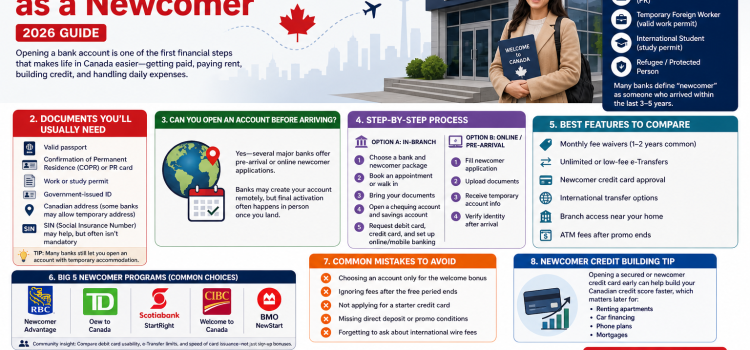
- Research and Choose a Bank: Before you even arrive, or shortly after, research different banks. Major Canadian banks include RBC, TD, Scotiabank, BMO, and CIBC. Many offer specific newcomer packages with benefits like no-fee banking for the first year, free international money transfers, or easier access to credit products.
- Gather Your Documents: This is the most crucial step. Banks are required by law to verify your identity. See the detailed checklist below.
- Visit a Branch or Apply Online: While some banks allow you to start the application online, newcomers often find it easier and more reassuring to visit a physical branch. This allows you to speak with a banking advisor, ask questions, and get immediate assistance. Make an appointment if possible to save time.
- Meet with a Banking Advisor: Bring all your required documents. The advisor will guide you through the application, explain different account options, and help you choose what’s best for your needs. Don’t hesitate to ask questions about fees, transaction limits, and online banking features.
- Activate Your Account and Services: Once your account is open, you’ll receive a debit card, and often, initial cheques. The advisor will help you set up online banking, mobile banking, and possibly link your accounts to a digital wallet. Ensure you understand how to use these services securely.
Required Documents Checklist
Canadian banks are regulated by the Financial Consumer Agency of Canada (FCAC) and must verify your identity. Here’s a list of commonly accepted documents. You will typically need at least one document from List A and one from List B, or two from List A.
List A: Primary Identification (Must include photo and signature)
- Canadian Permanent Resident Card
- Valid foreign passport
- Work permit (e.g., Post-Graduation Work Permit, Temporary Foreign Worker Permit)
- Study permit (for international students)
- Certificates of Indian Status
- Refugee Protection Claimant Document
List B: Secondary Identification (May or may not include photo/signature)
- Canadian Driver’s License (if you have one)
- Credit card (from a Canadian financial institution, if applicable)
- Debit card (from a Canadian financial institution, if applicable)
- Canadian utility bill (e.g., electricity, gas, water, internet, phone bill) with your name and Canadian address
- Statement from another Canadian financial institution
- Record of Landing (IMM 1000) or Confirmation of Permanent Residence (IMM 5292 or IMM 5688)
- Social Insurance Number (SIN) document or letter (while not always required for account opening, it’s essential for employment and tax purposes, and banks will usually ask for it to report interest income to the CRA).
Important Note: Always bring your original documents. Banks cannot accept photocopies. Requirements may vary slightly between financial institutions, so it’s wise to check with your chosen bank beforehand.
Comparing Major Canadian Banks for Newcomers
Choosing a bank can feel overwhelming. Here’s a comparison of common features and offerings from Canada’s ‘Big Five’ banks, often popular with newcomers. Remember that specific offers change, so always check the bank’s official website.
| Bank | Newcomer Programs & Common Features | Pros for Newcomers | Cons for Newcomers |
|---|---|---|---|
| RBC (Royal Bank of Canada) | RBC Newcomer Advantage: Often includes 1 year of no-monthly-fee banking, unlimited transactions, credit card with no credit history required (secured or unsecured), international money transfers. Extensive branch and ATM network. | Strong newcomer focus, widely recognized, excellent digital banking, good credit building options. | Monthly fees can be high after the newcomer period if minimum balance requirements aren’t met. |
| TD (Toronto-Dominion Bank) | TD New to Canada Banking Program: Often offers 1 year of no-monthly-fee banking, unlimited transactions, credit card with no credit history, free safety deposit box for a year. Known for long operating hours. | Good customer service, extensive branch network, convenient hours, strong online/mobile banking. | Standard account fees can be substantial after the promotional period. |
| Scotiabank | StartRight Program for Newcomers: Often includes 1 year of no-monthly-fee banking, unlimited transactions, credit card with no credit history, international money transfer offers. Strong presence in many countries. | Global reach beneficial for international students/workers, good credit card options, solid digital tools. | Branch network might be slightly less extensive than RBC or TD in some smaller communities. |
| BMO (Bank of Montreal) | BMO NewStart Program: Often provides 1 year of no-monthly-fee banking, unlimited transactions, credit card without credit history, free international money transfers. Canada’s oldest bank. | Established reputation, good newcomer offers, often competitive credit card rates, solid digital banking. | Branch footprint might be smaller in some areas compared to the largest banks. |
| CIBC (Canadian Imperial Bank of Commerce) | CIBC Newcomer Program: Often includes 1 year of no-monthly-fee banking, unlimited transactions, credit card with no credit history, special rates on GICs. Known for strong digital innovation. | Good digital banking experience, competitive GIC rates for savings, dedicated newcomer advisors. | Branch network can be less dense in some regions. |
Decision Criteria: Choosing the Right Bank for You
When making your decision, consider these factors:
- Newcomer Offers: Compare the benefits of each bank’s newcomer package. How long is the no-fee period? What credit card options are available? Are international money transfers included?
- Fees: Understand the monthly fees for chequing accounts and how they can be waived (e.g., by maintaining a minimum balance). Look at transaction limits and fees for exceeding them.
- Branch and ATM Network: Do you prefer a bank with a physical branch near your home or workplace? How important is easy access to ATMs?
- Digital Banking: Evaluate the quality of their online and mobile banking apps. Can you pay bills, transfer money, and manage your accounts easily from your phone?
- Customer Service: Some banks offer services in multiple languages, which can be helpful. Read reviews or ask other newcomers about their experiences.
- Other Services: Consider if you’ll need other services soon, like a secured credit card, lines of credit, or investment accounts.
Common Mistakes to Avoid
- Not Comparing Banks: Don’t just go with the first bank you see. Researching can save you money and provide better benefits.
- Ignoring Fees: Be fully aware of monthly account fees, transaction fees, and any other charges. These can add up quickly.
- Not Asking Questions: If you don’t understand something, ask your banking advisor. It’s their job to help you.
- Delaying Account Opening: Open your account as soon as possible after arriving. It simplifies many other settlement tasks. You can often start the process even before you arrive in Canada.
- Overlooking Newcomer Programs: These programs are designed specifically for you and offer significant advantages. Make sure you fully utilize them.
- Not Getting a SIN: While not always mandatory for opening a basic account, your Social Insurance Number (SIN) is crucial for working and for the bank to report interest earned to the Canada Revenue Agency (CRA). Ensure you apply for it as soon as you are eligible. You can find more information about your essential first steps in Canada, including getting your SIN, in our guide: First Month in Canada: Your Essential Checklist for Newcomers.
Frequently Asked Questions (FAQ)
Can I open a bank account before arriving in Canada?
Yes, many major Canadian banks offer programs that allow newcomers to start the account opening process before they arrive. This often involves a preliminary application online or via phone, and then finalizing the account setup in person at a branch once you are in Canada with your original documents.
Do I need a Social Insurance Number (SIN) to open a bank account?
While you can usually open a basic chequing or savings account without a SIN, banks will typically ask for it. It is required for any interest-bearing accounts (so the bank can report interest earned to the CRA) and essential if you plan to work in Canada. It’s highly recommended to obtain your SIN as soon as you are eligible.
What is a secured credit card, and how does it help newcomers?
A secured credit card requires you to provide a security deposit (e.g., $500) which becomes your credit limit. It functions like a regular credit card but uses your deposit as collateral. This is an excellent way for newcomers to start building a Canadian credit history, as banks are more willing to approve them without a prior credit score.
How do I transfer money from my home country to my new Canadian account?
You have several options: international wire transfers through banks, online money transfer services (like Wise, formerly TransferWise, or Remitly), or bringing bank drafts/traveller’s cheques. Discuss options and potential fees with your chosen Canadian bank.
Are my deposits safe in a Canadian bank?
Yes, eligible deposits in Canadian banks that are members of the Canada Deposit Insurance Corporation (CDIC) are insured up to $100,000 per depositor, per institution, in each of the insured categories (e.g., chequing accounts, savings accounts, GICs). Most major banks are CDIC members.
Disclaimer
This article is for general information only and does not provide financial, legal, tax, or immigration advice. Rules, requirements, fees, and programs may change. Always check official sources or speak with a qualified professional before making decisions.
Sources or Official Resources
- Financial Consumer Agency of Canada (FCAC): https://www.canada.ca/en/financial-consumer-agency.html
- Canada Deposit Insurance Corporation (CDIC): https://www.cdic.ca/
- Immigration, Refugees and Citizenship Canada (IRCC): https://www.canada.ca/en/immigration-refugees-citizenship.html
- Service Canada (for SIN): https://www.canada.ca/en/employment-social-development/services/sin.html
- Major Canadian Banks (official websites):
Conclusion
Opening a bank account is a foundational step in your new life in Canada. By understanding the process, gathering the necessary documents, and carefully comparing your options, you can choose a bank and an account that best fits your immediate needs and future financial goals. Take your time, ask questions, and empower yourself with the financial tools necessary for a successful transition to Canadian life. Welcome to your financial journey in Canada!

Pingback: Renting in Canada: Essential Documents for Newcomers (2026)
Pingback: first job Canada no experience - Find Your First Job in Canada Without Canadian Experience