
Best cities in Canada is a practical topic for newcomers who want clear, begi
er-friendly information about their first year in Canada .
Welcome to Canada! Embarking on a new chapter in a new country is an exciting, yet often overwhelming, experience. One of the biggest decisions you’ll face as you plan your move is choosing where to settle. Choosing the best cities for newcomers in Canada is one of the most significant decisions you’ll make, as it will shape much of your initial experience and future opportunities. This guide, updated for May 3, 2026, is designed to help you navigate this crucial choice with confidence and clarity .
Who This Guide Is For
This comprehensive guide is specifically crafted for newcomers to Canada, including permanent residents, temporary foreign workers, and international students. Whether you’re arriving from another country or already in Canada and considering a move to a new city , this information aims to provide practical, accurate, and begi
er-friendly insights to help you make an informed decision .
Practical Explanation: How to Choose Your Canadian City
There isn’t a single “best city” for everyone . Your ideal city will depend entirely on your personal circumstances, priorities, and goals. What might be perfect for a young professional in the tech sector might not suit a family looking for affordable housing and a strong community for children . It’s essential to consider a range of factors to find a city that aligns with your unique needs. Let’s explore some of these key considerations:
Key Factors to Consider When Choosing a City
- Job Market and Industry Opportunities: Research whether your profession or desired industry has a strong presence in the city. Are there specific companies or sectors that are actively hiring? Consider if there are entry-level positions or opportunities for professional growth. You can learn more about finding your first job in Canada by reading our guide: How to Find Your First Job in Canada Without Canadian Experience.
- Cost of Living: This is often a deciding factor. Housing (rent or purchase), groceries, transportation, and utilities vary significantly across Canadian cities. High wages in a major city might be offset by even higher living expenses. Our guide on the Cost of Living in Canada for Newcomers: Your 2026 Guide can provide detailed insights .
- Newcomer Support Services: Look for cities with robust settlement agencies, language training programs, employment support, and cultural integration services. These resources can be invaluable during your first year .
- Public Transit: If you don’t plan to buy a car immediately, access to reliable and extensive public transportation is vital. Some cities have excellent transit systems, while others are more car-dependent.
- Community and Culture: Do you prefer a bustling multicultural metropolis or a quieter, close-knit community? Research the diversity of a city and whether there are existing communities from your home country or cultural groups you wish to join .
- Climate: Canada is known for its diverse climate. Some cities experience very cold, snowy winters, while others have milder temperatures but more rain. Consider your tolerance for different weather conditions.
- Education and Healthcare: If you have children, access to good schools is important. Ensure you understand how healthcare works in your chosen province and city.
- Language: While English is widely spoken, French is an official language. In Quebec, French is the primary language, and proficiency is often beneficial for employment and daily life.
Step-by-Step: Researching Your Potential Cities
Once you have a clearer idea of your priorities, it’s time to dive into specific cities. Here’s a step-by-step approach:
- Identify Your Top 3-5 Priorities: Is it finding a job in IT, affordable housing, or a vibrant arts scene? Rank what matters most to you.
- Initial City Scan: Based on your priorities, make a shortlist of 3-5 cities that seem promising.
- Deep Dive Research: Use official city websites, provincial government sites, and reputable newcomer organizations to gather detailed information. Look for statistics on job growth, average rents, and available services.
- Coect with Communities:
Join online forums, social media groups, or coect with newcomer organizations that focus on specific cities. Hearing firsthand experiences can be incredibly insightful.
- Virtual Exploration: Use online maps (like Google Street View) to get a feel for neighbourhoods, public transit routes, and local amenities.
Top Contenders: Best Cities for Newcomers in Canada (2026 Overview)
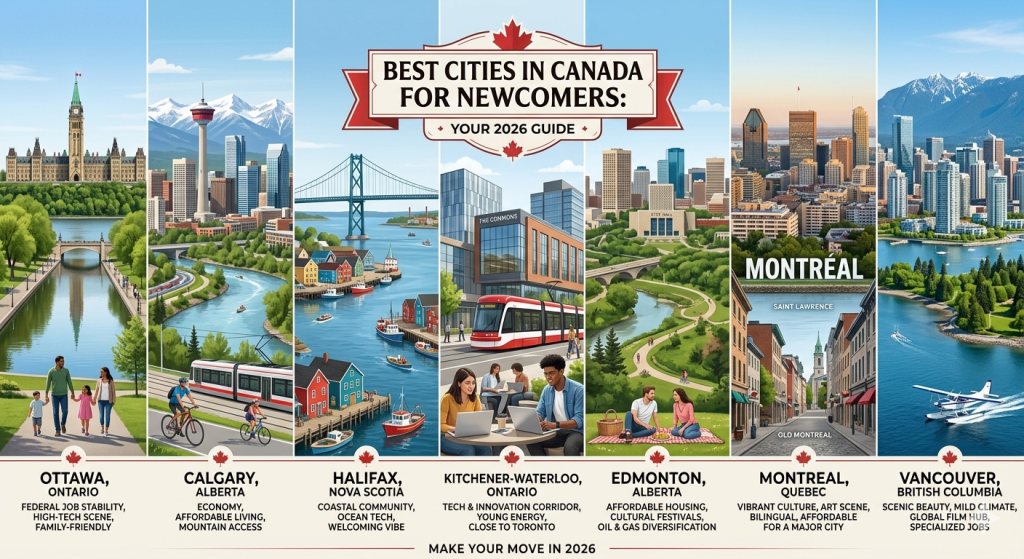
Here’s a look at some of the most popular and promising cities for newcomers in Canada, keeping in mind that the best cities for newcomers in Canada will vary by individual:
Toronto, Ontario
- Pros: Canada’s largest city, incredibly diverse, strong job market across many sectors (finance, tech, healthcare, arts), excellent public transit (TTC), vast array of newcomer services.
- Cons: Highest cost of living in Canada, particularly for housing.
- Good for: Professionals seeking diverse job opportunities, those who thrive in a bustling, multicultural environment, individuals comfortable with higher living expenses.
Vancouver, British Columbia
- Pros: Stuing natural beauty, mild climate (by Canadian standards), growing tech and film industries, strong focus on outdoor activities, diverse population.
- Cons: Extremely high cost of living, especially for housing; can be very rainy.
- Good for: Those in tech or creative industries, nature lovers, individuals seeking a milder climate and comfortable with high costs.
Montreal, Quebec
- Pros: Rich European charm, vibrant arts and culture scene, relatively more affordable cost of living compared to Toronto/Vancouver, strong tech and aerospace industries.
- Cons: French is the official language, and proficiency is often essential for jobs and daily life; cold winters.
- Good for: Those interested in a bilingual environment, strong cultural scene, and a more affordable major city experience, especially if you speak French or are willing to learn.
Calgary, Alberta
- Pros: Strong economy (energy, tech, logistics), no provincial sales tax, close proximity to the Rocky Mountains, good public transit (CTrain), relatively lower cost of living than Toronto/Vancouver.
- Cons: Can have very cold, dry winters; job market can be tied to the energy sector.
- Good for: Professionals in energy, finance, or tech; those who enjoy outdoor activities and a suier, colder winter.
Edmonton, Alberta
- Pros: More affordable than Calgary, strong job market in healthcare, education, and energy, vibrant arts scene, good public services.
- Cons: Very cold and long winters; not as scenic as Calgary.
- Good for: Families and individuals seeking affordability, stable job opportunities, and a strong community feel in a major city.
Ottawa, Ontario
- Pros: Canada’s capital city, stable job market (government, tech), highly educated workforce, bilingual environment, excellent quality of life, good for families.
- Cons: Can feel quieter than other major cities; winters are cold.
- Good for: Those seeking government or tech jobs, families, and individuals who appreciate a clean, safe, and bilingual city.
Halifax, Nova Scotia
- Pros: Growing economy (ocean technology, healthcare, tourism), charming coastal city, friendly atmosphere, more relaxed pace of life, relatively affordable housing compared to larger cities.
- Cons: Smaller job market than major hubs, fewer direct international coections.
- Good for: Those seeking a maritime lifestyle, a strong sense of community, and a growing economy in a smaller, manageable city.
Wi
ipeg, Manitoba
- Pros: Very affordable cost of living, diverse population, strong newcomer support services, central location in Canada, stable job market in various sectors.
- Cons: Extremely cold and long winters; can be isolated geographically.
- Good for: Those prioritizing affordability and strong settlement support, individuals comfortable with extreme winter weather.
Table: City Comparison Snapshot (Estimated for 2026)
This table offers a quick comparison of key factors for some of the best cities for newcomers in Canada. Please note that average rent figures are estimates and can vary greatly by neighbourhood, apartment size, and amenities. Always check current listings and official city data.
| City | Avg. 1-BR Rent (Monthly Est.) | Job Market Strength | Newcomer Support | Climate (General) |
|---|---|---|---|---|
| Toronto, ON | $2,500+ | Strong (Diverse) | Excellent | Four distinct seasons, humid summers, cold winters |
| Vancouver, BC | $2,700+ | Strong (Tech, Film, Tourism) | Excellent | Mild, rainy winters; warm, dry summers |
| Montreal, QC | $1,800+ | Good (Tech, Aerospace, Arts) | Excellent (French-focused) | Four distinct seasons, cold winters, warm summers |
| Calgary, AB | $1,700+ | Strong (Energy, Tech, Logistics) | Very Good | Cold, su
y winters; warm summers; Chinook winds |
| Edmonton, AB | $1,500+ | Good (Healthcare, Education, Energy) | Very Good | Very cold, dry winters; warm summers |
| Ottawa, ON | $2,000+ | Stable (Gov’t, Tech, Healthcare) | Very Good | Four distinct seasons, cold winters, warm summers |
| Halifax, NS | $1,600+ | Growing (Ocean Tech, Healthcare, Tourism) | Good | Mild, snowy winters; warm summers; coastal weather |
| Wi
ipeg, MB |
$1,200+ | Stable (Manufacturing, Agri-Food, Healthcare) | Excellent | Extreme cold winters; hot summers |
| Saskatoon, SK | $1,100+ | Stable (Agriculture, Mining, Healthcare) | Good | Very cold, dry winters; hot summers |
Checklist: Before You Make Your Final Decision
To ensure you’ve covered all your bases when considering the best cities for newcomers in Canada:
- ✓ Research Job Opportunities: Have you looked into specific companies or job boards for your field in your chosen cities?
- ✓ Calculate Your Cost of Living Budget: Beyond rent, have you accounted for groceries, transportation, utilities, and other monthly expenses?
- ✓ Explore Newcomer Services: Identify specific settlement agencies that can assist you upon arrival.
- ✓ Understand Language Requirements: If considering Quebec, are you prepared for French language integration?
- ✓ Review Public Transport Options: Can you get around easily without a car, or is a vehicle a necessity?
- ✓ Investigate the Housing Market: Understand average rents, types of housing available, and the typical rental process. Our guides How To Rent An Apartment In Canada Without Credit History and What Documents Do You Need to Rent in Canada as a Newcomer (2026 Guide) can be very helpful.
Common Mistakes to Avoid
- Choosing Solely on Reputation: A city might be famous, but its reputation doesn’t always align with your personal needs or financial situation.
- Underestimating Cost of Living: Many newcomers are surprised by the high cost of housing and daily expenses in major Canadian cities. Do thorough research.
- Not Researching the Job Market for Your Skills: A city might have a strong overall economy, but if your specific skills aren’t in demand, finding employment can be challenging.
- Ignoring Climate Preferences: Canada’s winters can be a shock. If you truly dislike cold, consider cities with milder climates or be prepared for the adjustment.
- Overlooking Language Considerations: If you move to Quebec without French language skills, you might face more hurdles than anticipated.
Frequently Asked Questions (FAQ)
Q: Which city is generally considered best for jobs?
A: Toronto, Vancouver, and Montreal typically offer the most diverse and robust job markets. Calgary and Ottawa also have strong, stable job opportunities in specific sectors like energy, tech, and government.
Q: Which city is most affordable for newcomers?
A: Generally, cities in the Prairies (Wi
ipeg, Saskatoon, Regina) and some Atlantic provinces (Halifax, St. John’s) offer a lower cost of living, particularly for housing, compared to Toronto or Vancouver.
Q: Do I need to speak French to live in Canada?
A: No, not for all of Canada. English is widely spoken across most provinces. However, in Quebec, French is the official language, and proficiency is highly recommended and often necessary for employment and daily life. Many government services across Canada are available in both official languages.
Q: How do I find newcomer support services in a specific city?
A: You can start by searching online for “settlement services [city name]” or “newcomer resources [city name]”. Immigration, Refugees and Citizenship Canada (IRCC) also lists funded settlement service providers across the country on the Canada.ca website.
This article is for general information only and does not provide financial, legal, tax, or immigration advice. Rules, requirements, fees, and programs may change. Always check official sources or speak with a qualified professional before making decisions.
Sources and Official Resources
- Government of Canada (Immigration, Refugees and Citizenship Canada): canada.ca/ircc
- Statistics Canada: statcan.gc.ca
- Canada Mortgage and Housing Corporation (CMHC): cmhc-schl.gc.ca
- City of Toronto: toronto.ca
- City of Vancouver: vancouver.ca
- City of Montreal: montreal.ca
- City of Calgary: calgary.ca
- City of Edmonton: edmonton.ca
- City of Ottawa: ottawa.ca
- City of Halifax: halifax.ca
- City of Wiipeg: wi
ipeg.ca
- City of Saskatoon: saskatoon.ca
Conclusion
Choosing your new home in Canada is a deeply personal journey. By carefully considering your priorities and researching the various factors discussed in this guide, you can make an informed decision that sets you up for success and happiness. Remember, Canada is a vast and welcoming country with a diverse range of cities, each offering its unique charm and opportunities. Take your time, do your homework, and you’ll find the perfect fit among the best cities for newcomers in Canada. We wish you all the best as you embark on this exciting new chapter!