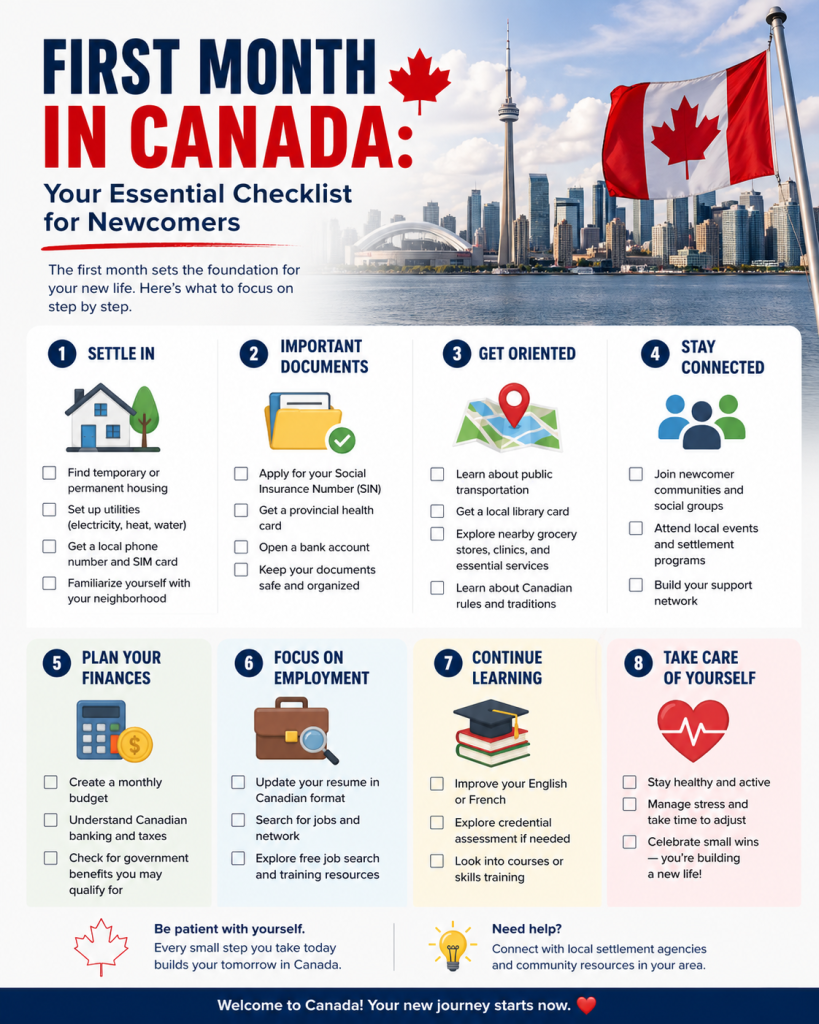

Welcome to Canada! Your first month in a new country is an exciting time, but it can also feel overwhelming with a long list of things to do. From essential documents to setting up your new home, navigating the initial steps effectively can significantly impact your settlement journey.
This guide from FirstYearCanada.com is designed to be your practical companion. We’ll break down the critical tasks into manageable steps, helping you prioritize and complete them efficiently during your first 30 days. By following this checklist, you can build a strong foundation for your life in Canada and avoid common pitfalls.
Who This Guide Is For
This comprehensive checklist is tailored for all newcomers arriving in Canada, including:
- New Immigrants (Permanent Residents): Those making Canada their permanent home.
- International Students: Individuals coming to study at Canadian institutions.
- Temporary Foreign Workers: People arriving with a work permit for employment in Canada.
- First-Time Residents: Anyone new to living in Canada who needs a clear roadmap for initial settlement.
No matter your immigration stream, the initial steps for settling into Canadian life share many commonalities. This guide focuses on universal priorities that will benefit almost everyone.
Practical Explanation: Why Your First Month Matters
The first month in Canada is a critical period for establishing your legal and practical foundations. Successfully completing key tasks like obtaining a Social Insurance Number (SIN), opening a bank account, and applying for a health card ensures you can access essential services, work legally, manage your finances, and begin building a life here. Delaying these steps can lead to unnecessary stress, missed opportunities, or even legal complications.
This guide aims to simplify the process by organizing tasks logically, offering clear instructions, and highlighting resources. Think of it as your strategic plan to transform the daunting into the doable, allowing you to focus more on experiencing your new environment and less on administrative hurdles.
Your First Month in Canada: A Step-by-Step Guide
Let’s break down your first 30 days into manageable weekly priorities. Remember that individual situations may vary, so use this as a flexible framework.
Week 1: Immediate Priorities (Days 1-7)
Your first few days are about establishing the most critical elements for your legal status and basic needs.
- Confirm Your Immigration Status and Documents:
- At the Port of Entry: Ensure your Confirmation of Permanent Residence (COPR) is signed, or your study/work permit is correctly issued and validated by a border services officer. Keep all official documents, including your passport, safe and easily accessible.
- Post-Arrival: For Permanent Residents, your PR card will be mailed to the Canadian address you provided. Ensure this address is correct and stable.
- Get a Canadian SIM Card and Phone Number:
- A local phone number is essential for everything from job applications to banking and connecting with family. Major providers include Rogers, Bell, Telus, and their sub-brands (e.g., Fido, Koodo, Virgin Plus). Prepaid options are available if you don’t have a Canadian credit history yet.
- Newcomer Example: Raj, an international student, bought a prepaid SIM card at the airport upon arrival. This allowed him to immediately contact his university, family, and landlord.
- Open a Canadian Bank Account:
- This is crucial for managing your money, receiving payments, and paying bills. Most major banks (e.g., RBC, TD, Scotiabank, BMO, CIBC, National Bank) offer newcomer packages with special benefits like no monthly fees for a period.
- Documents Needed: Typically, your passport, Confirmation of Permanent Residence (COPR), or study/work permit. Some banks may ask for a secondary ID or proof of address.
- Common Mistake: Relying solely on foreign bank accounts or cash. This is inconvenient and can be costly due to exchange rates and fees.
- Apply for Your Social Insurance Number (SIN):
- A SIN is a 9-digit number required to work in Canada and access government benefits and programs. You can apply online, by mail, or in person at a Service Canada Centre. Applying in person often provides immediate issuance if all documents are in order.
- Documents Needed: Your primary immigration document (e.g., Confirmation of Permanent Residence, work permit, study permit if it authorizes you to work).
- Tip: Apply for your SIN as soon as possible. Without it, you cannot legally work in Canada.
- Arrange Temporary Accommodation (if not permanent):
- If you haven’t secured long-term housing, ensure your temporary stay (hotel, Airbnb, short-term rental) is comfortable and safe. Start researching permanent options.
Week 2: Settling In (Days 8-14)
With your immediate priorities handled, focus on securing your living situation and accessing essential services.
- Begin Your Permanent Housing Search:
- Finding suitable rental accommodation can take time, especially in competitive markets. Start early. Use reputable websites like Realtor.ca, Rentals.ca, Kijiji, and Facebook Marketplace.
- Be Prepared: Landlords often ask for proof of income, references, and a credit check. As a newcomer, you may need to offer a larger deposit or provide a guarantor.
- Newcomer Example: Maria, a temporary worker, started her housing search online before arriving. Once in Canada, she used her Canadian SIM to call landlords and schedule viewings, often bringing her offer letter from her employer as proof of income.
- Apply for Your Provincial/Territorial Health Card:
- Each province and territory has its own health insurance plan. Eligibility and waiting periods vary (some provinces have a waiting period, typically up to 3 months). Apply as soon as you are eligible.
- Documents Needed: Proof of immigration status, proof of residency in the province, and often a secondary ID.
- Important: During any waiting period, consider purchasing private health insurance to cover unexpected medical costs.
- Explore Public Transportation:
- Familiarize yourself with your city’s public transit system (bus, subway, streetcar, train). Purchase a transit pass or reloadable card (e.g., Presto, Compass, Orca) for convenience and potential savings.
- Start Building Your Canadian Resume/CV (if seeking employment):
- Canadian resume formats differ from many other countries. Focus on skills, quantify achievements, and keep it concise. Utilize newcomer employment services for free resume help.
- Register Children for School (if applicable):
- If you have school-aged children, contact your local school board to understand enrollment procedures, required documents (proof of age, vaccination records, proof of address), and timelines.
Week 3: Connecting & Exploring (Days 15-21)
Beyond the essentials, this week is about integrating into your community and understanding local resources.
- Connect with Newcomer Settlement Services:
- Organizations like Immigrant Services Calgary, COSTI (Ontario), MOSAIC (BC), and others across Canada offer free services including language classes, employment support, housing assistance, and community connections. They are an invaluable resource.
- Tip: Search for “settlement services for newcomers [your city/province]” online.
- Obtain a Library Card:
- Public libraries in Canada are fantastic resources, offering free internet access, workshops, language learning materials, and community programs, in addition to books and media.
- Explore Your Local Community:
- Take time to walk around your neighborhood. Locate grocery stores, pharmacies, parks, community centres, and places of worship. Understanding your immediate surroundings will make you feel more at home.
- Consider Getting a Provincial Photo ID or Driver’s License:
- A provincial photo ID card (non-driver’s license) can serve as a convenient form of identification. If you plan to drive, research how to exchange your foreign driver’s license or apply for a Canadian one. Requirements vary by province.
- Understand Basic Canadian Laws and Rights:
- Familiarize yourself with basic laws, especially regarding tenancy rights, employment standards, and consumer protection. Websites of provincial governments often provide clear information.
Week 4: Review & Plan (Days 22-30)
As your first month concludes, take stock of your progress and start planning for the next phase of your settlement.
- Review Your Budget and Track Expenses:
- The first month often involves significant initial expenses. Review your spending and adjust your budget for the coming months. Understand the cost of living in Canada.
- Newcomer Example: After two weeks, Chen reviewed his bank statements. He realized he was spending more on eating out than planned and decided to cook more at home to save money.
- Follow Up on Applications:
- Check the status of your health card application, SIN card delivery (if mailed), and any housing applications.
- Plan for Future Steps:
- Depending on your goals, start planning for job searching, further education, or connecting with professional associations.
- Understand the Canadian Tax System (Basics):
- While tax season might be months away (April 30th for the previous year’s taxes), understanding that you will need to file taxes annually is important. Keep records of your income and expenses. The Canada Revenue Agency (CRA) is the federal body responsible.
- Consider Building Your Credit History:
- A good credit history is vital in Canada for renting, getting loans, and even some jobs. You can start building credit with a secured credit card or by ensuring timely payments on any bills.
- Disclaimer: Building credit takes time and responsible financial habits. There are no guarantees of approval for any credit product.
First Month in Canada Checklist Summary
Here’s a quick summary of your essential tasks:
- ✔ Validate immigration documents at port of entry.
- ✔ Get a Canadian SIM card.
- ✔ Open a Canadian bank account.
- ✔ Apply for a Social Insurance Number (SIN).
- ✔ Secure temporary/permanent accommodation.
- ✔ Apply for your provincial health card.
- ✔ Familiarize yourself with public transit.
- ✔ Connect with newcomer settlement services.
- ✔ Get a library card.
- ✔ Explore local amenities.
- ✔ Review budget and plan next steps.
Key Documents for Your First Month
Keeping your essential documents organized and readily accessible is crucial. Here’s a table outlining common documents you’ll need for various tasks:
| Task/Service | Primary Document(s) Needed | Additional Documents Often Requested |
|---|---|---|
| Immigration Status Validation | Passport, Confirmation of Permanent Residence (COPR) / Work Permit / Study Permit | Letter of Introduction (if applicable) |
| Canadian SIM Card | Passport / Photo ID | Proof of Address (sometimes) |
| Open Bank Account | Passport, COPR / Work Permit / Study Permit | Secondary ID (e.g., foreign driver’s license), Proof of Address |
| Apply for SIN | COPR / Work Permit / Study Permit (that authorizes work) | Passport, other official ID (if applying in person) |
| Provincial Health Card | COPR / Work Permit / Study Permit, Proof of Residency | Secondary ID, Marriage Certificate (if applying for family) |
| Renting Accommodation | Immigration Documents, Proof of Funds / Employment Letter | References, Credit Report (once established), Bank Statements |
Common Mistakes to Avoid During Your First Month
Being aware of common pitfalls can save you time, money, and stress:
- Delaying SIN Application: Without a SIN, you cannot work legally or access many government services. Apply as soon as possible.
- Not Getting a Canadian Phone Number: Many services and employers require a local contact number. It’s a foundational step.
- Underestimating Housing Search Time: Finding a permanent place can be challenging. Start your search early and be prepared for a competitive market.
- Ignoring Health Card Waiting Periods: Some provinces have a waiting period before you’re covered. Don’t assume immediate coverage; plan for private insurance if needed.
- Not Connecting with Settlement Services: These free services are designed to help you integrate. They offer invaluable advice and resources that can simplify your journey.
- Falling for Scams: Be wary of unsolicited offers for jobs, housing, or financial services that seem too good to be true. Always verify information from official sources.
- Carrying Large Amounts of Cash: It’s safer and more convenient to use a Canadian bank account for transactions.
Frequently Asked Questions (FAQ)
Q: How long does it take to get a SIN?
If you apply in person at a Service Canada Centre and have all the required documents, you can often receive your SIN immediately. If you apply online or by mail, it can take up to 20 business days after your application is received, plus mail delivery time.
Q: Can I open a bank account without a SIN?
Yes, you can open a bank account in Canada without a SIN. Banks are generally required to open an account for you if you have valid identification. However, you will need to provide your SIN to your bank once you receive it, especially if you plan to earn interest on your savings, as the bank needs it for tax reporting purposes.
Q: What if I don’t have a permanent address yet for my PR card or health card?
For your PR card, it’s crucial to provide a stable Canadian mailing address where you can reliably receive mail. If you don’t have a permanent address immediately, consider using the address of a trusted friend or family member, or a settlement agency that offers mail-holding services. For health cards, you will need to prove residency in the province, which typically requires a permanent address and supporting documents like a rental agreement or utility bill.
Q: Is healthcare free immediately after I arrive?
No, not necessarily. While Canada has universal healthcare, each province and territory manages its own health insurance plan. Some provinces, like Ontario, British Columbia, and New Brunswick, have a waiting period (typically up to three months) before you become eligible for provincial health coverage. During this waiting period, you are responsible for your medical costs, so private health insurance is highly recommended.
Disclaimer
This article is for general information only and does not provide financial, legal, tax, or immigration advice. Rules, requirements, fees, and programs may change. Always check official sources or speak with a qualified professional before making decisions.
Sources and Official Resources
- Immigration, Refugees and Citizenship Canada (IRCC): canada.ca/en/immigration-refugees-citizenship.html
- Service Canada (for SIN): canada.ca/en/employment-social-development/services/sin.html
- Financial Consumer Agency of Canada (FCAC – for banking): canada.ca/en/financial-consumer-agency.html
- Provincial Health Ministries: Check your specific provincial government website (e.g., Ontario.ca for OHIP, HealthLinkBC for BC, Alberta.ca for AHCIP).
- Canada Revenue Agency (CRA – for taxes): canada.ca/en/revenue-agency.html
Conclusion
Your first month in Canada is a foundational period, setting the stage for your entire journey. By systematically addressing the tasks outlined in this checklist, you can navigate the initial complexities with confidence and ease. Remember to utilize the many free resources available to newcomers and don’t hesitate to ask for help. Welcome again to Canada, and we wish you a successful and fulfilling first year!


Pingback: Open Bank Account in Canada as Newcomer | FirstYearCanada
Pingback: Cost of Living in Canada for Newcomers (2026 Guide)
Pingback: choose a bank Canada newcomer - How to Choose a Bank in Canada as a Newcomer in 2026